US Breathes Life, Barely, into Offshore Wind
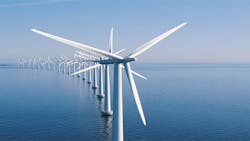
WASHINGTON -- Europe: 1,662 turbines; United States: 0. After delays that left the American industry years behind other nations, the first wind farm off the U.S. coast should finally produce electricity by 2015.
With Americans living atop mountains of coal and reserves of petroleum and natural gas, it is little wonder there is resistance to financing a renewable but expensive offshore energy resource that remains untapped in the United States.
Despite several proposals, and the blessing of environmentalists who describe them as sustainable alternatives to coal, not a single wind farm off the Atlantic coast has been built.
Several are in the works, but they have run up against political hurdles in states like Maryland and Virginia, where lawmakers are hesitant to offer government subsidies.
As veteran energy expert Jim Lanard, president of the Offshore Wind Development Coalition, noted, Europeans jumped ahead with heavy subsidization of renewables like wind because they lacked the oil to meet their energy needs.
With far more indigenous energy supply, "there's less pressure for the United States to do more in the renewable sector than in Europe, where there's a greater pressure to achieve energy independence," Lanard said.
"If you're from a state with lots of coal, it doesn't matter if you are a Democrat or a Republican, you're going to support an energy policy with coal," Lanard said.
Coal provides 37% of U.S. electricity, compared to natural gas at 30%. Far behind is onshore wind at 3.4%, but offshore resources would help boost that figure.
For some U.S. lawmakers the jury is still out as to how human activity influences climate change. The American public has shown a stubborn indifference to the phenomenon compared to Europeans.
But wind received a shot in the arm in January, when Congress extended tax credits on all wind energy projects for this year. Such grants can amount to 30% of investment costs.
Two offshore projects in particular will benefit, including Cape Wind, whose 130 huge turbines are being developed in Massachusetts for the waters near Martha's Vineyard, the tony island playground where President Barack Obama and other VIPs spend their vacations.
One of the state's richest men, the billionaire conservative coal and gas investor Bill Koch, has spent years campaigning in vain against the project.
A smaller wind farm of five turbines in water three miles off Block Island in Rhode Island is aimed at replacing diesel generators that have powered the community for years.
Cost of Offshore Wind
Electricity generated by offshore wind costs two to three times more than onshore wind, according to Steve Clemmer, who heads energy research for the Union of Concerned Scientists.
"It's really more economical to develop projects on land," Clemmer said.
That is especially true in the United States, where on-land wind resources are more abundant than in Europe.
Cape Wind will sell energy for 18.7 cents per kilowatt hour for the first year. By comparison, a coal-fired plant can produce electricity at about 10 cents per kWh. Electricity from onshore wind farms can be even cheaper.
Offshore wind can be a money pit: extensive research is needed to identify the best location and assess risks to marine life; installation, maintenance and replacement in deep water can incur crushing costs, and the use of boats to transport equipment and workers runs up the bill.
Some states like New Jersey, despite experts proclaiming viability for offshore wind, have let projects wither. Operators have thrown in the towel for lack of funding.
But technology favors projects in the open water, where winds are strongest. The government estimates combined offshore potential for 10 projects at 3,800 megawatts, the equivalent of three nuclear power plants and enough to power millions of homes in the crowded Northeast.
A new technology being developed, for deepwater "floating" turbines, also solves a central criticism of wind power: visual and noise pollution. A first contract has been approved in the state of Maine.
Job creation is the ultimate carrot for cautious states, and expert Michael Conathan at the Center for American Progress think tank said there is value in being an early entrant.
"If you are first, you are going to be effectively in the driver seat for who gets the shoreside industrial development, who's going to get the jobs (and) where they'll build the first turbine construction facility," he said.
Ivan Couronne, AFP
Copyright Agence France-Presse, 2013
About the Author
Agence France-Presse
Copyright Agence France-Presse, 2002-2025. AFP text, photos, graphics and logos shall not be reproduced, published, broadcast, rewritten for broadcast or publication or redistributed directly or indirectly in any medium. AFP shall not be held liable for any delays, inaccuracies, errors or omissions in any AFP content, or for any actions taken in consequence.