Manufacturing Clusters: Finding Strength in Numbers


See Also: Manufacturing Innovation & Product Development Strategy
The two companies might never have had a chance to get together were it not for the efforts of NorTech, a regional nonprofit economic development group dedicated to accelerating the growth of emerging technology industries such as the advanced energy and flexible electronics sectors.
The quasar-Forest City partnership helps illustrate what many economic development and manufacturing experts say is the vital role that industrial clusters play in encouraging innovation and maintaining the strength of U.S. manufacturing.
Clusters help speed up the "cycle of innovation."
Companies in early development, says Dave Karpinski, a vice president at NorTech, gain real value from personal interactions. Engineers can walk out to the manufacturing floor and check on a design. Entrepreneurs can meet others with similar interests and explore new ideas and partnerships. As a result, says Karpinski, "The cycle of innovation can happen at a much higher rate of speed."
The term business cluster or industry cluster was popularized by Harvard professor Michael Porter in The Competitive Advantage of Nations, his 1990 book in which he argued that businesses in a geographic area may be able, through a concentration of resources, to achieve a competitive advantage. Clusters do this, Porter explained, "First, by increasing the productivity of companies based in the area; second, by driving the direction and pace of innovation, which underpins future productivity growth; and third, by stimulating the formation of new businesses, which expand and strengthen the cluster itself."
Clusters Essential for Advanced Manufacturing
"If you create a mental map of what a strong manufacturing country looks like, it is not linear. It's clusters, economic teams that create energy, build on themselves and create new companies and new ideas," says Cliff Waldman, a senior economist with Manufacturers Alliance for Productivity and Innovation (MAPI). "To pursue an advanced manufacturing strategy as one of the tools for moving forward out of this difficult period, clusters are absolutely essential."
Clusters can be spurred because of a strong OEM presence. In Tennessee, for example, where Nissan (IW 1000/26) and Volkswagen (IW 1000/10) have major assembly plants, more than 860 auto suppliers and ancillary manufacturers have now located in the state.
Some argue that geographic proximity is unimportant in a global economy powered by the internet and next-day shipping. But in their new book, Producing Prosperity, Harvard professors Gary Pisano and Willy Shih say such arguments neglect the value of the industrial commons, or "the set of manufacturing and technical capabilities that support innovation across a broad range of industries." By failing to protect these "delicate ecosystems," they stress, companies and industries can put themselves at a competitive disadvantage and risk their long-term viability.
Pisano and Shih point out that "distance matters" because it can be difficult to transmit some types of knowledge and capabilities over long distances.
"Important knowledge is still carried around in the heads of people and in informal (almost invisible) routines used by organizations," they write, noting that despite decades of other car companies trying to copy Toyota's production system, large differences in productivity among the automakers still exist. "It seems that there was important knowledge about the Toyota production system locked inside the heads of its employees that others couldn't access."
Pisano and Shih warn that the erosion of America's industrial commons could leave the U.S. with "a big problem on its hands." As an example, they point to the move of semiconductor production from the United States to Asia in the 1980s. That shift brought with it a host of related manufacturing capabilities, such as electronic-materials processing, deposition and coating. As a result, it established an industrial commons outside the U.S. "needed to produce a whole host of advanced, high-value-added electronic products such as flat-panel displays, solid-state lighting and solar PV."
Targeting Competitive Advantage
While some economic development organizations say they promote manufacturing clusters as a whole, the field is increasingly taking a more targeted approach to the concept.
"What we do is retention, expansion and targeted recruitment," says Sean Robbins, CEO of Greater Portland Inc. "Because we don't have endless amounts of resources, we have to pick where we concentrate our activities on clusters where we have competitive advantage or that create ripple effects in our economy when we have a win."
While Robbins notes there was a lot of "moving of chess pieces across the board" in the past as cities and states tried to lure companies from one location to another, he said it makes much more sense to work on developing the firms that are already in a community. He points to the success of companies such as Microsoft (IW 500/15) and Amazon in the Seattle area.
"Seattle didn't get on a plane one day and fly to Tulsa to move those companies. Those companies started in Seattle, were nurtured and cultivated by the entrepreneurs who started them, and were supported by the community. Once upon a time, those companies had five, 10 employees and then over time they grew in Seattle. Key to economic development is picking the winners, picking the horses in your community that will have the products, technology, labor force, and management capacity to be those superstars who you look back on in 20 years and say, ‘Aren't we glad to have them here.'"
While Robbins says it is a mistake to act as if manufacturing in the U.S. is dead, he argues it is also wrong not to acknowledge that some sectors of manufacturing are on a "long and steady decline."
"That being said, there are hot spots and niches of potential future growth in manufacturing that can be leveraged going into the future," says Robbins. "Despite our national conversation that lumps manufacturing into one definition, the reality is that manufacturing is incredibly diverse, sectors are at various stages in their maturity continuum and pieces of it make sense to be in the U.S., not in China."
Hal Sirkin, an analyst with the Boston Consulting Group, recently concluded in a study that received wide attention that there were seven manufacturing sectors that were on the threshold of making economic sense to return to the U.S. from China: computers and electronics; appliances and electrical equipment; transportation goods; plastics and rubber; machinery; furniture; and fabricated metals.
Advanced Energy
Do companies benefit from the efforts of organizations such as NorTech to develop a cluster? Jay Schabel, the CEO of RES Polyflow, headquartered in Akron, Ohio, says he was "one of the bigger skeptics" regarding government-supported efforts to promote businesses but he is an unabashed supporter of NorTech. "They see their role in the right light and that is making this cluster commercially viable."
Polyflow offers an innovative technology that allows recycling of mixed dirty plastic and rubber waste, such as tires, carpeting and e-waste, which now end up in landfills or are incinerated. The process produces fuels such as gasoline and diesel but also monomers and solvents that can serve as the feedstock for engineering polymers. Polyflow says its process, if used nationwide, could reduce U.S. dependence on foreign crude oil over 3.5% annually.

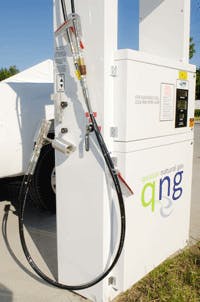
-Jay Schabel, CEO of RES Polyflow Schabel says initially he was not conscious of being part of a cluster, but that has changed as he has worked with NorTech. "Now I do emphatically for two selfish reasons. One, we need attention and people to believe that we are a real burgeoning industry. That has been a struggle and having NorTech helped put us on the map as something viable. I don't think we would be building our first commercial processor if that had not happened. "The other is that in creating an industry, we are seeing partnerships develop that probably would not have developed if we had not gotten into the mindset of being a cluster. I know my competitors and we all know that we are not really competing with each other. There is plenty of polymer waste to go around. We are competing with the disbelief that there is an industry or that we are viable, and with landfills, frankly, because that is where it is all going." Advanced energy has the potential to define the future of the country, says Caroline Henry, vice president, Marketing for quasar energy, but many of the companies in the industry are small. "NorTech with the cluster has increased the speed of innovation for companies like quasar by introducing us to local engineering firms, suppliers and customers with related capabilities and interests," she says.
"Could this be a good customer or the front end of an industry that is going to develop?" he said. "It is a business development activity for us. It is good for Rockwell as a learning experience and from a base growth perspective."
The value of clusters to manufacturing has been championed by the Obama administration. In May, it announced a $26 million multi-agency Advanced Manufacturing Jobs and Innovation Accelerator Challenge, a grant program expected to fund 12 projects that will "create jobs, grow the economy, and enhance the competitiveness of U.S. manufacturers in the global marketplace."
About the Author
Steve Minter
Steve Minter, Executive Editor
Focus: Leadership, Global Economy, Energy
Call: 216-931-9281
Follow on Twitter: @SgMinterIW
An award-winning editor, Executive Editor Steve Minter covers leadership, global economic and trade issues and energy, tackling subject matter ranging from CEO profiles and leadership theories to economic trends and energy policy. As well, he supervises content development for editorial products including the magazine, IndustryWeek.com, research and information products, and conferences.
Before joining the IW staff, Steve was publisher and editorial director of Penton Media’s EHS Today, where he was instrumental in the development of the Champions of Safety and America’s Safest Companies recognition programs.
Steve received his B.A. in English from Oberlin College. He is married and has two adult children.