Reshoring on the Banks of the Gulf: A Houston Story
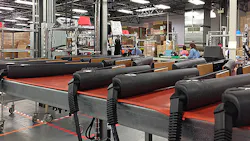
Reshoring doesn’t seem to be a fringe trend in Houston. Rather, it seems to be more of the norm.
Maybe that explains why Houston already has recouped all of its job losses from the recession. Or why the 10-county MSA represents 23% of the state’s economy.
In any case, three very different companies recently decided to move manufacturing back to the states, to Houston, for very similar reasons.
An American Style
Farouk Shami, executive chairman and founder of Farouk Systems, a manufacturer of the CHI and Biosilk hair and spa products, in 2009 moved operations in Korea and China to Houston, the home of its global headquarters.
Shami, who characterizes himself as an “American by choice,” said he wanted to do his part to spur the U.S. economy.
“We need to bring jobs back,” said Shami.
In explaining his reasons for bringing manufacturing to Houston, Shami sounded like an ambassador for the city.
“Houston is God’s country,” said Shami, who donned a pair of CHI-branded cowboy boots.
His reasons varied — from the climate to the international melting pot of residents to the accessibility of the city — but, in the end, the premise was: he could manufacture products in the U.S. at comparable costs to Asia.
But, indeed, Shami has embraced Houston as home both for himself and for his company. The exterior of one of the two manufacturing facilities Farouk’s operates in Houston is decorated with blue and red stripes and stars, paying homage to the state.
A Bit of Green in the Red, White and Blue
Just last year, John C. Higgins, president and CEO of Neutex Advanced Energy Group, decided to forgo operations in Shanghai, China for Houston, his hometown.
He renovated a former hospital into the new site of his LED manufacturing company.
His decision was one made by dollars and sense.
In moving manufacturing to the U.S., Higgins was able to automate processes, thus cutting workforce numbers and improving quality control. In China, he said, five workers were doing the work of one in the U.S. On top of that, he eliminated the language barrier and gained greater control of product delivery.
“Those trends, while they seem small…make a difference over time,” Higgins said.
Houston became his port of call because it: has a transportation network of railroads and highways; is a diverse city with an unskilled and skilled labor pool; has accessible and welcoming city officials; has established colleges and universities with which the company could partner; and has a number of C-level executives who call Houston home.
“Everything about Houston made sense,” Higgins said. “Most other cities are not as progressive as Houston is.”
Plus, Higgins said, it would be a true test of his company if it could succeed as a manufacturer of LED lighting in the energy capital of the world.
Fueled by Demand for 'Made in America'
Toshiba Industrial Corp. in 2011 moved production of its hybrid electric vehicle motors from Japan to a 45,000-square-foot warehouse in its manufacturing complex in Houston. The move was driven by customer demand for U.S.-made products, which would reduce currency risk and shorten the supply chain, said Matthew Bates, plant manager of the HEV plant.
Before relocating, Toshiba set up a training plant in Japan, using the same equipment that later would be shipped to Houston, and brought 40 U.S. employees to the site to learn the operations from the Japanese workers. The company then moved the equipment to the states, sending 15 Japanese workers to Houston to further train employees.
The highly-automated plant, which manufactures HEV motors and HEV generators for Ford’s hybrid vehicles, now has 120 employees and is working at full capacity.
About the Author
Ginger Christ
Ginger Christ, Associate Editor
Ginger Christ is a former associate editor for EHS Today, a Penton publication.
She has covered business news for the past seven years, working at daily and weekly newspapers and magazines in Ohio, including the Dayton Business Journal and Crain's Cleveland Business.
Most recently, she covered transportation and leadership for IndustryWeek, a sister publication to EHS Today.
She holds a bachelor of arts in English and in Film Studies from the University of Pittsburgh.