5 Reasons Why You Need to Know Your Supplier's Supplier

Multi-tier supply chain visibility is no longer just a pipedream -- market leaders in every industry segment have visibility not just into their important tier 1 suppliers, but at least a limited cross-section of their tier 2 and tier 3 suppliers as well. This article will discuss why organizations, especially those who outsource manufacturing operations, can improve operational capabilities with better connectivity with and visibility into all tiers of their suppliers in the business network.
Outsourcing is increasingly becoming a key strategy to lower costs, reduce capital assets and get products to market more efficiently than the competition. According to IHS Isuppli, the total electronic contract manufacturing market continues to hold in 2012, after posting a solid growth in 2011. Industries such as pharmaceuticals are leaning towards outsourcing clinical trials and manufacturing.
But at the same time, outsourcing has led to increased complexity and less visibility and control over the manufacturing process -- as the key planning and execution data resides outside the four walls of the enterprise. Electronic connectivity with suppliers alleviates this issue by providing critical visibility and control that OEMs need. But why not just connect with the first tier of your supply base and then let them manage their suppliers?
Below are five key reasons why manufacturers need multi-tier connectivity:
Well-coordinated Product Launch and Wind-down
Two critical areas of focus in certain industries such as consumer products and technology are product launch and product retirement. In industries such as high technology where products have short lifecycles, most profits are made in the early weeks of the product launch before competition moves in. Coordination within the supply base is critical for ensuring that the production ramp-up goes smoothly (and is cost effective) in preparation for a product launch.
Similarly potential write-off liability can rapidly accumulate in fast-moving industries if wind-down is not planned well. Multi-tier supplier connectivity provides the foundation for an OEM to coordinate closely with key suppliers (whatever tier they are at) and successfully execute these two product lifecycle stages for every product in a repeatable and predictable manner.
Better Day-to-day Coordination of Activities to Improve Key Operating Metrics
During on-going production, OEMs want ongoing visibility into availability of key components to ensure smooth production. Some of these components may be in short supply (such as flash chips in the high technology industry that may be coming from lower tier suppliers, or some automotive components being supplied in 2011 from plants in areas affected by the Japanese tsunami), or may be under allocation, so visibility is often very critical.
Multi-tier visibility provides OEM visibility into such components and enables them to proactively identify imbalances, errors and shortages and address them. It also alleviates the need for expensive shipment methods to meet delivery dates.
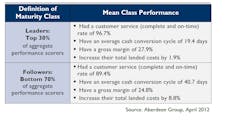
Finally, due to better coordination, cash-conversion metrics improve. According to analyst firm Aberdeen Group (see Table 1), by taking advantage of B2B collaboration, best-in-class companies show significantly better operational performance.
Better Plan Quality
One of the biggest challenges in fast-moving industries is that the planning cycles of various constituents are misaligned and starved for information, so the planning cycle takes a lot longer than the execution cycle of flow of actual products from contract manufacturer to the consumer retail point. Multi-tier connectivity can accelerate the velocity of information flow, which not only improves the quality of information used in the planning process, but also reduces the overall planning cycle time across the supply chain.
Better Supplier Performance Tracking and Metrics
In order to measure the performance of key suppliers (irrespective of what tiers they belong to), OEMs need to be connected to them so they can get better quality of data that is always current. By tapping into events as they occur (due to connectivity within the supply chain), they can measure not only ongoing performance metrics but other information such as supplier’s flexibility and effectiveness in executing against electronic signals (vs. phone calls) so that cost of processing within a supply chain can be reduced. Better supplier performance information also allows them to improve their sourcing process.
Reduced Supply Chain Risk
A recent McKinsey report identified that reducing supply risk is one of the top priorities of industry executives. By improving visibility into a supplier’s delivery plans, shipments and status changes, organizations can more closely coordinate their activities with a supplier. This enables them to improve predictability, proactively address issues and have more time to react faster to any surprises.
In its research report on the top 25 supply chains of 2012, analyst firm Gartner came to a similar conclusion: “Beyond absolute financial performance, the ability of a company to consistently post industry-leading results year after year, despite demand and supply disruptions, is an indicator of resiliency.”
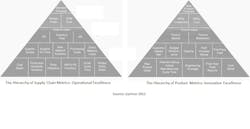
Better visibility into and coordination with suppliers and using it to proactively take actions, as well as better communication of demand/changes to suppliers, can enable organizations to get closer to their goals of operational and innovation excellence. Figure 1 shows the hierarchy of supply chain and innovation metrics in an organization. Multi-tier supply chain connectivity that leverages a business metwork can significantly improve these metrics for any organization.
Combined with a business network, multi-tier supply chain visibility is one of those capabilities that can enable an organization to reduce costs by achieving operational and innovation excellence, reduce supply risk and improve profitability from newly introduced products – all sources of competitive advantage in any industry.
Siddharth Taparia is the senior director of portfolio and strategic marketing at SAP.