Paper Manufacturer Protects its Assets while Reducing Emissions

Just as homeowners are more likely to renovate their current homes rather than purchase a new one when the economy is soft, so too are many manufacturers opting to maintain and repair their existing equipment rather than making substantial capital investments in new systems. According to Ralph Rio, research director at analyst firm ARC Advisory Group, there’s been strong growth in the adoption and usage of maintenance management systems, and that growth has been propelled by four key factors: uptime, cost control, asset longevity and safety.
Enterprise Asset Management in 25 Words or LessEnterprise asset management (EAM) is the management of the assets of an enterprise across departments, facilities, business units and geographical locations.Source: Techopedia.comAfter a few down years due to the recession, the market for so-called enterprise asset management (EAM) solutions has rebounded, reaching $2.2 billion in 2011. Rio sees this market continuing to expand over the next several years, reaching $3 billion by 2015. EAM solutions typically include several areas of functionality required by maintenance organizations, he notes, including: asset information management, work order management, MRO materials management, labor management and service contract management. But that’s just for starters. Some companies, for instance, are adapting this maintenance-centric technology to reduce their carbon footprints as they get a better handle on their energy usage.
Reaping Energy Savings
The paper industry is one of the largest emitters of carbon dioxide, which is one of the reasons why Mohawk FinePapers Inc. uses an EAM solution from Infor to reduce energy consumption throughout its plants. The Cohoes, New York-based company, a privately owned manufacturer of fine papers and envelopes, has five energy-intensive production facilities, with the capacity to process 175,000 tons of paper per year.
Energy is Mohawk’s largest operating and maintenance expense, explains Paul Stamas, the company’s vice president of IT, accounting for 60% of the cost. With the expectation of energy costs continuing to rise at an annual rate of 10%, Mohawk made the decision to leverage EAM technology as part of its overall operations strategy.

“The goal of the EAM project is to get better visibility into the lifecycle of our plant equipment and to optimize the performance, quality and efficiency of our machines,” Stamas says. “The trick is doing that with the least amount of energy consumption, thereby reducing our energy costs and also our carbon emissions.”
The company basically adopted the EAM software to schedule preventive maintenance on its production equipment, which had the immediate impact of improvements in the way of more proactive inspections, calibrations and repairs. The solution had an unexpected side benefit as well.
“As machines performed better through improved maintenance, our total energy consumption was decreasing,” Stamas says. “We realized that a more sustainable approach would be to drive down energy consumption in the first place through better energy management at the asset level, which also makes financial sense.”
Indeed, the company has saved hundreds of thousands of dollars in energy costs as the EAM solution has helped lead to a 15% reduction in energy consumption. Stamas notes that Mohawk expects to save an additional 15% to 20% in further energy savings thanks to what he describes as “a shift from asset management to asset sustainability.”
Quotable
The Time is Right for Natural Gas
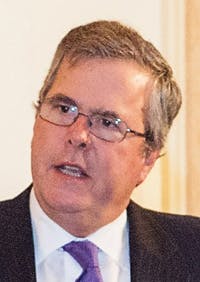
“For the first time, alternative energy sources, like natural gas, are being wholeheartedly embraced by American entrepreneurs as a way to lessen our nation’s dependence on foreign oil. An acceptance of natural gas, which is abundant in North America, could cut our dependence on foreign sources by half. We need our government to support the transportation industry at this transformational moment instead of blocking it with extreme regulations and taxes.”
—Jeb Bush, consultant and former Florida governor, at the AmeriQuest Transportation Industry Symposium
About the Author
Dave Blanchard
Senior Director of Content
Focus: Supply Chain
Call: (941) 208-4370
Follow on Twitter @SupplyChainDave
During his career Dave Blanchard has led the editorial management of many of Endeavor Business Media's best-known brands, including IndustryWeek, EHS Today, Material Handling & Logistics, Logistics Today, Supply Chain Technology News, and Business Finance. He also serves as senior content director of the annual Safety Leadership Conference. With over 30 years of B2B media experience, Dave literally wrote the book on supply chain management, Supply Chain Management Best Practices (John Wiley & Sons, 2010), which has been translated into several languages and is currently in its second edition. He is a frequent speaker and moderator at major trade shows and conferences, and has won numerous awards for writing and editing. He is a voting member of the jury of the Logistics Hall of Fame, and is a graduate of Northern Illinois University.