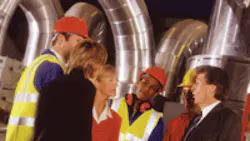
For some U.S. manufacturers, the plant floor has become a mini United Nations. Their workplaces are populated with employees from several different countries, and for some of those workers English is not their primary language, if they speak it at all.
The diversity of cultures and languages can provide rich learning opportunities among the workforce. However, it also presents challenges in an area in which many manufacturers struggle already: safety. Does putting up safety signage in multiple languages meet the needs of the workforce? Does that worker who understands spoken English have a grasp of the written language? And language aside, what impact might cultural beliefs have on developing a workplace dedicated to safety excellence? Get those answers wrong and the results can be costly.
It is a challenge, admits Michael Topf, owner of Topf Initiatives, an organizational effectiveness training and consulting firm that specializes in safety training. The first steps to meeting the challenge are recognizing that diversity and language differences exist, and then understanding how the differences influence workplace safety, as well as production and quality, he says.
"They are all tied together. The same misinterpretations because of language can produce a poor quality job or get [workers] hurt or sick or pollute the environment," Topf says.
To that end, it is important to provide signage, training and instructions in the languages needed by the workforce. If there is a large population of employees who speak a single language -- Spanish, for instance -- it may make sense to require bilingual skills of a supervisor or lead position to provide adequate communication on an ongoing basis.
Safety Requires Ongoing Conversation
The heart of safety is communication, and it must be an ongoing conversation, Topf says. Therefore, it is important to train people to lead, counsel and communicate to make sure the workforce understands what needs to be done, how it needs to be done and the necessity of performing the work safely. Managers must be willing to intervene constructively if necessary, then follow up and reinforce safe behaviors.
Even the worker who speaks English may not be fluent in understanding the language. Because of this, Topf says it is important that a manager ask, "Am I taking the time you need to understand what I said?" and make certain the communication is properly interpreted.
On the other side of the equation are mistakes companies make by not recognizing cultural differences in a diverse workforce. Topf says don't assume everyone has the same values or belief systems. For example, some people in the Latin American culture have an attitude of fatalism, "meaning it is in the hands of God." As a result, the consultant says they may not look at the use of personal protective equipment, for example, as having an influence on their personal safety.
Some workers have very macho attitudes that lead to taking risks or shortcuts with the idea that "it can't happen to me." "We've got to break through [such thinking] to say, Something could happen. Your safety is important to me. You're a valuable employee, and we want you to be safe,'" Topf says. "To be safe you've got to comply with the requirements. You've got to follow the procedures. This is essential."
He says workers from some Asian cultures may be less likely to report unsafe conditions. Keeping their job is the more essential issue. "Many people won't bring up things because they don't want to be labeled a troublemaker," the consultant says. "That's where your leaders need to be trained to communicate, coach, get people involved."
"We have to show our concern, our caring for people, regardless of where they come from. Show they are important to us and to the company and to the job."
About the Author

Jill Jusko
Bio: Jill Jusko is executive editor for IndustryWeek. She has been writing about manufacturing operations leadership for more than 20 years. Her coverage spotlights companies that are in pursuit of world-class results in quality, productivity, cost and other benchmarks by implementing the latest continuous improvement and lean/Six-Sigma strategies. Jill also coordinates IndustryWeek’s Best Plants Awards Program, which annually salutes the leading manufacturing facilities in North America.
Have a story idea? Send it to [email protected].