Apple Brand Could Become Casualty of FBI Tussle
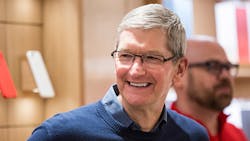
Apple is doubly vulnerable after taking a hardline public stance on encryption.
Not only does the company risk a defeat before judges who will decide whether it can legally oppose FBI demands to help it hack a terrorist’s iPhone, but it’s also susceptible to a setback in the court of public opinion.
The company is being portrayed by the government as soft on crime during an election year when candidates are already on record as saying the technology industry doesn’t do enough to help combat terror. Now polling shows that the public is divided on whether CEO Tim Cook is doing the right thing.
While it’s too early to gauge the impact on the bottom line, the standoff increases the likelihood that the fabled Apple brand develops as much of a reputation for its views on policy issues as it has for its must-have products. That’s a contrast to the days before Cook took the helm, when the company was less likely to air political views.
About half of Americans say Apple should unlock the iPhone to assist the ongoing FBI investigation into the San Bernardino attacks, which killed 14 people, according to a survey by Pew Research Center. Some 38% said Apple shouldn’t do so.
“There have been more incidents of terrorist threats, which have made the general public more responsive to the government being able to open someone’s phone, particularly someone like this,” said Michel Pham, who teaches branding and marketing strategy at Columbia Business School in New York. “It’s a risky proposition for Apple.”
Opinion is broadly split between two camps. On the one hand are those who agree with Cook that helping the FBI hack the handset would be a dangerous precedent that could lead to a stampede of foreign regimes demanding that Apple also help them access the phones of, for instance, political dissidents. On the other side are those who think that the company is hindering federal efforts to establish the extent of the San Bernardino terror plot, and is thereby endangering national security.
“They’re going to alienate some people if they release it, and they’re going to alienate some others if they don’t,” said David Reibstein, a professor of marketing at the University of Pennsylvania’s Wharton School. “For some customers it’s going to hurt, no question.”
Donald Trump was among the first to criticize Apple’s refusal to honor the court order to unlock the phone. The Republican presidential candidate urged supporters at a rally on Friday in Pawleys Island, S.C., to boycott the company. He later tweeted that he’ll give up his personal iPhone in favor of a Samsung device until Apple caves to the FBI’s demands.
The conflict risks diverting attention from a key pillar of Apple’s success as a brand: its products. When Interbrand ranked Apple the world’s most valuable brand for the third consecutive year in 2015, it highlighted both the efforts “to make people feel more secure” and how Apple “speaks directly about the merits of its product and its benefits to the user.” The brand is worth $170 billion, Interbrand said.
Staying on Point
Every time Apple veers away from talking about its iPhones, iPads and computers, it chips away at its image, according to Columbia’s Pham. Since taking over as CEO from Steve Jobs, who died in 2011, Cook has defended Apple’s tax payments before the U.S. Senate, been outspoken about social issues and instigated investigations into the company’s supply chain.
“The product is really what resonates with people — it’s a brand that makes cool products,” said Pham. “This is a brand that people hold in a special place in their hearts. Whenever the discourse moves to the brand being something broader than that it creates a little bit of danger.”
In some respects the conflict serves Apple, by highlighting the strength of its encryption to customers who are concerned about privacy, according to Wharton’s Reibstein. That’s particularly the case outside the U.S., where consumers are often less preoccupied with the same national security issues, he said.
“Apple can say, ‘We’re doing everything we can to fight for your security, even taking on the government’,” he said.
The most valuable company in the world might come out unscathed from both sides if it ultimately complies with the U.S. court order, but does so while “kicking and screaming” for the sake of customers, said Susan Hennessey, a fellow at the Brookings Institution. Yet Apple mights also be miscalculating how aligned public sentiment is with the values of Silicon Valley, she said.
“Apple is attempting to bolster their reputation within a smaller community that is not necessarily reflective of the general population of the United States,” Hennessey said.
So far the impact in the U.S. is evenly split: 24% of 1,002 respondents in an online survey told Piper Jaffray they viewed Apple more favorably as a result of the FBI tussle, while 23% said their view was less positive than before. That could change as the political debate about national security becomes more heated in the run-up to November’s presidential election.
One of the biggest risks is that Cook’s vocal and hardline stance could prompt Congress to take action, just months after the White House said it wouldn’t push for legislation to force companies to install “back doors” in their software for government access. At stake is far more than just fines and public image at Apple. The fight could help determine just how independent a broad swath of the technology industry will be of government tentacles in the U.S., and ultimately abroad.
“If Apple gets drawn into that broader political fight, that’s not going to be good for them,” said Steve Callander, a professor of political economy at the Stanford Graduate School of Business. “It’s easier to make enemies than it is to make friends. It’s going to be difficult for Apple not to be the focus of hatred or anger.”
By Alex Webb and Selina Wang
About the Author
Bloomberg
Licensed content from Bloomberg, copyright 2016.