Manufacturing Day 2026: Building a Strong Talent Pipeline in Florida
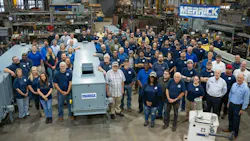
Ask a manufacturer anywhere in the country about hiring, and you'll hear about too few welders and machinists, fading high school shop programs and young people who don't yet see a career on the plant floor.
Small and midsize manufacturers can sometimes feel like they are navigating talent sourcing alone. Like a supply chain, a strong talent pipeline draws on more than one source. It requires qualifying more than one source, sharing specs early and investing in long-term relationships.
In Northwest Florida, where aerospace, maritime and advanced fabrication thrive, manufacturers collaborate closely with technical colleges, military installations and economic developers.
We’ve seen how to address workforce challenges from both sides. One of us runs Merrick Industries, a family-owned maker of weighing and feeding equipment. The other leads Florida's Great Northwest, the 13-county regional economic development organization for Florida's panhandle.
Here are five partners that can help and how to work with each.
1. Your technical and state colleges
Start with the technical and state colleges closest to your facility. Merrick employees sit on the welding advisory committee at Haney Technical College in Panama City, where they tell instructors what the company looks for in a hire, from skills to temperament.
Merrick's work is one-off, precision fabrication in a close-knit family culture. Once the college understood Merrick’s needs, it began sending candidates who were a stronger fit and more likely to stay. One welder joined Merrick before finishing his program, so the college adjusted his schedule to help him complete it. Today, he's expanding his skillset through additional machining training.
The same conversation should cover equipment. Merrick bought a handheld laser welder, and because no local program teaches how to use it, the company sent employees to Iowa for training. At $25,000 to $30,000 a unit, the laser welder is a hard ask for a school budget.
Merrick learned to tell colleges about new equipment before it arrived and ask whether other manufacturers need the same skills. When several employers share a need, a regional partner may find a way to share the cost.
2. The military talent pipeline
Some of the region's best-trained candidates learned their skills in uniform. About 5,200 people leave military service from one of Northwest Florida's six installations each year.
For employers, that experience is an opportunity. When we read a veteran's resume, we see years of training someone else already invested in. The discipline and the habit of showing up are already there. Veterans also find a familiar culture at Merrick. The owner has a military background, all branches are represented and many employees wear red on Fridays to honor those who serve.
If your plant is near a military installation, ask your economic development organization what resources are available to connect with transitioning service members. Florida's Great Northwest partnered with the University of West Florida Haas Center to study the transitioning military workforce across the region's six military bases.
Two findings stood out. First, many already hold security clearances, which can save employers in defense-related work months of waiting and thousands of dollars per hire.
Second, forecasts indicate that a steady pipeline of veterans will strengthen the local talent pool— bringing proven leadership, exceptional adaptability and specialized credentials such as active security clearances.
3. Your regional economic development organization
While economic development organizations recruit new companies to the region, their quieter work is as a regional convener. They’re well-positioned to hear a need and find a solution that serves more than one employer.
Merrick's laser welder shows how that works. One school may not justify the cost. Several manufacturers with the same need, working with technical colleges in neighboring counties, might. A regional organization can see those patterns across county lines and bring the right partners together.
Recruiting new companies can benefit existing ones, too. When IAG Aero Group, a jet engine maintenance company, expanded in Bay County, it donated a GE engine to Haney Technical College's airframe and powerplant program. Students now train on equipment they'll see on the job, and the employers who hire from that program benefit.
4. Your state manufacturing network
Some partners can carry the structure that you may not have the staff to build.
Merrick doesn't run a formal apprenticeship of its own. Instead, two employees are in a Society of Manufacturing Engineers apprenticeship administered through FloridaMakes, Florida's Manufacturing Extension Partnership, which handles the curriculum and administration. Merrick supervises the work and reports on-the-job hours.
For a company without a training department, that split makes apprenticeship realistic.
5. Your own employees
The last partner is already on your payroll. Your employees know the work and who will fit, so Merrick pays a referral bonus when a new hire stays 90 days.
Keeping people, however, matters just as much as finding them. Merrick is competitive on pay and benefits, but culture is what makes people stay. When both parents work, sometimes on opposite shifts, Merrick recognizes the importance of family obligations and will work with employees to provide reasonable scheduling flexibility.
For young hires, Merrick takes time during the job offer and onboarding to walk through health insurance and the 401(k) match one-on-one. Those conversations feel more like mentoring, helping new employees see the long-term value of those benefits.
The Talent Pipeline Is a Team Effort
Like a supply chain, a talent pipeline is stronger when it draws from more than one source. Manufacturers who show up at these tables, with a clear ask and something to give, are better positioned to build workforces that last.
That makes partnership worth weighing when you decide where to grow. Ask how well a region's colleges, military installations and economic developers already work together.
About the Author
 Jennifer Conoley
President & CEO, Florida's Great Northwest
Jennifer Conoley is President & CEO of Florida’s Great Northwest, providing the executive leadership and strategic vision necessary to drive economic growth across the 13 counties in Northwest Florida.
 Todd Miller
General Manager, Merrick Industries
Todd Miller is general manager of Merrick Industries in Lynn Haven, Florida, a maker of dry bulk weighing and feeding systems since 1908.