Telsa Preps End of Two Auto Models as Autonomy Focus Grows
Tesla Inc. will by summer “honorably discharge” two of its car models as it continues to dedicate more attention and lots more money to autonomous vehicles and robots as well as energy storage.
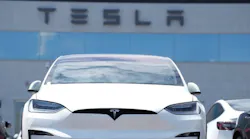
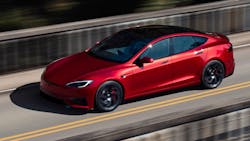
CEO Elon Musk said Jan. 28 that Austin-based Tesla will “basically stop production” of the four-door sedan Model S and mid-sized SUV X vehicles during the second quarter. Sales of those vehicles have tailed off significantly in recent years: Even though Tesla doesn’t break out the sales of individual models, the S and X are included in its ‘other models’ group (which also includes the Cybertruck) that last year produced 53,900 vehicles. That figure was down from more than 94,000 in 2024 and more than 20% below 2022’s production figures, which don’t include the Cybertruck.
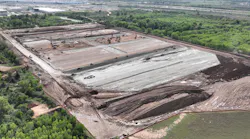
Tesla will soon begin to convert the Fremont, California, factory that makes the S and X models into a plant dedicated to manufacturing Optimus humanoid robots. The long-term goal for that switch, Musk said after Tesla reported a big drop in fourth-quarter profits compared to late 2024, is to produce 1 million robots annually.
“It is time to bring the S/X program to an end,” Musk said on a conference call with investors and analysts. “It’s part of our overall shift to an autonomous future.”
That shift will require a mountain of investment dollars: CFO Vaibhav Taneja said 2026 will be a “huge investment year” for the company as it overhauls the Fremont plant as well as the supply chain that feeds Optimus production and expands capacity for its Cybercab autonomous vehicle, the Semi heavy-duty truck, a battery factory and other projects. Taneja said capex could top $20 billion this year, a figure that would be more than 2024 ($11.3 billion) and 2025 ($8.5 billion) combined.
Taneja and Musk also said that Tesla’s investment plans could grow even bigger and last longer as they contemplate spending billions more to create a more vertical Tesla that makes its own semiconductors and solar cells. Musk said he could see Tesla building a chip plant “in three or four years” to improve its supply and help protect it against geopolitical risks.
More broadly, Taneja said Tesla’s “big aspirations” around autonomy and robotics mean the company has entered an investment phase that has a longer tail.
“When you look at it, some of these aspirations are—I call them an infrastructure play,” Taneja said. “If we have to do a chip fab and we have to do a solar cell manufacturing fab, those are infrastructure plays and that funding takes a little bit longer. And you would be in an investment cycle for a little bit longer.”
Related to that broader push, Tesla leaders also disclosed that they invested $2 billion earlier this month in xAI, Musk’s artificial-intelligence holding company. Taneja said the move ties into Tesla’s growth plan because it lets the company lean on xAI’s Grok large-language model and other AI tools. Musk said one possible use would be to have Grok be “the orchestra conductor for the Optimus robots” on various projects.
Shares of Tesla (Ticker: TSLA) were down about 1.5% to about $424 in early trading Jan. 29. Over the past six months, they have risen more than 30%, which has pushed the company’s market capitalization to more than $1.4 trillion.
About the Author
Geert De Lombaerde
Senior Editor
A native of Belgium, Geert De Lombaerde has been in business journalism since the mid-1990s and writes about public companies, markets and economic trends for Endeavor Business Media publications, focusing on IndustryWeek, FleetOwner, Oil & Gas Journal, T&D World and Healthcare Innovation. He also curates the twice-monthly Market Moves Strategy newsletter that showcases Endeavor stories on strategy, leadership and investment and contributes to other Market Moves newsletters.
With a degree in journalism from the University of Missouri, he began his reporting career at the Business Courier in Cincinnati in 1997, initially covering retail and the courts before shifting to banking, insurance and investing. He later was managing editor and editor of the Nashville Business Journal before being named editor of the Nashville Post in early 2008. He led a team that helped grow the Post's online traffic more than fivefold before joining Endeavor in September 2021.