We Needed Automation to Reshore Our Supply Chain
Key Highlights
- TAC Industries in Springfield, Ohio, where people with disabilities work alongside nondisabled people, makes cargo nets for the Air Force.
- Attempts to reshore TAC's hardware suppliers from Asia to the United States intially fell short as parts assembly costs were too high.
- TAC then tried a different tack: Ask domestic manufacturers to invest in automation. One supplier said yes.
- Today 100% of TAC's product is manufactured in the U.S., lead times are shorter, throughput has increased and the workforce is performing more complex tasks.
As a longtime federal contractor for the United States Air Force, one thing has become increasingly clear to me: Securing the supply chain and mitigating foreign dependency is no longer a long-term goal. It is mission-critical, and the time to act is now.
That urgency hasn’t just changed our supply chain strategy; it has reshaped our entire approach to manufacturing.
Costs Too High at Home
TAC Industries manufactures cargo nets for the 463L pallet system for the Air Force. These nets are used for the warfighter in humanitarian and other logistics missions around the world. They are made up of nylon webbing, thread and metal hardware. Each net system has over 150 pieces of hardware—all of which we were sourcing from Asia.
When we first pursued a domestic supplier for the hardware (the hooks, rings, adjustors, springs, rivets, pins and other metal components that go into every cargo net), we faced a seemingly insurmountable problem: cost.
The estimates came back significantly higher than what we'd been paying for overseas parts. Our customer, the U.S. Air Force, told us what any buyer would: The cost needed to come down. Reshoring the hardware and securing the supply chain was the ultimate goal, but at those prices, it just wasn’t going to happen.
Domestically, we could stamp metal fairly competitively against any overseas supplier. However, domestic suppliers couldn't compete on the price of assembly. The labor to assemble the parts was the largest cost driver by far, not the raw material. How do you compete with companies using labor at a fraction of the cost of domestic suppliers?
Investing in Automation vs. Price Matching
We had to change the request we were making of suppliers. Instead of asking domestic manufacturers to match overseas prices, we asked them to invest in automation to help close the cost gap for a long-term contract.
We issued RFIs and then RFQs, and we heard back from many companies with diverse methodologies and strong manufacturing practices. But the capital investment, timeline and uncertainty made it difficult for most to justify building something new around a contract that was not yet guaranteed. I don't fault them for that. Automation is a real investment, and there was no guarantee on when the contract would be awarded.
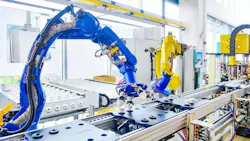
Ultimately, one supplier said yes. They agreed to completely automate the assembly of our hardware. We worked alongside them from equipment selection through installation and internal product testing. That partnership brought pricing into a range that the Air Force could accept.
After the production of the first article and several months of rigorous testing, we received a new multi-year contract requiring domestic hardware. As of June 1, 2026, every cargo net that leaves our production floor for the U.S. Air Force is 100% sourced and manufactured in the United States. That's the first time we can say that in at least 20 years.
This changed the game for TAC in ways that are hard to overstate.
Lead Times Drop Drastically
Here's what I didn't fully appreciate at the start. The price gap was real, but it wasn't the whole story. Once we reshored, our hardware lead times dropped from about six months to one. That matters for us, and it matters even more for our customers. The Air Force ramps up production when funding becomes available, and the ability to surge on demand is part of readiness. When order surges pushed production to two or three times the normal level, hardware lead times stretched to six months or more. Now we can do it in a month. Supply chain resilience is not an abstract concept when you're responsible for getting a mission-critical product out the door.
Workforce Advantage
Automation is what made this reshoring possible. The tactical advantage automation provided is huge.
Additionally, automation has also enabled us to build a workforce over the years that includes individuals of all abilities doing meaningful defense manufacturing work. The same kind of investment in modern equipment that helps our supplier assemble hardware cost-competitively also helps our team sew the cargo net and run a versatile, scalable production operation. We have increased our throughput by two and a half times. And the equipment gives people of all abilities the opportunity to contribute where their skills are strongest. And our automation isn't dedicated to one product. We can change products on the line.
Providing the best product for the customer means lower lead times, a quality product and on-time delivery at a fair price.
Tapping Into Manufacturing Extension Partnership
For manufacturing leaders looking at something similar, let me offer a few final thoughts:
Resources exist. We leaned on our Manufacturing Extension Partnership, which is part of NIST, for research and evaluation. That was especially helpful because we do not carry engineers on staff who specialize in every piece of automation equipment. Industry associations helped, too. You don't have to take the leap without a guide.
Change doesn’t happen overnight, and big changes in the defense supply chain sometimes do not move at commercial speed. But the payoff on the other side—a multi-year long-term contract, a more resilient supply chain and production capacity we can flex with demand—is why we kept at it.
One thing our operations team says often enough that it's worth repeating: If you're still doing things the way you did them 20 years ago, you are in trouble and do not know it. Someone else will automate. Someone else will cut the lead time. Someone else will match the quality. Sooner than you think, it’ll be too late to catch up.
I'd rather take the leap.
About the Author
Jim Zahora
CEO, The Abilities Connection
Jim Zahora is CEO of The Abilities Connection (TAC), a Springfield, Ohio-based manufacturer and longtime U.S. Air Force supplier. Under Jim's leadership, TAC manufactures mission-critical components for the Department of Defense while creating meaningful career pathways for individuals of all abilities through partnerships with AbilityOne and SourceAmerica.