Reshoring Turned the Lights Back on for Made-in-USA LEDs
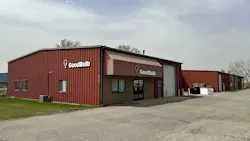
North Dakota-based lighting company GoodBulb operates the only factory in the United States that manufactures A19 LED lightbulbs. With the recent launch of its Fargo operation, GoodBulb is proving that products like these standard household bulbs, once thought permanently offshored, can once again be made in America. GoodBulb’s first American-made LEDs went on sale on July 4, 2026.
Offshoring the Standard LED Bulb
LED A19 bulbs became commercially widespread in the 2000s and 2010s. As demand for LED lighting accelerated and LED bulb manufacturing scaled, production shifted offshore to Asia, especially China, for lower costs. By about 2021, virtually all U.S. production of the standard A19 LED bulbs had ceased, until production returned in 2026 with the launch of GoodBulb’s new factory.
GoodBulb founder Tom Enright was confident the work could be successfully reshored with the right automation investments, operational orchestration and a well-trained workforce. Enright celebrated the effort as the return of an American industry, proclaiming: “We’re not just making bulbs, we're bringing an American industry home.”
Keeping the Lights on
Founded in 2015, GoodBulb produces commercial-grade lighting built for long-term reliability. As the company grew, Enright took on the challenge of reshoring the A19 LED bulb to the U.S.—something the industry had long considered economically unfeasible.
The company would spend eight years developing and refining the process. Enright traveled the world to learn how the bulbs are manufactured, then brought together the multidisciplinary expertise needed to build a customized advanced lightbulb production line.
Enright argues that lightbulbs are part of the nation’s critical infrastructure. “A country should be able to manufacture something as fundamental as its own light,” he has said. “We shouldn't depend on anyone else to keep the lights on. Making them here is not just the right thing to do; it’s the smarter way to run the business.”
Speed is the first advantage. GoodBulb can produce and ship same-day from Fargo, while importers typically face three-to-six week ocean freight timelines, port delays and limited capacity among brands using the same overseas factories.
GoodBulb’s second advantage of manufacturing at home is better production control that allows the company to avoid stockouts and offer custom or smaller batch runs.
Finally, there is the total cost. The offshore price doesn’t include freight, tariffs, container costs, minimum orders, the carrying cost of inventory and the extended time for warranty/rework. Add all of that up, and the total cost of ownership (TCO) gap is much smaller. Made-in-USA is also a marketing advantage.
The Development
GoodBulb produced its first U.S.-made bulb on June 10 and planned the July 4 launch in honor of the nation's 250th birthday. Development included mastering the temperature, humidity and static control that domestic LED production requires. The line is engineered to produce 10,000 bulbs per shift and uses over 100 feet of automation. As of this writing, Enright estimates the company’s practical maximum is about 8,000 bulbs per shift.
GoodBulb manufactures its own LED circuit boards, uses automation to build and package the bulbs and robotics to palletize them, all at the Fargo operation. But the electronic components are sourced overseas, a reality for all U.S. LED manufacturers.
Imported components are produced in enormous quantities for many industries beyond lighting, at a drastically lower unit cost.
The Line Is Built for Range and Flexibility
GoodBulb is launching 60W and 100W equivalents in four color temperatures —2700K, 3000K, 4000K and 5000K—starting with 90 CRI (color rendering index) and dimmable. Using a custom mold on the same line allows GoodBulb to add 75W-equivalent and 3-way versions across different colors. If you include dimmable vs. non-dimmable and CRI variations, that's a capability to produce at least 24 distinct SKUs from one production line.
Automation Key to Reshoring Effort
Factory automation offsets higher U.S. labor costs by dramatically increasing production volume while decreasing the cost of labor-intensive tasks. Automation technology made domestic production viable, purpose-built to enable this American manufacturer to compete on a global scale.
"Overseas factories compete on cheap labor, building and packaging bulbs by hand across dozens of workers. We knew we could never win that way, so instead we built a highly automated line, 140 feet of it, that enables a small, highly skilled team to produce at volume,” Enright explained.
The Importance of a Well-Trained U.S. Workforce
Building and training the workforce was as important as building the factory. GoodBulb worked closely with equipment and automation partners to train the team on the automated systems.
Cooper Bierscheid, chief operating officer at GoodBulb, brought engineering expertise and the vision of a two-time startup founder to the operation. His innovation approach to operational leadership, combined with the highly skilled, agile production team, has played a key role in making the reshoring effort a success. “You can't reshore a product like this without investing in the skills to run it,” said Enright.
More Reshoring Planned
In an effort to reshore as much bulb manufacturing as possible, GoodBulb plans to next invest in an injection molding machine to produce the diffuser in-house. This investment will move another major component onshore, pushing the U.S. content even higher. “The goal is to keep bringing more of the bulb home, piece by piece,” said Enright.
US-Made Efficiency vs. Imports
GoodBulb’s biggest advantages vs. imports are its exceptional lifespan and energy efficiency. It helps to see the market in three tiers. GoodBulb’s U.S.-made product delivers about two to five times the rated life of typical imports. The GoodBulb A19 is rated at 25,000 hours, while the vast majority of imported bulbs sold in the U.S. are short life with poor quality light. A smaller share has longer life but still subpar light quality. Only a small slice of imports offer longer life and quality light. In that top tier, GoodBulb is the cheaper option.
Are You Thinking About Reshoring?
Click here [https://reshorenow.org/resources/] to access the full list of Reshoring Resources offered by the Reshoring Initiative. For help, contact me at 847-867-1144 or email me at [email protected].
Have you reshored a metal component or product? Apply for the National Metalworking Reshoring Award. The 2026 winner will be honored at IMTS 2026.
About the Author
 Harry Moser
Harry Moser
Founder
Harry Moser, founder of the Reshoring Initiative, grew up experiencing the glory of U.S. manufacturing. With more than 45 years of manufacturing experience (most recently 25 years as president, chairman and then chairman emeritus of GF AgieCharmilles), Moser is a leading industry spokesman for reshoring and for developing the skilled manufacturing workforce required by reshoring.
The not-for-profit Reshoring Initiative ‘s Mission is to bring back U.S., and more generally North American, manufacturing jobs by helping companies see that, increasingly, they will be more profitable if they produce and source in or near their market.