A Real-Life Blueprint for Planning a Factory Expansion
Learning Objectives
- Define the steps your organization must take into account when planning a facility reconfiguration or expansion.
- Understand key considerations for the expansion.
- Identify constraints so that your project runs smoothly.
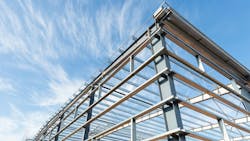
Modifying a facility’s production footprint and optimizing its process flow can dramatically improve efficiency and output. However, without proper planning, this challenging task can create inefficiencies, cost overruns and business-killing disruptions.
Here are the principles we followed in our recent work with a national manufacturer of power supplies and lighting fixtures to plan for a facility expansion and for process improvements to optimize workflow, efficiency and scalability.
1. Define business objectives and growth strategy.
The company’s 20-30% annual growth rate necessitated a 26,000-square-foot expansion at its New England facility. Key drivers included increased production capacity for its two key lighting product lines. Decisions needed to align with future automation and lean production goals.
Takeaways
- Align facility expansion with long-term business goals.
- Assess market demand, capacity needs and production forecasts.
- Align expansion with market demand and scalability.
- Future-proof the facility for automation, Industry 4.0 and emerging technologies.
2. Assess facility space planning and site constraints.
The company found that its north-south aisleway was a priority for factory flow efficiency. Natural light considerations influenced warehouse and storage rack orientations. A decision to expand the flexible lighting encapsulation room positioned the facility for planned additions of more encapsulation equipment and automation.
Takeaways
- Access structural and zoning constraints before expansion.
- Optimize the facility’s layout for both current efficiency and future scalability.
- Examine structural and environmental considerations: Soil, load-bearing limits, climate control and emissions.
- Build in flexibility for future growth. This could include modular design and scalable layouts.
3. Focus on process flow optimization: Minimize waste, reduce material handling, optimize movement.
The company analyzed its workflow from receiving to subassembly using process mapping. Process bottlenecks in handling long lighting fixtures and tray movement led to recommendations for portable tray carts. Shipping and receiving workflows were optimized to reduce staging clutter and improve efficiency.
Takeaways
- Use lean manufacturing principles and process analysis to optimize flow.
- Test workflow and layout models: U-shaped, straight-line, cellular or hybrid flow design.
- Minimize non-value-added material handling.
4. Consider equipment selection and placement.
The company planned for a second surface-mount-technology (SMT) line but decided against powder coating due to environmental issues. They considered an automated encapsulation process. They made the decision to allocate space in the expanded facility for CNC machining.
Takeaways
- Evaluate the cost vs. capability and capacity of new vs. existing equipment before investment.
- Evaluate the need for upgrades, relocation logistics and integration with legacy systems.
- Automation and robotics integration: Consider future automation with AI and IoT-enabled equipment and eliminate redundant or non-core operations.
- Consider maintenance access and downtime.
5. Make adjustments to supply chain and inventory management.
The company improved its receiving staging area with marked floor zones, optimized rack orientations and more incoming inspection capabilities. They took steps to reduce inventory and to organize the work area, applying 5S techniques.
Takeaways
- Reconfigure warehouse layouts and redesign material flow: raw material intake, storage, work-in-progress (WIP) and finished-goods handling.
- Implement just-in-time (JIT) instead of buffer inventory to reduce excess stock; make adjustments for new capacity.
- Consider the impact on supplier logistics: Lead times, shipping routes, dock configurations.
- Organize the area with 5S, and don’t forget the last two, Standardize and Sustain.
6. Evaluate workforce considerations and change management.
The new factory layout is designed for ergonomic improvements, such as lighter, more agile tray carts to reduce stress and strain. The company will train its teams on new workflows for the expanded facility. To promote a culture of lean implementation, they will employ kaizen events to refine their processes. They are cross-training employees in receiving, shipping, and the warehouse, documenting it in a cross-training matrix.
Takeaways
- Involve employees in layout planning to ensure their buy-in.
- Make ergonomics and safety improvements to minimize worker fatigue and injury risks.
- Workforce training and upskilling: Adaptation to new workflows and automation.
- Regularly communicate changes and gain employee buy-in, minimizing resistance to the expansion.
7. Incorporate energy efficiency and sustainability.
The company weighed the appropriate HVAC configuration for an expanded encapsulation room while exploring potential energy incentives with the local utility provider that can reduce equipment operating costs. As a lighting company, they also utilized one of their lighting design engineers to create an energy-efficient but bright lighting plan.
Takeaways
- Ensure that lighting, HVAC, and process improvements can support the expanded footprint in energy-efficient ways.
- Explore energy incentives from utility providers.
- Look into sustainable materials and waste-management plans.
- Explore energy-reduction strategies.
8. Analyze budgeting, ROI and cost control.
After first planning their expansion in two phases, the company analyzed the financials of the move and decided to opt for a single-phase final layout to minimize cost. They also decided to avoid moving expensive outsourced operations in-house after analyzing the specialized labor, environmental and equipment/tooling costs of doing so.
Takeaways
- Prioritize low-cost, low-disruption expansion strategies
- Assess whether outsourcing is more cost-effective than adding new in-house capabilities.
- Consider capital vs operational planning.
- Capex vs. opex planning: Leasing vs. buying equipment, construction cost estimates.
9. Configure regulatory compliance and safety plan.
A new compressed air system upgrade is planned to support the expansion and to anticipate future growth and automation; new factory restrooms are planned to meet OSHA capacity requirements as they grow their workforce.
Takeaways
- Plan for OSHA and environmental compliance from the outset.
- Design facilities with worker safety and comfort in mind. Minimize travel distances to facilities.
- Plan for fire suppression, hazardous materials handling and emergency exits.
- Integrate quality control and ISO compliance as appropriate.
10. Designate project execution and timeline management.
The executive team assigned a project coordinator to lead the expansion and move. The coordinator created a plan and is working with the building owner and internal operations to complete the building modifications and move operations with minimal disruptions. The building architect and lighting designer are working from CAD files of the final layout prepared by DPA. Kaizen events are planned to help teams refine workflows after the expansion is complete.
Takeaways
- Collaborate early with architects, engineers and lighting designers.
- Plan a phased implementation instead of a full-scale buildout to minimize operational disruption.
- Ensure cross-functional coordination with engineers, operators, finance, logistics and HR teams.
The facility layout and process improvement project represents a strategic, data-driven approach to optimizing space utilization, workflow efficiency and future scalability. By conducting an in-depth analysis of current operations, identifying key bottlenecks and developing multiple layout options, we provided the company with a roadmap for expansion that balances operational efficiency, cost-effectiveness and adaptability to future growth.
The final layout selected integrates critical elements—such as improved material flow, optimized workstation arrangements and provisions for automation—to meet increasing production demands while maintaining quality and safety. The plan minimizes disruption through detailed workflow enhancements across shipping, receiving and support functions in order to position this manufacturer for long-term success.
About the Author
 Mike Beauregard
Mike Beauregard
Senior Consultant, Daniel Penn Associates
Mike Beauregard is a senior consultant with Daniel Penn Associates. He is an international consultant and lecturer on the application of lean manufacturing and quality improvement techniques to manufacturing, warehousing, and distribution operations. He has held engineering, manufacturing, and plant management positions in the discrete parts manufacturing, plastics and chemical process industries. Mike is a registered professional engineer and a certified quality engineer. He is a ninth-time member of the Board of Examiners for the Malcolm Baldridge National Quality Award and served in two Connecticut quality awards as a senior examiner, team leader and instructor.