Take Control of Inbound Supply Chain to Keep Freight Moving
Key Highlights
- Proactively managing the inbound supply chain provides control over shipment costs and visibility.
- Orchestrating inbound shipments requires a cross-functional team to unbundle freight costs, work with suppliers and manage transportation.
- A mix of inbound transportation solutions can provide agility and flexibility and having a partner to help can ease the transition.
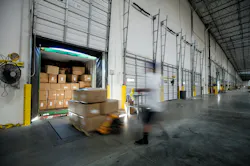
Disruptions have become a regular part of business. Extreme weather events, trade policies, international unrest, and supply shortages are some of the disruptions that can impact the entire supply chain. The result is empty shelves in retail stores or customers waiting on manufactured goods. Through conversations with senior executives across many industries, it’s clear that in this environment, controlling the inbound supply chain is increasingly viewed as a necessity.
Suppliers may have the best of intentions, but from a transportation point of view they lack scale or resources, which means they aren’t getting it done. Taking control of one’s transportation creates the opportunity to enhance freight status visibility of inbound shipments from suppliers to plants and distribution centers.
Increased visibility creates greater insight into potential disruptions, such as a supplier falling behind, allowing the company to implement a contingency plan to minimize the need for expedited transportation or the risk of failing a customer.
PREPARING FOR DISRUPTIONS
When companies execute more control over inbound transportation, it creates the potential to marry that with their outbound transportation to make a more effective and efficient overall network. Networks must be organized and possibly even reimagined to better coordinate inbound and outbound loads. Site selection, mode selection, routing, inventory and transport costs are all considered. Effective network optimization takes ongoing engineering support if the goal is to be best in class.
MAKING A CHANGE
Supply chain management is an orchestration across many functions, including procurement, finance and operations, and requires integration with trading partners such as suppliers and carriers. There are critical steps that take place from the conceptual stage in a boardroom discussion to reality.
Taking control over inbound supply chains is a team sport. It is critical to develop a cross-functional team, which typically includes the procurement department, the operations and logistics teams, and the finance group. Procurement must support the unbundling of freight costs from the cost of goods with suppliers. At the same time, service teams must rate transportation moves to ensure the underlying transportation is valued at market rates.
When switching terms with underlying suppliers, a critical organizational step is evaluating the value of the freight portions of purchases. Shippers will be working with suppliers to navigate changes in freight terms. Determining the freight spend of prepaid freight and negotiating rates must be done thoughtfully, and this is where a logistics partner can provide tremendous value and guidance.
Finance teams must navigate the proper accounting and establish processes to support the new transactions to be managed. Plus, technology is a significant enabler, offering the tools to create freight status visibility across the supply base.
Additionally, assets or a carrier base must be assembled to support the shipping activity. When the time comes for shipments to be managed, every load must get moved every day. Major suppliers will expect shippers to handle all of their loads once they take control of their freight terms. “However, it may only be practical for you to handle 300 of your loads. That is where a partner handles part of the solution,” Moses said.
FINDING THE RIGHT SOLUTION
There is a continuum of the greatest degree of control and the greatest degree of commitment within transportation. Shippers have a wide range of options, from buying or leasing trucks and hiring drivers to utilizing a packaged logistics program. A mix of solutions can provide the agility and flexibility many shippers need and can shift based on seasonal or operational changes. Below are three common options that can be used.
PRIVATE FLEETS
Successful fleet management often includes a combination of rented, leased and purchased vehicles, and shippers can evaluate routes, delivery days, times and volumes to identify and remove inefficiencies. Drawing on data from historical, current and predicted routes and volumes enables shippers to make informed decisions about the right mix of equipment and the optimal size fleet.
SUPPLY CHAIN MANAGEMENT SERVICES
Today’s supply chain is more complex, variable and demanding. With high delivery expectations, multiple carriers, capacity fluctuations and service compliance – all areas where costly disruptions can occur – supply chain management is more critical than ever.
A full supply chain management service can optimize transportation operations, coordinate suppliers, integrate supply chain technologies, and synchronize inbound and outbound logistics flows. It can also model and manage distribution networks.
DEDICATED CONTRACT CARRIAGE
Within dedicated contract carriage, specific trucking assets are dedicated to a customer account for a given contract length, providing buyers with core trucking capacity. Dedicated assets ensure capacity is always available and rates remain stable.
DCC provides all the benefits of fleet ownership: a safe, efficient fleet that’s under the shipper’s control, visibility into shipments and deliveries, professional drivers, and continuous improvement that’s measured and tracked.
WORKING WITH A PARTNER
Taking control of the supply chain is critical, but creating supply chain transformations requires conviction and alignment. Many companies have trouble when integrating functions across the supply chain, from manufacturing to end-customer deliveries. Whether it is ensuring raw materials keep production plants moving or products get to retailers, the C-suite is pushing for solutions.
It may create extra work for procurement teams or the finance groups to manage a shift like this, so it must be handled thoughtfully and properly. Creating a broad competitive advantage in competitive industries is vital, and that is where great leadership comes in.
Having a seasoned partner by your side will help you make a transition in a matter-of-fact way. Penske Logistics has pioneered inbound strategies for over 30 years and has the scale, resources and experience to help shippers meet broad industry challenges.
Overall success within sustainable operations means that most days run smoothly, and managing expectations and disruptions is the anomaly. Getting there takes process management discipline, which provides visibility stakeholders can rely on daily.
This content is sponsored by: