Strait of Hormuz Watch: Saudi Pipeline Damage Disrupts Alternative Crude Route
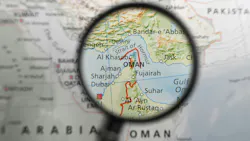
This summary explainer article is designed for readers to grab the latest details on the situation at the Strait of Hormuz, and the impacts that are being felt in manufacturing. Bookmark this article to return for breaking updates.
Latest update: 9/18/2026
- Status of Strait: Severely constrained, operating at a fraction of normal traffic.
- Status of negotiations:
- Direct U.S.-Iran talks remain stalled.
- Reuters reported on Sept. 16 that, according to China’s foreign ministry, Chinese Foreign Minister Wang Yi in a meeting with Iranian Foreign Minister Abbas Araqchi encouraged the U.S. and Iran to refrain from further escalation and return to the interim agreement.
- Latest statements: President Donald Trump told Axios on Sept. 17, “I have a big decision coming up. Do I want to go in and annihilate them [the Iranian regime] or do I not? It's a big decision. Anything could happen with me.”
- Latest developments:
- Following a drone attack, Saudi Arabia’s major East-West Pipeline has been mostly shut down for repairs, which could take around three to five weeks, according to the Associated Press. The pipeline is responsible for transporting crude to the Red Sea, bypassing the Strait of Hormuz.
- The United Kingdom Maritime Trade Operations (UKMTO) center has received multiple reports over the past week of vessels being struck by unidentified projectiles in and around the Strait of Hormuz. At least two of the incidents resulted in fires onboard vessels.
- Status of U.S. petroleum reserves: For the week ending Sept. 11, the U.S. Strategic Petroleum Reserve held 285 million barrels of crude oil, according to the U.S. Energy Information Administration, down from 285.4 million barrels the previous week.
Stats Tracker sources: UN Global Platform; IMF PortWatch; U.S. Energy Information Administration
Latest update: 9/11/2026
- Status of Strait: Extremely constrained, operating at a fraction of normal traffic.
- Status of negotiations: Direct talks between the U.S. and Iran appear to have stalled once again. When asked if negotiations with Iran are expected to restart, President Trump said, “We’re not looking for it, to be honest with you … Yes, a negotiation could possibly happen, but it’s not something we’re looking at.”
- Latest developments:
- The U.S. Central Command said that American forces have disabled or destroyed eight Iranian oil tankers over the past week after Iran attempted to target U.S. Navy warships with ballistic missiles. Several news reports indicate that Iran’s Islamic Revolutionary Guard Corps has claimed it struck eight oil tankers and two U.S. vessels. The U.S. has disputed that any of its warships were struck.
- The United Kingdom Maritime Trade Operations (UKMTO) center received a report of four unidentified projectiles striking two unknown vessels near Khasab, Oman. A fire was reported on one of the ships, and the status of the second vessel is unknown.
- Status of U.S. petroleum reserves: For the week ending Sept. 4, the U.S. Strategic Petroleum Reserve held 285.4 million barrels of crude oil, according to the U.S. Energy Information Administration, down from 286.6 million barrels the previous week.
Stats Tracker sources: UN Global Platform; IMF PortWatch; U.S. Energy Information Administration
Latest update: 9/4/2026
- Status of Strait: Extremely constrained, operating at a fraction of normal traffic.
- Status of negotiations: Vice President J.D. Vance said during a Sept. 3 White House press briefing that the U.S. is not currently talking to Iran and “we're not going to talk to them unless they stop shooting at commercial shipping.”
- Latest developments:
- The U.S. struck rocket launchers on Larak Island in the Strait of Hormuz on Sunday, Aug. 30, marking the first military action in Iran since late July, according to the Associated Press. AP reports Iran responded with its own strikes aimed at U.S. bases in Jordan. The exchange of strikes came nearly a week after the Trump administration announced Operation Economic Outcast, a campaign of economic sanctions intended to cut off Iran’s remaining sources of revenue.
- The United Kingdom Maritime Trade Operations (UKMTO) center received a report of a tanker transiting the Strait of Hormuz being struck by three unidentified projectiles on Aug. 31. A separate report on Sept. 2 notes a security incident involving a tanker that resulted in two casualties.
- Latest analysis: Ron Bousso, Reuters energy columnist, offered the following commentary for the Aug. 28 edition of ROI: Reuters Open Interest: “Oil prices initially eased this week after Washington's "economic D-Day" sanctions proved less disruptive than feared, and Oman-Iran negotiations raised hopes of a temporary shipping arrangement. Yet the conflict is hardening into a stalemate that could last well into 2027, with energy markets held hostage, inflation elevated and neither side willing—or able—to back down.”
- Latest statements:
- The U.S. Central Command said the Sept. 1 strikes “struck Islamic Revolutionary Guard Corps (IRGC) targets including air defense sites, radar systems, maritime assets and facilities, mine laying capabilities and communications sites. The strikes follow recent attempted attacks by the IRGC against commercial shipping in the Strait of Hormuz and against American service members.”
- Reuters reported on Sept. 1 that Iranian President Masoud Pezeshkian said at the Shanghai Cooperation Organization Summit that Iran would immediately reciprocate if the U.S. honors its commitments under the June interim deal.
- Status of U.S. petroleum reserves: For the week ending Aug. 28, the U.S. Strategic Petroleum Reserve held 286.6 million barrels of crude oil, according to the U.S. Energy Information Administration, down from 289.7 million barrels the previous week.
Stats Tracker sources: UN Global Platform; IMF PortWatch; U.S. Energy Information Administration
Latest update: 8/19/2026
- Status of Strait: Extremely constrained, nearly halted
- Latest development: The United Kingdom Maritime Trade Operations (UKMTO) center received a report that a bulk carrier transiting the Strait of Hormuz was struck by an unidentified projectile, causing a crew casualty and damage to the vessel.
- Status of negotiations: On Aug. 18, President Donald Trump wrote on Truth Social: “There are no talks or conversations going on, or scheduled, with the Islamic Republic of Iran. The Naval Blockade remains in full force and effect. The Hormuz Strait is open and operating. All water mines have been removed or detonated.”
- Status of U.S. petroleum reserves: For the week ending Aug. 14, the U.S. Strategic Petroleum Reserve held 293.4 million barrels of crude oil, according to the U.S. Energy Information Administration, down from 298.7 million barrels the previous week.
Stats Tracker sources: UN Global Platform; IMF PortWatch; U.S. Energy Information Administration
Latest update: 7/31/2026
- Status of Strait: Still severely constrained, operating at a fraction of normal traffic.
- Status of negotiations: After 13 nights of U.S. strikes against Iran, the U.S. and Iran paused direct strikes on July 24, renewing hopes for peace negotiations. However, the pause broke on July 28 as Iran conducted a missile attack on U.S. forces in Jordan, prompting the U.S. to resume strikes on July 29.
- Latest statements: The U.S. Central Command said the July 29 strikes against Iran “aimed to further diminish threats posed by Iran and its proxies to American forces, commercial shipping, and neighboring Gulf countries.”
- Status of US petroleum reserves: For the week ending July 24, the U.S. Strategic Petroleum Reserve held 307.7 million barrels of crude oil, according to the U.S. Energy Information Administration, down from 311.4 million barrels the previous week.
Stats Tracker sources: UN Global Platform; IMF PortWatch; U.S. Energy Information Administration
Latest update: 7/23/2026
- Status of Strait: Still severely constrained, operating at a fraction of normal traffic.
- Status of negotiations: Following the collapse of the ceasefire, prospects for peace negotiations continue to fade as U.S. and Iranian strikes escalate tensions. The Associated Press reports “the continued American airstrikes are occurring even as diplomatic efforts show little public sign of progress and officials on both sides have dug in on the dispute over the crucial waterway for global energy that remains largely closed.”
- Latest statements:
- On July 22, President Donald Trump wrote on Truth Social: “From this point forward, any time the Islamic Republic of Iran shoots at a ship in the Strait of Hormuz, whether it be by Missile, Rocket, Drone, or any other device or weapon, the United States will bomb and destroy ONE BRIDGE OR POWER PLANT, including those located next to, or in, the Capital City of Tehran.”
- The U.S. Central Command said the Iran strikes on July 21 “targeted Iranian military operations centers, maritime capabilities, aircraft hangars, drone storage facilities, and military logistics infrastructure to further degrade Iran's ability to threaten commercial shipping in the Strait of Hormuz.”
- Iranian Foreign Minister Seyed Abbas Araghchi wrote on X: “Our defense doctrine is clear: eye for an eye. Any aggression against Iran, including our infrastructure, will compel a powerful and decisive response.”
- Latest analysis: Madison Cartwright, Commonwealth Bank senior geo-economics analyst, told ABC News Australia, “The United States is not trying to win this war through its bombing campaign at the moment. What they’re trying to do is degrade the Iranian military’s ability to exercise any control over the Strait of Hormuz.”
- Status of US petroleum reserves: For the week ending July 17, the U.S. Strategic Petroleum Reserve held 311.4 million barrels of crude oil, according to the U.S. Energy Information Administration, down from 316.5 million barrels the previous week.
Stats Tracker sources: UN Global Platform; IMF PortWatch; U.S. Energy Information Administration
Latest update: 7/17/2026
- Status of Strait: Severely constrained, operating at a fraction of normal traffic
- Status of negotiations: The ceasefire has effectively collapsed as the U.S. and Iran continue to trade strikes. On July 15, President Trump in a Fox Business interview said of Iran, “We received a call just as I was coming here that they want to meet,” indicating the potential for future negotiations.
- Latest development: The U.S. Central Command has reinstated a blockade on vessels entering or exiting Iranian ports. Earlier in the week, President Trump said he would impose a 20% fee on vessels traversing the Strait of Hormuz, but he cancelled the proposal after consulting with Persian Gulf allies, according to the Associated Press.
- Latest analysis: Richard Meade, editor-in-chief of Lloyd's List, told CNBC International, “Where we are seeing ships going through is in the northern route, which is effectively the Iran-approved and controlled route where ships are moving under government-to-government agreements … What has stopped is the ships moving through the southern route. This is the ships traversing the Oman coast,” he said. “Shipping is again in a state of limbo … We’re just going to be in this cycle of escalation and de-escalation. Shipping’s really just sort of trying to play the windows when they open. I don’t see this really fundamentally changing until there is some stable, credible control system in place that shipping can trust.”
- Key supply chain impacts: Oil; LNG; Fertilizer
- Current status: Reuters reported Friday that “The re-escalation in fighting between the U.S. and Iran has once again largely stopped traffic through Hormuz … There were no Very Large Crude Carrier or liquefied natural gas tankers passing through the strait for a second day on Thursday.”
Status of US petroleum reserves:
- As of July 10, the U.S. Strategic Petroleum Reserve inventory sits at 316.5 million barrels of crude oil, according to the U.S. Energy Information Administration, down from 325.7 million barrels at the end of June.
Stats Tracker sources: UN Global Platform; IMF PortWatch; U.S. Energy Information Administration
Breaking news: 7/9/2026
- Latest development: In retaliation for attacks on three ships in the Strait of Hormuz, the U.S. launched two nights of strikes on Iran and revoked a license that allowed the country to sell oil openly on the world market, according to the Associated Press. Although Trump says he will let U.S. negotiators continue talks, he thinks the ceasefire is over and the negotiators are “wasting their time,” according to AP.
Latest update: 7/9/2026
- Status of Strait: Open to shipping traffic, reportedly at half regular capacity
- Status of negotiations: On July 8, President Trump commented on the status of the cease fire agreement, claining that "as far as I'm concerned, it's over." Negotiators from the U.S. and Iran had met with mediators for indirect talks, but according to Reuters made little progress toward a lasting agreement. Reuters reported that the Strait of Hormuz was a prominent discussion topic, despite the June 17 memorandum of understanding that outlines a 60-day plan to reopen the Strait. Plans to schedule the next meeting are in place, including a claim from Trump on Wednesday night that "they called a little while ago. They want to make a deal so badly."
- Latest development: The United Kingdom Maritime Trade Operations (UKMTO) center has received reports of attacks on three tankers transiting the Strait of Hormuz on July 6 and July 7. The first two incidents involved unidentified projectiles, while the third was struck by an uncrewed aerial vehicle (UAV). The first attack caused a fire, while the other two vessels are believed to have sustained structural damage. No casualties have been reported, according to the UKMTO. Iranian state television said the first tanker ignored warnings prior to the assault, but Iran did not claim any of the incidents, according to the Associated Press.
- Latest statements: At a July 6 media event in the Oval Office, President Trump made the following statement regarding the conflict in Iran: “We’re either going to make a deal, or we’re going to finish the job … I’d rather make a deal because I don’t want to affect 91 million people. We can knock down their bridges in one hour. We can knock out their energy supply.”
- Latest analysis: According to Yahoo Finance, JP Morgan strategists recently wrote to clients that the oil market may be "facing the risk of a temporary glut as trapped oil finally re-enters a system that has already spent months learning how to function without it," specifically mentioning a sharp drop in oil demand by key customer China since the conflict began in February.
- Key supply chain impacts: Oil; LNG; Fertilizer
- Current status: Tanker and dry bulk vessel transits are slowly recovering, according to IMF PortWatch.
Stats Tracker sources: UN Global Platform; IMF PortWatch; U.S. Energy Information Administration
-
Status of US petroleum reserves: As of June 26, the US Strategic Petroleum Reserve inventory sits at 325.7 million oil barrels, less than half of the authorized capacity, according to the Department of Energy. This is the lowest inventory level since May 1983, according to data from the U.S. Energy Information Administration.
-
What people are saying:
-
Amrita Sen, founder and director of market intelligence at research consultancy Energy Aspects, told CNBC, “The situation is still far from normal … Shipping costs are incredibly high right now, and you still can’t find enough shippers willing to go back in there. So, as long as the vessels that have been stuck are coming out is one thing, but in a few weeks’ time when we need vessels to go back in, that’s when the rubber is going to hit the road.”
-
“It’s a very difficult environment for row-crop farmers today,” Ben Klieve, equity research analyst at The Benchmark Company, told Reuters. “The prices of the grain that they’re producing have fallen sharply in recent weeks and are actually down relative to the pre-Iran war levels, while input costs like diesel and fertilizer remain significantly higher, so their bottom lines are only getting weaker.”
-