5 Essential Human Qualities as AI Reshapes Manufacturing Work
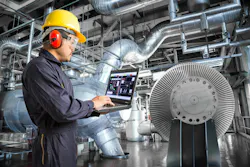
One broken soldering machine can bring a production line to a halt. At Siemens’ electronics factory in Erlangen, Germany, employees can now ask an AI assistant what went wrong and how to fix it. The assistant searches machine data plus roughly 600 documents, manuals and parts lists, instantly delivering information that used to take hours to find.
Having that information on demand also raises demands on employees. They can investigate more complex problems, yes. But they also have to be able to judge the validity of answers, spot what’s missing and decide when to call in an expert. When production is waiting, those decisions have to be both fast and sound. That means manufacturers now need to develop people for jobs that are changing faster than their hiring and training systems.
That challenge is already reshaping work well beyond manufacturing. Even at a company that builds AI, the hiring conversation is moving beyond technical skills to include how people think. At Anthropic, employee-directed AI agents are logging six hours of activity for every estimated human work hour, and its hiring increasingly emphasizes autonomy and judgment, while placing less emphasis on narrow technical expertise. That’s a shift every manufacturer should pay attention to.
Technical skills become more important every day as equipment grows more sophisticated and production systems become more connected. But alongside that technical training, workforce development partners need to help manufacturers prepare people to manage machines: to direct, evaluate and improve work they once performed themselves.
That means changing how we assess candidates and develop the people already working in our plants. Five human abilities deserve particular attention.
1. Deep curiosity
Every factory has problems that people simply work around. They enter the same information twice, adjust for a recurring defect or spend hours assembling a report.
A deeply curious employee keeps asking why. AI gives that person more ways to investigate, from finding patterns in production data to comparing possible causes of a defect.
Employers can develop and encourage such practices by giving employees a specific improvement to pursue. Choose a recurring problem, establish what it costs and ask the team to identify what they need to learn before proposing a fix.
Have a supervisor coach the investigation. Which explanation are we testing? What would disprove it? What did the last experiment teach us?
Those questions help turn curiosity into a repeatable way of improving the work. They also give employees practice deciding what information to ask AI for.
2. Willingness to keep learning
We don’t yet know all the ways AI will change manufacturing work. We need people willing to learn their way through those changes, including changes to the jobs they’ve spent years mastering.
The World Economic Forum predicts that 39% of workers’ core skills will change by 2030. Learning will soon become as continuous as production. As AI changes the tools, tasks and decisions people make, employees will need to keep changing how they work.
Look for people who seek feedback, challenge “how we’ve always done it” and try again when a new approach fails. During hiring, ask candidates about a time they had to change how they worked. What convinced them to change? What did they struggle with? What can they do now that they couldn’t before?
Existing employees need the same opportunity. Give them time to explore new tools, coaching as they apply them, and chances to share what they learn. Supervisors should be responsible for developing people alongside meeting production targets.
We’re asking employees to keep adapting. Employers have to make that possible.
3. Skepticism
AI can make nonsense sound like an engineering report.
We need employees who question everything: an AI recommendation, an established practice, even their own assumptions.
Teach people to identify which claims take priority. The wrong part number or maintenance instruction can have different consequences from an awkward sentence in a report.
During training, compare an AI recommendation with the records behind it. Ask employees what they would verify, which source they would trust and what remains uncertain. Capture useful checks in work instructions so the next employee benefits.
Experienced workers can help identify what AI overlooks. But their assumptions need scrutiny, too. “We tried that years ago” deserves a follow-up: What has changed since?
Before approving a recommendation, ask the team to identify its weakest assumption and explain how they checked it.
4. Critical thinking
AI makes it easy to skip the thinking and go straight to the answer.
Microsoft Research and Carnegie Mellon researchers surveyed 319 knowledge workers about their use of generative AI. Those who were more confident AI could handle a task reported doing less critical thinking.
That makes it important to examine how people reason, even when their answer sounds convincing.
In my final-round McKinsey interview early in my career, a senior partner pretended to take a call from President Barack Obama. He hung up and said, “The president wants a solution to Social Security funding instability tomorrow. Tell me how you would do it.”
The point was to see how I would think through an unfamiliar problem: what I would ask, which assumptions I would test and how I would organize the work.
Give candidates a realistic production challenge and evaluate their reasoning against consistent standards. Then introduce evidence that challenges their conclusion.
Watch whether they examine the new evidence, revise their recommendation and explain why. Automatically agreeing with the interviewer tells you less.
Use the same discipline in project reviews. Ask employees what changed their thinking and which evidence drove the decision.
5. Sound judgment
AI can give us more options than we have any business pursuing. Someone has to decide which deserve time, money and attention.
A schedule that keeps every machine busy could still make an important delivery late. A cheaper supplier could send inconsistent material that generates more scrap.
Judgment means weighing the consequences and recognizing the limits of your knowledge and authority.
Give employees practice choosing between improvements under real constraints: limited budget, scarce maintenance time and customer commitments. Ask what they would approve, postpone or reject, and what evidence would change the decision.
Review those choices with experienced colleagues before acting. Afterward, compare the expected result with what happened. That follow-through helps people improve their judgment instead of simply moving to the next assignment.
For a small manufacturer, continuous development could begin with one team, a recurring coaching session and a real problem to solve. A larger company can share tested approaches across shifts and plants. Both need scheduled learning time, someone responsible for coaching and a way to update guidance as tools and processes change.
There is also a harder question: How will employees develop judgment if AI increasingly performs the work by which they once learned it?
Back in 1983, psychologist Lisanne Bainbridge described what she called the “ironies of automation”: machines took over routine work, leaving people rusty when they had to step in and fix a problem.
Aviation addressed this through deliberate practice. Pilots trained to handle failures in simulators and kept practicing manual flying so they could take control when needed.
Manufacturers need to apply that lesson to AI by replacing the learning opportunities it automates. Machines become more capable through a simple software update. Developing the capabilities people need for the AI era demands a full upgrade of how we hire, train and develop our workforce. That upgrade needs to start now, so humans are truly ready to manage the machines.
About the Author
Ethan Karp
President & CEO, MAGNET
As President and CEO of MAGNET, Ethan Karp brings his wide range of experiences to drive economic prosperity in Northeast Ohio through innovation and invention. Prior to focusing on building the future of Ohio from its strength in manufacturing with MAGNET in 2013, Ethan advised Fortune 500 companies to innovate and grow with global consulting firm McKinsey in Cleveland. Ethan is a trained scientist who spent many years trying to uncover how the brain works while attaining a Ph.D. in Chemical Biology from Harvard and undergraduate degrees in physics and biochemistry from Miami University.