Why Are Your Employees Crying Union? A Labor Relations Expert Has Some Thoughts
Labor union activity has been trending upward in U.S. manufacturing since 2020, with 68 strikes and organized protests in 2025-2026 and 2023-2024, up from 39 in 2022-2023 and 40 in 2021-2022, according to the Cornell University/University of Illinois Labor Action Tracker.
While those numbers might seem relatively small, they coincide with pro-union sentiment in the U.S.—especially among younger workers—rising to levels not seen since the 1950s and 1960s. Union approval since 2021 has hovered in the 70% range, according to Gallup. (The record high was 75% in 1953 and 1957, with the all-time low at 48% in 2009.) The United Autoworkers Union had an important win in the South at the Volkswagen Chattanooga plant in Tennessee in 2023, and this year 96% of those union workers voted in favor of the union contract that gave them a 20% wage increase.
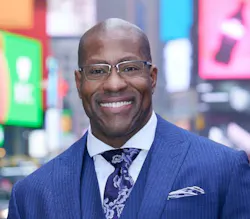
Jason Greer, president of labor management/employee relations firm Greer Consulting in St. Louis, has seen the changing labor tides since he was a field examiner for the National Labor Relations Board in the early 2000s. Much of the work he’s done in labor relations has been in the manufacturing sector and the military, with clients including Nike, the U.S. Army and Keurig Dr. Pepper. He’s also helped employers navigate employee relations after the George Floyd murder in 2020 and through changing workplace diversity politics at the national, state and local levels.
Greer, who administered union elections and investigated unfair labor practices for the NLRB, in his current role often works with employers after the union comes in but before the election takes place.
In this interview with IndustryWeek, Greer talks about how worker dissatisfaction directly relates to leadership that poorly communicates with the rank-and-file and a culture where employees are expected to work harder and longer but aren't asked to contribute in other ways.
The gap between leadership and front-line workers is only growing, he says, as a new generation wants a voice as well as a paycheck—and is easily able to assess pay and workplace culture vs. peers in other places.
IndustryWeek: What trends are you seeing in manufacturing labor relations?
Jason Greer: It used to be that employees would file a petition with the National Labor Relations Board in terms of wanting to organize from the perspective that they wanted more money, and they would actually go all the way to the point where they were going to vote.
What we're seeing now is employees using the threat of bringing in a union in order to force companies’ hands. Whether it’s that the employees are looking for raises, better benefits, for better holidays or better overtime. Or just really, “We want you, management, to see us and to understand us. You spend no time with us. So this is really the only way we can actually get your attention.”
The only way to show employees that you care and hear them is to address issues and concerns in real time so employees do not believe they have to resort to the union bargaining chip in order to get the employer’s attention.
It’s less about “Let’s vote in a union” and more about the employees understanding that management will often bend over backwards to meet employees' needs once they raise the idea of union organizing. Most companies do not realize that they’ve conditioned employees to believe that they won’t be heard and have their issues and concerns addressed unless they say “We’re going union.”
The only way to show employees that you care and hear them is to address issues and concerns in real time so employees do not believe they have to resort to the union bargaining chip in order to get the employer’s attention.
We’re also seeing, when you consider the impact of the tariffs on the manufacturing sector, it's not just the executives that are feeling the impact. The employees are feeling it as well, because [tariffs] have led to employers freezing wages. It has led to employers freezing a lot of the benefits that employees were used to because management is trying to figure out how to work their way through these tariffs. Unfortunately, that onus is being put on the employees, which is then fueling the rise of labor unions.
What sorts of things are employees coming to the table with? What do they want? Is it just higher pay?
If we were having this conversation 10 years ago, I would say it's higher pay. What we're seeing now, especially with the employees being not only younger, but also more knowledgeable based on what they can find through social media and the internet as a whole, is different.
Any time you hear employees saying, “We want more money”—that's just the iceberg model. That's just the part that you can see, because it's the most it's the most tangible conversation they can have.
Underneath that, what they're looking for is the proverbial seat at the table. They might not like the disciplinary policies that are in place. Also, employees today—and we're talking the younger generation—typically want to know that their managers care about them.
You know, if you look at my father's generation, he was a baby boomer. You look at my generation, I'm a Generation X. We were more along the lines of, “It'd be great if my supervisor spoke to me, but nevertheless, I want to make sure I get my paycheck”
What we're seeing with younger employees is more of a feeling of, “Yeah, I do want to get paid,” but money is not their guide in the way that other generations place money. Now, it's more a matter of respect. It’s more a matter of, “We may not be making the decisions, but we still want to be part of the decision-making in terms of giving our input.
Any time you hear employees saying, “We want more money”—that's just the iceberg model.
What kind of mistakes are employers making in these discussions? What should they be doing that they're not doing?
A lot of employers, they're not making mistakes because they're ignorant. They're making them because they've just never been in this position before.
I see a lot of employers guessing as to why the employees are even thinking about organizing. So now, all of a sudden, they start buying the employees pizza after they work their shifts—they're working 12, 14 hours, and they spend more time at work than they do with their families.
Leadership will assume that this is all about pay raises, or they will assume it's about a number of things that oftentimes it's not.
What employers are not doing enough of is actually taking the time to listen to the employees. So they'll have these big town hall meetings. I see this happen, especially in manufacturing. You will have the CEO of the company, or the regional vice president, come in front of the employees, and believe it or not, employees are actually pretty excited that they get some face time with these folks. They might not show it, but they're pretty excited.
And then the regional vice president or the CEO will spend 30 minutes talking and might actually take five questions, and then will shake all the managers' hands, and they'll say, you know, “I think we got them.”
You didn't get anything because you didn't really spend time getting to know the inside of the employees. So that's the biggest mistake that I see.
Do you think town hall meetings are a good idea in general? Or is it better just to talk with smaller groups around the plant?
Town hall meetings are harder to manage because you have a bunch of people together, and it just takes one person to ask the right question, and it takes one leader to give the wrong answer, and all of a sudden you shift the entire tenor of the entire group.
The question that I ask every leadership team who's thinking about the town hall is, “Are you ready for the truth?” Because if you're ready for the truth, then we will do a town hall meeting. The truth is what the employees are going to ask you, and they need you to tell the truth in the answers that you give.
When I ask that question, and the answer from the leadership team is, “I'm not sure,” then I say, “Let's go ahead and do smaller groups. Let's go ahead and do departmental groups where you can get a feel for the employees. You can spend more time. It's more intimate. And even if you get it wrong, you have an opportunity to make it right in the end.”
If you're ready for an honest dialogue that might not necessarily go your way, do a town hall meeting. But understand that even if it doesn't go your way, people will respect you for being honorable enough to get in front of the employees and to give your truth, but to also listen to their truth.
If you want an opportunity to be more intimate, an opportunity to really get to know the employees while also allowing them to get to know you, then the smaller groups might be the best fit.
A lot of employers, they're not making mistakes because they're ignorant. They're making them because they've just never been in this position before.
Are you hearing much around mandatory overtime? I just wonder if you've seen resentment around people being forced to work 60 or 70 hours a week.
It's huge. But that's not necessarily a new trend; that's been going on for a long time. And part of the reason is, people typically say mandatory overtime is the issue. Mandatory overtime can stink for employees, but it's really the fact that you might have laid off five to 10% of the workforce, but now you're forcing those employees who are still there to take on the work of the people who were laid off.
Management sits back and says “Wait a minute, you're making more money. Why would you care?”
Well, it's not the fact that I'm making more money, it's the fact that you're taking me away from my family. You're taking me away from my hobbies. You're taking me away from rest, because sleep is important. Why is there so much work that I have to do mandatory overtime? Why did you get rid of the people that could have done the work with us?
If there's been no layoff, what I hear from employees is, “Yeah, the money is great, but why don't they hire 10 to 12 more people, and then maybe I don't have to spend 6½ days working here with only a half day to try to get rest and take care of my family.”
There were some wins for the UAW in the South, and they say they’re going to try again at Mercedes Alabama. Do you see momentum building in the South?
Let’s talk about the fact that in the South, you're talking about Right to Work states where employers generally took their their manufacturing might and put it in the South because they didn't have to worry about labor unions, and for the most part, they paid those employees less than what they have to pay them in other parts of the country.
What we're hearing and what we're seeing from workers in the South—again, the internet and social media has been a powerful tool for recruitment for unions because if I'm in Alabama, and I'm looking at what I'm getting paid, and I happen to see a social media post where somebody who is doing the same job that I'm doing, but they're in Illinois, and they're making $5 to $6 more an hour than me, that's going to make me wonder, what is the difference?
The difference is not just regional; it's the fact that they're represented by a union. What I think the hardest thing for manufacturing companies in the South to combat is perception, and the perception is that the employees feel like they have been taken advantage of, and that's why you see the UAW.
The perception of the UAW 10 years ago was not nearly as strong as it is today, largely because they are speaking the language of the employees, and that's very hard to combat.
What we're seeing with younger employees is more of a feeling of, “Yeah, I do want to get paid,” but money is not their guide in the way that other generations place money. Now, it's more a matter of respect.
Where are we at with diversity, equity and inclusion in the current political climate?
What I've seen amongst my clients is they have kept many of the same policies. They just don't call it DEI anymore, as a matter of external marketing because of some of the venom that comes anytime a company formally announces that they are supporting DEI policies and procedures.
You have organizations that are calling it internally something along the lines of “togetherness” or just standard company policy.
Besides calling it something different, is there anything else manufacturers can be doing to keep these programs alive if they find them beneficial?
Let me tell you something an attorney told me. He's an in-house general counsel, and this was advice that he gave to his organization as they were grappling with the external heat that was placed on DEI in January, February 2025.
He said, “Let's keep the policies and watch how this thing blows over as people gravitate toward the next big media thing.” And lo and behold, they kept the policies and people gravitated toward the next big media thing.
They call him Nostradamus, because he has this ability to predict trends. But ultimately he understands that the majority of the people screaming about DEI don't even quite understand what DEI is.
And I think that shareholders and stakeholders tend to get a bit anxious around this topic, because no one wants to be perceived as being racist, or, you know, whatever adjective you want to use to describe somebody.
It's an American issue that anytime we talk about the inclusion of others, we're still grappling with what that means theoretically, let alone what that means in terms of applying that practically.
So the advice that I give to organizations as they grapple with the whole DEI thing is really the advice that the attorney gave: Keep it and understand that this thing might blow over, and if it doesn't blow over, take a stand. If that stand is “we respect the rights of all people, and we want to make sure that we have an inclusive workplace,” you might catch some heat externally, but I can't tell you the number of employees that I've come across in my career who said, “I was willing to go to another job because I was going to make more money, but I felt like my organization stands for something.”
So it's one of those things that, as we talk about DEI organizations, you sort of have to do the Potomac two-step. On one hand, you're pleasing the people external to you, but you really need the people internal to you who are going to drive your productivity to feel like you actually respect and recognize them.
Do you still see inclusivity as an engagement, retention and recruiting tool?
I believe so. I mean, when you look at one thing—it’s an alarming statistic. In December 2025, the percentage of African-American women who were unemployed was 7.6%, which is close to pandemic levels. It's only 2.4% away from “Let's hit the emergency button,” because we're talking about a high unemployment rate.
That number has since come down to about maybe around 6.3%, which is still high in itself. And I've had the opportunity to encounter a number of African-American women, both in the professional setting, as well as folks who reached out to me on LinkedIn, saying, “Can you help me find a job?”
And you look at their resumes, and it's extensive. You look at their academic credentials, incredible.
One of the things that many of them have said—and it's not a question that I've asked, but this is the stuff that they volunteer to me—is "I'm looking for an organization that, in some shape or form, is going to prize me, not just the fact I'm a Black woman, but in the fact that I bring a lot to the table."
About the Author

Laura Putre
Senior Editor, IndustryWeek
As senior editor, Laura Putre works with IndustryWeek's editorial contributors and reports on leadership and the automotive industry as they relate to manufacturing. She joined IndustryWeek in 2015 as a staff writer covering workforce issues.
Prior to IndustryWeek, Laura reported on the healthcare industry and covered local news. She was the editor of the Chicago Journal and a staff writer for Cleveland Scene. Her national bylines include The Guardian, Slate, Pacific-Standard and The Root.
Laura was a National Press Foundation fellow in 2022.
Got a story idea? Reach out to Laura at [email protected]