3D Printing Creator Chuck Hull on Additive’s Future
Key Highlights
- Additive was about prototyping tools from the very beginning.
- 3D printing is most profitable at the "front" and "tail" end of manufacturing.
- Transplantable 3D-printed human organs are the frontier for additive.

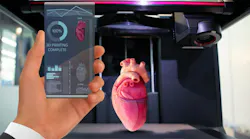
If you need a replacement organ, it is possible that one day a hospital could 3D print a heart just for you, tailored to your physiology, perhaps even replicating your heart perfectly. This is not science fiction. The creator of additive manufacturing is on the case.
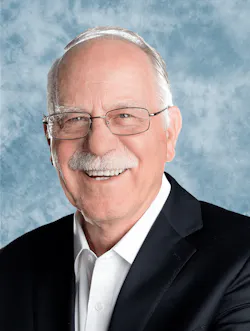
Chuck Hull in 1986 patented a 3D printing technique called stereolithography (SLA) which uses UV light to harden liquid polymers in layers to print a shape. He then co-founded 3D Systems, focused on rapid prototyping. The company has since grown into a juggernaut of the additive industry, with a focus on application development and success in the dental sector.
IndustryWeek had an opportunity to speak with Hull about his broad view of the additive sector and where he thinks the technology is going.
Dennis Scimeca: You filed for your SLA patent in 1984. It was granted in 1986. When you were doing this, did you have a vision of where additive manufacturing might grow in the future? What was your vision for the future?
Chuck Hull: My vision was I had a particular application in mind, which was basically rapid prototyping for plastic parts: verify the design, maybe use it a little bit for prototyping and maybe iterate, get it just right, and then take it off to production tooling. That's what I had in mind. I had maybe, vaguely some thoughts about other things you could do, but I was just focused on that [application].
DS: I imagine you had your doubters back then, with a brand-new technology. Were there common, critical sentiments you could think of?
CH: We started to start a company [3D Systems] in '86 and raised capital. I touted it as “the thing to help manufacturers,” and manufacturing back then was rapidly being offshored and…in the venture capital world there was very little interest in anything about manufacturing. So that was kind of the doubt about whether it would work or not.
I remember my wife tells a story. She was in college and told one of her professors what I was up to, and he goes, "What a stupid idea! You know, people have milling machines that can do this. They don't need anything else. And besides, if you do this, you're going to put people out of work.”
DS: Where would you say additive manufacturing has found its strongest role in the manufacturing industry?
CH: The applications are spread all over industry, and each one has to have some advantage: it's more cost effective. Manufacturing tooling is a big example. You can crank out tooling at a much lower price [with additive] than other ways.
The cost-effective time [for additive] is what I call the tails, the very front end and the very back end of manufacturing. At the front end you don't have all the startup costs of tooling and so forth. It's more cost effective to start a product with additive.
There are times when that tail end is more cost effective to use additive. A typical thing I'm thinking of is electrical connectors. … There are all kinds of volumes, all kinds of connectors, but those two ends, the tails, are where additive is very cost effective.
DS: Did you ever think additive would replace traditional methods of mass production?
CH: Probably not. Getting back to connectors, you can probably more cost effectively manufacture [with additive] than the traditional way, but there's very few applications like that because obviously size is an issue. The bigger a part, the longer it takes, and the less cost-effective it is.
We hope a lot of aerospace will eventually use [additive] in the production method for metal parts for spacecraft and aircraft and on and on.
DS: If a manufacturer wanted to take their first steps into additive, any thoughts on where they might want to begin?
CH: You start with a good application engineering department at an additive company. These are really smart, really skilled guys. They have all the experience of what works and what doesn't work in in additive … the additive manufacturing salesman shows up and says, "Hey, buy my machine." You might do that, but to successfully get into [additive] manufacturing, you need some wise counseling.
DS: How important do you think it is for manufacturers to have in-house talent in terms of working with additive?
CH: It depends on how much volume you have, but you certainly need somebody with a good background in additive who can help guide it and keep it going.
DS: Have you heard of Thingiverse? [Ed. note – Thingiverse is an open-source online repository of 3D printing files.]
CH: Sure. Yeah.
DS: Thingiverse represents additive manufacturing growing way past its roots in traditional manufacturing. Now it's become a household technology. You have people with 3D printers in their garages just for fun. Did you ever foresee that happening when you invented this technology?
CH: I don't think so. When the maker movement started…I quickly understood it, and to me the good thing about it is that people didn't used to know what 3D printing was or additive manufacturing was, and that whole movement changed that.
So now everybody understands. You know, 3D printer, “That's the thing my kid has in the garage.” They don't necessarily know [about] those rooms full of these [industrial 3D printers] around Detroit making things, but at least now it's a common understanding of what 3D printing is. I didn’t have a premonition of it.
DS: Are there any innovations in additive that really impressed you, to the point where laymen might not understand its full impact yet, but you can see where it’s going?
CH: I work in transplantable organs that are 3D printed. The 3D printers to do that are just amazing compared to anything else out there in terms of precision, and accuracy down to two or three microns. And not just [print tiny] parts but do it in parts that are a reasonable size.
Stuff that we said was impossible 10 years ago is now leading-edge technology. And the question is, are there other things given that capability you can do with the technology?
DS: I imagine you are familiar with the way engineering schools teach additive.
CH: I've helped edit textbooks for this in Europe, not in the U.S. And so I have a pretty good idea for the textbook certainly and for the curriculum.
DS: In your experience, is additive now accepted as a proven technology that engineers must learn to use, or is additive still more regarded as something good to know, but not a requirement to be a well-rounded engineer?
CH: I go to lots of engineering schools. They're all well-rounded. They all know additive. They use it, and they learn about it.
DS: Do you ever see opportunities for growth with additive that no one else seems to acknowledge yet?
CH: Well, I mentioned already human parts, for surgery and so forth, and that's starting to really take off, and will probably be the next the next frontier.
About the Author
 Dennis Scimeca
Dennis Scimeca
Dennis Scimeca is a veteran technology journalist with particular experience in vision system technology, machine learning/artificial intelligence, and augmented/mixed/virtual reality (XR), with bylines in consumer, developer, and B2B outlets.
At IndustryWeek, he covers the competitive advantages gained by manufacturers that deploy proven technologies. If you would like to share your story with IndustryWeek, please contact Dennis at [email protected].