4 Fundamentals on the Path to Autonomous Manufacturing
Key Highlights
- A unifying data fabric breaks down silos, providing seamless, actionable information across the enterprise to support autonomous decision-making.
- Software-defined control offers flexibility and scalability, allowing manufacturers to reconfigure operations quickly and extend control beyond individual plants.
- AI and digital twins enable predictive maintenance and autonomous optimization, shifting operations from reactive to proactive and autonomous states.
- Reliable instrumentation and advanced sensor networks ensure accurate data collection, forming the foundation for safe and effective autonomous systems.
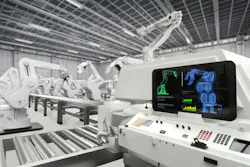
Industrial manufacturers today face a pivotal moment. Supply chain volatility, electrification, nearshoring and workforce shortages are converging with a powerful opportunity: The ability to operate more of their enterprises autonomously. The future of manufacturing isn't just smarter—it is fundamentally different. And the path forward requires a comprehensive approach to technology, data and AI.
A recent survey by Deloitte and the Manufacturing Leadership Council reveals that 78% of manufacturers are allocating more than 20% of their overall improvement budgets toward smart manufacturing initiatives. What's driving this investment? A clear recognition that digital transformation is no longer optional but the foundation for competitiveness.
The Foundation: Four Fundamentals Enabling the Autonomous Journey
To get there, manufacturers need more than point solutions. They need an integrated foundation – four fundamental capabilities that work together to create autonomous operations at scale.
1. Unifying Data Fabric: Breaking Down Silos
One of the biggest barriers to autonomous operations is fragmented data. A unifying data fabric addresses this by creating an enterprise-wide layer that liberates, contextualizes and democratizes information from the intelligent field to the cloud.
This isn't about connectivity alone; it’s about making data intelligent and actionable across the entire operation.
When data flows seamlessly from sensors to edge to cloud, autonomous systems can see what's happening everywhere, all at once. This visibility is essential for orchestrating complex operations without human intervention at every decision point.
2. Software-Defined Control: Flexibility for Tomorrow's Needs
Legacy automation architectures were built around proprietary hardware and fixed control logic. But autonomous operations demand flexibility. Software-defined, modular control – enabled by virtualization and on-premise edge computing – allows manufacturers to adapt quickly, reconfigure operations with software updates and scale control beyond single plants to entire enterprise networks.
This architectural shift is foundational to autonomous systems because it decouples business logic from hardware constraints, enabling AI and optimization algorithms to operate at scale.
3. AI Orchestration and Digital Twins: From Optimization to Autonomous Decision-Making
Advanced analytics and AI are moving from theoretical promise to operational reality. Digital twins paired with AI agents trained on industry expertise enable systems to make decisions autonomously. These aren't generic AI assistants; they're AI advisors rooted in deep operational technology expertise, decades of OT data and first-principles models. They can predict equipment failures before they happen; optimize production in real-time; and identify opportunities for improvement across complex global operations. The result? Operations shift from reactive to predictive to ultimately autonomous.
4. Seamless Connectivity and Reliable Instrumentation: The Foundation for Trust
Despite the rise of digital systems, robust field-level intelligent devices remain essential. Next-generation platforms combine advanced sensor networks, wireless instrumentation and high-speed communications to ensure data is captured accurately and transmitted securely from the field. Autonomous systems depend on reliable data and reliable data depends on trustworthy instrumentation. This foundation enables the real-time, closed-loop feedback required for autonomous operations to function safely and effectively.
The Connected Path Forward
Manufacturers today are at an inflection point. The integration of these four fundamentals – data fabric, software-defined control, AI orchestration and reliable instrumentation – creates a foundation capable of supporting autonomous operations.
About the Author
 Ram Krishnan
Ram Krishnan
Chief Operating Officer, Emerson
Ram Krishnan became executive vice president and chief operating officer of Emerson in February 2021. In this role, he oversees the business segments, global sales, supply chain, information technology, mergers and acquisitions, and strategy. He is a member of Emerson’s Office of the Chief Executive.
Krishnan joined Emerson in 1994 as a project engineer. He became vice president of marketing and business development for valve automation in 2000, adding technology oversight of the business to his role in 2003. He was named vice president and general manager of gas chromatographs in 2004, a role he held until 2005, when he became president of analytical liquid for Emerson.
He became president of refrigeration for Emerson in 2007 before being named president of Climate Technologies in Asia in 2011, serving in Hong Kong. Krishnan returned to the United States as vice president of profit planning and perfect execution in 2015, a role he held until 2016, when he became group president of flow solutions. He was named chief operating officer of final control in January 2017 and became the group president of final control in November 2017, following the successful $3.15 billion acquisition of Pentair’s valves and controls business. He held this role until his February 2021 appointment as executive vice president and COO.
Krishnan has a bachelor’s degree in metallurgical engineering from the India Institute of Technology, a master’s degree in materials engineering from the Rensselaer Polytechnic Institute and a master’s degree in business administration from Xavier University.