Key Highlights
- Data centers have risen from about 2% of U.S. electricity consumption in 2018 to 5% today.
- A midsize data center uses enough energy to power 7,000 homes.
- Using nuclear reactors to power data centers would reduce carbon emissions and serve growing urban areas.
- Small modular reactors (SMRs) are easier and faster to build, are independent of the power grid and can be installed directly on-site at data center campuses.
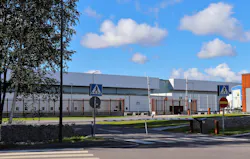
Traveling with friends recently through the rural outskirts of Washington, D.C., we drove past massive data centers under construction. No surprise—Northern Virginia is called “Data Center Alley” for a reason, serving as the largest hub for these facilities not just in the country but in the world, accounting for 13% of the globe’s data center operational capacity.
Also not surprising: One of the passengers murmured how unfortunate it was that the landscape was being tarnished by these enormous facilities. With more than 3,000 data centers in operation and more than 1,500 in development across the nation, the decibel of such objections is rising dramatically. A dozen states have filed or implemented moratoriums on data center construction, and litigation is surging in attempts to block these projects.
But there’s a serious problem with such NIMBYism: Without data centers, this country’s roughly 315 million smart phones would be—well, dumb phones. Data centers are, effectively, the backbone of our digital economy, supporting cloud storage, streaming media, modern communications, and online game servers. And with the rise of AI, they will become even more essential. (Note: The impact of new data center construction on manufacturing is also notable. Such construction is driving demand for U.S.-made goods, especially transformers, switchgear, power distribution systems and cooling equipment. In fact, one source forecasts that data centers will account for about 40% of the entire electrical equipment market by the end of 2030.)
Therein lies our society’s challenge: While no one is volunteering to give up their digital devices, the number of resources needed in data centers, especially energy to power servers and cooling systems, is vast and growing. Indeed, according to the International Energy Agency the new hyperscale data centers can use as much energy as 80,000 to 100,000 homes. According to the Electric Power Research Institute, data centers have risen from about 2% of the share of U.S. electricity consumption in 2018 to roughly 5% today – and are expected to exceed 10% of the nation’s electricity consumption by 2030. With that kind of exponential growth, something’s got to give—most likely, the electrical grid.
Considering that a midsize data center uses upwards of 10 megawatts (MW) of energy, enough to power around 7,000 homes, we are in need of a quick fix. Fortunately, there’s a solution to this potentially debilitating challenge: the introduction of nuclear reactors to power these energy-sucking behemoths. As I’ve written in these pages in the past, today’s nuclear industry is a world apart from your father’s or grandfather’s industry, and is in a prime position to help us reduce carbon emissions while serving growing urban areas.
Why not create data centers either affiliated with nuclear power plants or outfitted with their own Small Modular Reactors (SMRs)? This isn’t as far-fetched as some might think—in fact, it’s already in the works. Perhaps most notable are several agreements between Big Tech and regional nuclear facilities. Microsoft and Constellation Energy launched the Crane Clean Energy Center, which will take carbon-free energy from a reconstituted Three Mile Island plant in Pennsylvania and power Microsoft’s data centers.
Google is teaming up with Kairos Power to deploy a fleet of SMRs to power its data centers. Amazon—which has invested over $500 million in SMR technologies thus far—bought a data center campus adjacent to the Susquehanna Nuclear Power Plant in Pennsylvania (though that agreement came under scrutiny from the Federal Energy Regulatory Commission – see below). And Meta signed a deal with three energy partners for nuclear power to support its Prometheus AI data center in Ohio.
I recognize there are real concerns about this process. For starters, the Federal Energy Regulatory Commission’s primary trepidations in the Amazon case relate to the potential when data centers connect “behind the meter” with a regional nuclear facility—cost shifts could burden residents with higher electric bills. There is also a concern with pulling regional nuclear facilities off the power grid to exclusively power data centers, thus potentially creating electrical shortages for a community.
Of course, the construction of a new nuclear facility dedicated to data centers would bypass that challenge. Fermi America is planning to do just that with its approximately 5,800 -acre “HyperGrid” in the panhandle of Texas, designed to deliver 11 Gigawatts (GW) of dedicated behind-the-meter power to North Texas data centers through a mix of nuclear, solar and natural gas power. But considering the cost of constructing such a facility—indeed, this project was postponed due to the collapse of funding—such projects are seriously problematic.
This is where SMRs enter the picture. These are smaller, prefabricated reactors that are easier and faster to build and can be installed directly on-site at data center campuses. This means not having to wait multiple years to connect to the grid through utility transmission lines. They offer a 24/7, zero-carbon energy supply that is grid-independent. Thus, rather than taking regional nuclear plants partially off the power grid to feed data centers, SMRs have the capacity to supply enough power to operate multiple large facilities without affecting the community’s energy supply or prices.
There are other environmentally related advantages as well. One of the biggest challenges in a data center is the need for large quantities of water for IT cooling. SMRs use thermal co-generation efficiency—they capture and repurpose large amounts of thermal energy, which reduces the evaporation-based water consumption typically needed.
Bottom line: We may not want new data center construction in our neighborhoods, but we need new data centers for our modern digital economy. To stem the construction of new facilities nationwide would be cutting our nose to spite our face. While the debate over community aesthetics will continue, the massive energy consumption from data centers should not be a constraint to building these facilities. If the biggest users, Big Tech, lead the way in building data centers and supplying their own energy sources (SMRs), it’s a win-win for society.
About the Author
 Stephen Gold
Stephen Gold
President and Chief Executive Officer, Manufacturers Alliance
Stephen Gold is president and CEO of Manufacturers Alliance. Previously, Gold served as senior vice president of operations for the National Electrical Manufacturers Association (NEMA) where he provided management oversight of the trade association’s 50 business units, member recruitment and retention, international operations, business development, and meeting planning. In addition, he was the staff lead for the Board-level Section Affairs Committee and Strategic Initiatives Committee.
Gold has an extensive background in business-related organizations and has represented U.S. manufacturers for much of his career. Prior to his work at NEMA, Gold spent five years at the National Association of Manufacturers (NAM), serving as vice president of allied associations and executive director of the Council of Manufacturing Associations. During his tenure he helped launch NAM’s Campaign for the Future of U.S. Manufacturing and served as executive director of the Coalition for the Future of U.S. Manufacturing.
Before joining NAM, Gold practiced law in Washington, D.C., at the former firm of Collier Shannon Scott, where he specialized in regulatory law, working in the consumer product safety practice group and on energy and environmental issues in the government relations practice group.
Gold has also served as associate director/communications director at the Tax Foundation in Washington and as director of public policy at Citizens for a Sound Economy, a free-market advocacy group. He began his career in Washington as a lobbyist for the Grocery Manufacturers of America and in the 1980s served in the communications department of Chief Justice Warren Burger’s Commission on the Bicentennial of the U.S. Constitution.
Gold holds a Juris Doctor (cum laude) from George Mason University School of Law, a master of arts degree in history from George Washington University, and a bachelor of science degree (magna cum laude) in history from Arizona State University. He is a Certified Association Executive (CAE).