Senate Clears Way for Obama to Negotiate Trans-Pacific
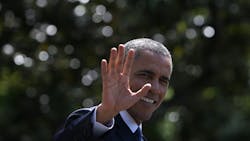
Following days of obstruction from lawmakers in President Barack Obama's own Democratic party, the Senate advanced a bill Thursday allowing him to finalize swiftly a landmark Pacific trade pact.
The 65 to 33 vote marked a victory for the White House and free-trade Republicans who had united in an effort to press ahead with Obama's biggest domestic legislative priority in the remaining 20 months of his presidency.
Thursday's vote merely opened debate on so-called trade promotion authority, marking an early step on what could be a testing path for the TPA bill to reach the president's desk.
TPA would allow Obama -- and his successor -- to negotiate international trade accords and present them to Congress for a year-or-no vote, with lawmakers prevented from making any changes to the deal.
The measure also provides assistance for U.S. workers hurt by globalization, and sets some 150 objectives for Washington to negotiate into the accords, including provisions on human rights and state-owned enterprises.
Supporters argue that the 12-nation Trans-Pacific Partnership and a US-Europe trade accord currently under discussion would together create 1.4 million American jobs and level the playing field for US exports abroad.
TPA was blocked from advancing in a vote on Tuesday, with Democrats arguing the bill ignored some of their priorities, including ensuring that American jobs were protected from imports unfairly priced due to currency manipulation.
But, after intense negotiations, lawmakers produced a compromise in which Democrats got to vote on two bills reflecting their priorities.
With the impasse broken, the U.S. Senate also voted 78 to 20 Thursday to impose strict enforcement measures on international trade, including currency manipulation restrictions.
That bill now heads to the House of Representatives, where its chance of passage took a hit when Speaker John Boehner dismissed as "laughable" the prospect of Congress legislating currency valuations between countries.
The measure seeking to prevent some governments from manipulating their currency's value in order to gain trade advantage is aimed at China and Japan.
The currency bill is "a shot across China's bow that we're not going to just sit there and do nothing," Democratic Senator Chuck Schumer said.
"Americans should not be patsies for other countries cheating," added Democratic Senator Sherrod Brown.
The bill also closes a child labor loophole, and beefs up other customs enforcement priorities including anti-dumping rules.
The White House and Republican leaders had warned that including such a measure directly in the TPA bill could jeopardize the broader legislation and throw the entire Pacific accord into doubt.
"Under our plan, the Senate will avoid the poison pills that had been floated," while allowing senators "to express themselves without endangering more American trade jobs," Senate Majority Leader Mitch McConnell said.
TPA itself may face a tough sell in the House, where Democratic Leader Nancy Pelosi said members of her caucus were expressing "unease" with a potentially years-long process that could "provide carte blanche for agreements unknown, for countries to be determined, for a time in perpetuity."
The Senate also overwhelmingly passed a separate bill renewing lapsed trade preferences for developing countries, including many in Africa.
Copyright Agence France-Presse, 2015
About the Author
Agence France-Presse
Copyright Agence France-Presse, 2002-2026. AFP text, photos, graphics and logos shall not be reproduced, published, broadcast, rewritten for broadcast or publication or redistributed directly or indirectly in any medium. AFP shall not be held liable for any delays, inaccuracies, errors or omissions in any AFP content, or for any actions taken in consequence.