US Fed Holds Rates Unchanged Over 'Uncertain' Iran War Implications
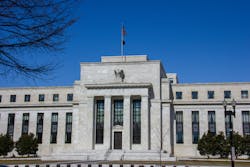
The U.S. Federal Reserve kept interest rates unchanged as expected Wednesday, in defiance of President Donald Trump as the world's largest economy battles stubborn inflation, weak labor demand and an "uncertain" economic outlook due to the war in Iran.
The 11-1 vote kept rates steady at a range of 3.50% to 3.75%, with officials flagging one expected rate cut by the end of the year.
"The implications of developments in the Middle East for the U.S. economy are uncertain," the Fed said in a statement.
The central bank cut rates three consecutive times late last year before holding them steady at its January meeting.
It has a dual mandate of maintaining inflation near a long-term target of 2% while ensuring maximum employment.
With war in the Middle East causing global oil prices to spike, potentially fueling widespread inflation and curbing growth, analysts said policymakers were unlikely to make any immediate moves.
Affordability has been a key political issue for Trump, who has repeatedly called for rates to be slashed even as price increases have remained stubbornly high.
"Uncertainty about the economic outlook remains elevated," the Fed said Wednesday, while noting that economic activity was "expanding at a solid pace."
"Job gains have remained low, and the unemployment rate has been little changed in recent months. Inflation remains somewhat elevated."
The Fed also released its quarterly summary of economic projections, expecting fourth-quarter GDP growth to come in at 2.4% year-on-year.
The Fed raised its inflation outlook, now expecting the personal consumption expenditure (PCE) measure to stand at 2.7% by December 2026, up from an earlier estimate of 2.4%.
Single Dissenting Vote
The knock-on effects of the war in Iran, particularly oil supply shocks, have dominated headlines since the United States and Israel launched strikes on Feb. 28.
Central banks tend to ignore the inflation effects of short-term price shocks, but it is unclear how long the war will last.
Before the war, a rate cut was expected as soon as this summer, with another possible later in the year.
The only dissenting voice on Wednesday came from Fed Governor Stephen Miran, a close ally and former economic advisor of Trump, who voted for a quarter-point cut to interest rates.
The statement defied analyst expectations of a more fragmented Fed, since the central bank's two mandates are potentially in conflict with one another.
For now, it appeared Fed policymakers were mostly in consensus to wait and see.
Central banks tend to ignore the inflation effects of short-term price shocks, but it is unclear how long the war will last.
While U.S. consumer inflation has dropped from a peak of 9.1% during the Covid pandemic, it remains well above the Fed's target, leaving households battered by years of price increases.
"Unlike other countries, which have already achieved some level of price stability," the United States has yet to reach this point after five years, said Diane Swonk, chief economist at KPMG.
She warned that, depending on how long the Iran war lasts, inflation could again soar past 4%.
The Fed's other mandate, of managing unemployment, has also shown potential need for intervention.
The United States unexpectedly lost 92,000 jobs in February, government data showed, while the unemployment rate rose to 4.4%.
Analysts say a relatively steady unemployment rate has been masking churn beneath the surface -- with sluggish labor demand covered by a drop in workers due to Trump's immigration crackdown.
Swonk noted that uncertainty due to the Iran war and its knock-on effects would further curb labor demand.
"Uncertainty acts as its own tax on the economy, and one of the first lines of defense that firms do is they freeze hiring," she said.
Recent data ahead of the Fed meeting was not encouraging, with U.S. GDP growth revised sharply lower in the final months of 2025.
All rights reserved ©2026 Agence France-Presse
About the Author
Agence France-Presse
Copyright Agence France-Presse, 2002-2026. AFP text, photos, graphics and logos shall not be reproduced, published, broadcast, rewritten for broadcast or publication or redistributed directly or indirectly in any medium. AFP shall not be held liable for any delays, inaccuracies, errors or omissions in any AFP content, or for any actions taken in consequence.