‘This Is Exciting. We’re Really Going to Determine Our Future.’

Honeywell International Inc.’s multiyear journey to turn itself into three companies focused on aerospace, industrial automation and advanced materials hit its first major milestone last Oct. 30 with the spinout of Solstice Advanced Materials Inc. The move created a company, headquartered in Morris Plains, New Jersey, that rang up $3.9 billion in sales in 2025, nearly 60% of which came from the United States.
President and CEO David Sewell and his lieutenants have ambitious plans to capitalize on the tailwinds in many of their markets. For instance, Solstice’s division making uranium hexafluoride, which is used to enrich nuclear fuel, has a backlog of $2 billion and is, along with the company’s refrigerants and thermal management group and its electronics business, growing at a double-digit pace.
Since separating from Honeywell, Solstice executives have announced three expansion projects that are driving much of the company’s 2026 capital spending budget of between $400 million and $425 million:
- In Spokane Valley, Washington, Solstice is investing $200 million in an expansion and upgrade of a plant that makes electronic materials. By the end of 2029, that work will double the facility’s capacity for sputtering targets used to make thin films.
- The company’s plant in Colonial Heights near Richmond, Virginia, is getting $220 million to beef up its production of polyethylene fibers used in vests, helmets and other equipment for military and law enforcement personnel.
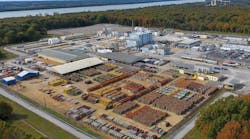
- Projects to eliminate bottlenecks at Solstice’s uranium hexafluoride-making Metropolis Works in Illinois are on track to boost output this year to more than 10 kilotonnes. That’s 20% more than projections made in 2024, a year after the facility was restarted.
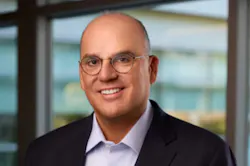
Sewell—who held leadership roles at WestRock, General Electric and Sherwin-Williams before joining Honeywell about a year ago—recently sat down with Geert De Lombaerde for a wide-ranging chat about strategy and leadership. Here, lightly edited for brevity and clarity, are excerpts from their conversation. Among the topics:
- Telling Solstice’s story during its first handful of months as a standalone entity
- How Sewell and his team are thinking about investing in growth—including in the data center space
- The role Lean Six Sigma plays in their expansion projects
De Lombaerde: What’s gone well for you since the spin? Where are you ahead of where you thought you might be and what’s maybe lagging a little bit?
Sewell: What we’re really excited about is the areas on which we’re really focused. We believe we’re at the inflection point of these tremendous growth sectors with advanced computing, data centers and nuclear. We feel great about our refrigerants business. We feel really, really good about the markets we’re in and where those markets are headed. We are excited about the portfolio that we have, the IP protection that we have.
The work we’re doing as a new company—building our culture, building our values, really engaging with our employees to ensure this is a great place to work and that we’re all driving to the same road ahead—is really important and we feel very good about how that’s going. We’ve gone through a very deliberate process with employees about what’s the type of company that we all want to be a part of.
I think that the thing that’s been interesting for us […] goes back to that […] we are such a unique company. There’s just no true peer that we have. So really explaining the story that we have to investors and to analysts, has been a process. I think that narrative is getting through, how differentiated we are, but I think there’s still work to be done.
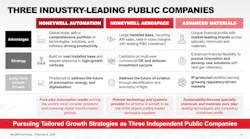 honeywellslide
So that would be the area that I think we’re still focused on: Really getting people to understand what a unique portfolio we have within the markets we serve, but also the technologies.
De Lombaerde: You’ve already been poked a couple of times about the portfolio maybe being kind of unwieldy. Did that surprise you or did you think those questions would come your way?
Sewell: Right, because it really is seven distinct businesses. But when we walk people through it, six of those seven businesses have a fluorine chemistry component. So there is a synergistic aspect to it.
But I think it’s a fair question and […] as we really drive our strategy, it’ll be something we continue to look at because there’s areas we certainly want to expand. And then we’ll continue to look at, do those segments belong with us as the best owner. But right now, we are really comfortable with our portfolio.
De Lombaerde: You’ve talked about how the refrigerants and the electronics and the nuclear businesses all feed into data centers and have been educating people a little bit about that. There’s an element of serendipity to having the data center growing as it is. Do you lean into that serendipity or do you or in your mind try to hedge it and say, “We don’t want to get too tied to that specific growth sector right now.”
Sewell: It’s actually a natural lean in for us because there’s so much growth there. With our semiconductor business, there’s just a natural element that these are going into data centers because you’re getting into leading-edge nodes […] going down to potentially below 2 nanometers. So that is going to be a natural fit for us no matter what.
But the data center element is really pulling together other parts of our portfolio. What’s happening with these data centers is [that because] these chips are getting so much smaller and faster, the heat that’s being generated, there is a new solution that’s going to [be needed].
That’s why we’re getting pulled in and we think we’re uniquely positioned where our refrigerants business has to be a part of that. We have to figure out how to get that heat off the chip. The natural ambivalent cooling we’re doing with our refrigerants and stationary [cooling] is always going to be needed but we’re going to need a next level. And that’s the work we’re doing, whether it be direct-to-chip cooling, two-phase cooling, potentially immersion cooling. So we’re leaning into that because we really like to co-innovate with our customers and be a solutions provider and they’re pulling us in.
While it has been a little bit of that Santa Claus effect, it also has demonstrated to the organization that, 'Oh my god. Here we are, four months in and we already have three huge capex projects, more so than we’ve ever had in the last 10 years as a business.'
Putting capital to work
De Lombaerde: Talk a bit, if you would, about what you’ve learned about the organization as a whole as you’ve thought about M&A, capex and allocating capital. What has bubbled up from the organization that you maybe hadn’t thought of before?
Sewell: I think the thing that was very interesting as we got started was the amount of organic growth that we have and the capex that’s needed for that organic growth. Because when we’ve looked at our semiconductor business, when we looked at our safety and defense business and our nuclear business, we were literally in a sold-out environment. And the demand and the future demand was significant.
We recognized that because of our technology, organic was maybe better in some cases than M&A. That’s why we redeployed that capital to those large projects that we have because the returns were going to be so, so significant.
We’re already at a 19% ROIC company. And so if we can continue to invest and get those kind of returns, we know that’s good value. And all of those investments are aligned with customers and customer orders and growth.
I think that was the piece that said, “You know, we are really in a unique situation where we’ve got several segments where it’s organic and it’s not an M&A [story]. Now, M&A will still play an important role but we that’s why we’re focused right out of the chute on those large capex projects.
De Lombaerde: Do you feel a little bit like Santa Claus? You mentioned at a recent conference that these businesses were competing for capital inside the larger Honeywell and weren’t getting that attention necessarily. But now there is capital or, at least, there’s a decision process to potentially get them capital. Is there a bit of a Santa Claus effect that that you’ve run into?
Sewell: That’s really good analogy. I I would tell you our first capital deployment review we had on what the projects were was very lengthy. The whole list came out like, “OK, here we go. This is everything we want to do.” We actually had to cut the list back. We wanted to prioritize. We really wanted to ensure execution.
But while it has been a little bit of that Santa Claus effect, it also has demonstrated to the organization that, “Oh my god. Here we are, four months in and we already have three huge capex projects, more so than we’ve ever had in the last 10 years as a business.”
It has demonstrated to our employees that this is exciting. We’re really going to determine our future.
De Lombaerde: You mentioned the organic growth outlook and you’ve talked about how, in a lot of the the markets that you’re in, the growth can get into well into the 2030s. How do you think about allocating capital to those longer-term goals? Is there a point where you can say, “We’re set in this business unit for a while?” How active is the process of allocating capital for the longer term?
Sewell: It’s incredibly fluid. When we looked at that capital allocation, it was an aspect of, “OK, this made the priority for a lot of the different reasons of our internal metrics that we use. But if we are going to do this, let’s do it right so we don’t have to revisit it in a few years.”
I’m a firm believer in Lean Six Sigma. We’re looking at AI and digital manufacturing as well. When we did these projects, we took advantage of the engineering work that was going on to expand capacity to support the technology that was needed. […] Let’s make the plant more efficient. So we took a Lean Six Sigma element to it. We took an automation element to it. We’re trying to implement some AI tools as we did that.
Both of those cases double the capacity […] but we are also making those plants more efficient from a margin expansion standpoint because they’re going to be higher reliability, more automated and more efficient moving forward. The goal of that—to get to your question—was that now we don’t have to do those projects in the future. We can move on to other plants.
De Lombaerde: Right. It’s not a dribs-and-drabs investment strategy. The idea is, “Let’s nail it from the beginning.”
Sewell: Exactly. We went all in. I guess the best way to say is we went all in to make those world-class facilities in all aspects.
About the Author
Geert De Lombaerde
Senior Editor
A native of Belgium, Geert De Lombaerde has been in business journalism since the mid-1990s and writes about public companies, markets and economic trends for Endeavor Business Media publications, focusing on IndustryWeek, FleetOwner, Oil & Gas Journal, T&D World and Healthcare Innovation. He also curates the twice-monthly Market Moves Strategy newsletter that showcases Endeavor stories on strategy, leadership and investment and contributes to other Market Moves newsletters.
With a degree in journalism from the University of Missouri, he began his reporting career at the Business Courier in Cincinnati in 1997, initially covering retail and the courts before shifting to banking, insurance and investing. He later was managing editor and editor of the Nashville Business Journal before being named editor of the Nashville Post in early 2008. He led a team that helped grow the Post's online traffic more than fivefold before joining Endeavor in September 2021.