Truly Human Leadership's Next Chapter
Key Highlights
- Bob Chapman demonstrated that caring for employees and achieving business success are not mutually exclusive but mutually reinforcing.
- Patrick Berges, new CEO of the Chapman Institute: Leadership development should focus on experiential learning and emotional intelligence, not just formal training or slide presentations.
- As the workforce shifts toward Millennials and Gen Z, leaders must adopt more agile, compassionate, and service-oriented approaches.
- The rise of AI has reduced organic human interactions, making intentional development of soft skills more critical than ever.
- Treating employees with kindness and transparency during tough times, like layoffs, builds trust and sustains organizational culture.
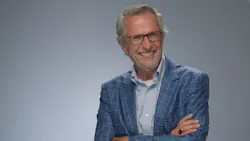
Bob Chapman inherited leadership of his family’s bottle-washing company in 1975. But it wasn’t until the late 1990s, when he had an epiphany about people-centered leadership, that his company, Barry-Wehmiller, ultimately grew into a global packaging automation, life sciences technology and professional services conglomerate.
You can read all about Chapman and his philosophy of caring for people in a multitude of IndustryWeek articles through the years: the one where he was inducted into the IW Hall of Fame; the one where he received a Lifetime Achievement Award (basically, he’s won all our leadership awards); the book chapter on the hand-wringing around layoffs during the Great Recession and how he found a workaround to keep everyone on the job.
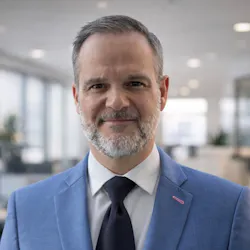
Chapman not only took good care of his employees; he turned that into a profitable business—the Chapman and Co. Leadership Institute, a facet of Barry Wehmiller’s professional services division.
Chapman passed away in March. That same month, Chapman and Co. acquired H3, a similar leadership consultancy helmed by Patrick Berges, a friend and mentee of Chapman’s. Berges, who spent eight years as a leadership-development executive at Medtronic, is now CEO of Chapman and Co.
IndustryWeek talked with Berges about how Chapman’s ideas translate as Gen Z gains a foothold in the manufacturing workforce, who gets shortchanged in leadership development and avoiding “slide-whipping” as a leadership teaching tool.
IndustryWeek: What have you learned from Bob Chapman?
Berges: Bob taught us that people and performance can work in harmony, and that caring for people and building a great business aren't two things that have to be in conflict or tension. He proved this across 80 different acquisitions over a couple of decades, where he took the business from $20 million to $3.6 billion.
Clearly he had a performance focus in driving the business forward, but at the same time he created an organization that people are proud to be a part of. And so when you look at the best-practice organizations and what they do differently, I think Bob and Barry Wehmiller are a perfect example of what can be done differently to drive business outcomes—and in this case, investing in leadership, investing in culture and really treating people in a way that shows that you care can make a difference on your business. I think a lot of times business leaders will look at those as the soft skills in business, but in reality it's a lot more than that. These are fundamentally performance-driving elements of business-culture leadership.
When companies come to you, is it usually to fix a certain problem, or are they specifically looking for people-centered leadership?
In some cases, it’s because something broke—high turnover finally got someone's attention, a safety incident, a change initiative that stalled, a leader who inherited a new team that won't follow. Almost never is that the real problem, and we need to get at the root cause of cultural or leadership gaps.
The more progressive organizations recognize “what got us here won't get us there,” that we're in a highly dynamic work environment and the pace of change is faster than it's ever been, and in order to stay on top with a shifting workforce, you have to lead differently.
When you dig deeper for the root cause, what are some things that you find?
Managers are generally promoted into management roles because they're good at the individual contributor jobs that they were in previously, and what makes you good as an individual contributor typically does not translate directly to people leadership and to management. Not investing enough in managers is really the core part of the problem. Not investing enough in those that have the privilege to lead and helping them understand that that's a privilege and the responsibilities to serve that come with that. I don't think that's very well taught in our education system and advanced education or in corporate training environments.
A few other macro environmental issues come into play. One being the shifting workforce. Within the next year or two, 75% of the workforce will be millennials or younger. What does that mean for those in a leadership capacity? It means you're going to have to pivot; you're going to have to be more agile and adaptive in your leadership approach.
We already know that millennials and Gen Z in the workforce today have a very different expectation of leaders than the generations that came before them. They want to be led by people who lead with compassion, who lead with service and selflessness. Those are the emerging demands of leadership that we're not equipped for. We haven't built a leadership model in corporate America that is prepared for that.
The third thing I'll point to is AI. With the onset of AI, knowledge-based competency is rising. But at the same time, emotional intelligence metrics are trending downwards.
We see this in real life—less human-to-human interaction, less skills developed in managing conflict and having difficult conversations. Experiences that shape people in their careers are becoming fewer and fewer.
Those natural, organic experiences that were happening 20 years ago to develop junior talent, they're just not happening today. Those experiences don't exist, and so being intentional about developing high potentials in an organization, I think, is one of the keys to success moving forward.
What constitutes ‘intentional development’?
It’s not putting people in a conference room and ‘slide-whipping’ them to force formal foundational learning upon them. That’s not the way to do it.
Seventy percent of development happens through experience, 20% happens through peer-to-peer learning and only 10% happens in that kind of formal classroom setting. For example, we have a two-day program called Leading for Results that’s essentially a field trip. We get on a bus, and we go and experience leadership in the wild. We have several different stops throughout the day in a given city, where we have the chance to experience remarkable leadership. And when you do that, what we find is that people in these cohorts benefit because they have the shared experience together.
We’re living in a time when empathy might not be front and center, a divisive time. Have you noticed work environments changing because of that?
I guess the way I'd respond to that is most people spend more waking hours at work than anywhere else. That means the workplace is either a place where they feel valued and treated with dignity, or it isn't.
And, as Bob used to say, if you send someone home feeling less than they were when they've arrived, then you've affected their family, you've affected their community, you've affected their whole ecosystem.
I truly believe that there's something more specific happening on a plant floor that doesn't get enough credit, though. When people work inside a high-functioning team, they're learning how to be in a community with people different than them. They're learning how to disagree and still move forward. They're learning how to trust someone enough to raise a problem or concern with them. Those aren't just workplace skills; those are skills that a healthy society runs on.
We're not going to fix the societal division overnight, but if we can make the average workplace somewhere where people practice respect, accountability and honest communication every day, then I think there's a lot of people going home more equipped for the outside world than they were coming into work that day.
One interesting data point here is, according to Gallup, in their 2026 survey, only 33% of global workers describe themselves as thriving, so work plays a major role in our ability to thrive as humans. Engaged employees are significantly more likely to thrive in life and less likely to report stress, sadness, loneliness. So, the way we treat employees at work is reflected on how they show up at home, is reflected on how they show up in the community. That's why we believe at Chapman and Co. that business can be a great force for good if employees are led properly.
Just before Bob passed away, IndustryWeek ran a powerful piece he wrote about layoffs and how they affect people and what they did at Barry-Wehmiller to avoid them. I'm wondering how you see leaders thinking differently after they've learned about Truly Human Leadership.
Layoffs are one of the fastest ways to accelerate the collapse of trust in a company. Layoffs are where leadership either earns credibility or destroys it permanently. Of course, it's necessary at times. There are economic conditions that require companies to make tough decisions, but how you treat people on the way out determines how the people who stayed show up the next day.
Most companies manage the legal and the logistics of this, but the best leaders and companies manage the human element of it. They're honest about what happened, they're clear about what comes next and they present their case in a way that explains the situation fairly. They're fully present with employees that are hurting. It's not soft; it's what holds a culture together when everything's under pressure. One of the phrases that I like to use is “kindness is a competitive advantage,” and I think that is true in both thriving environments and in environments that are under pressure. When leaders are under pressure, often their true colors come out, and I think this is where it's most critical that leaders show up as compassionate, as empathetic and as kind when they have to make difficult decisions that impact people's lives.
About the Author
 Laura Putre
Laura Putre
Senior Editor, IndustryWeek
As senior editor, Laura Putre works with IndustryWeek's editorial contributors and reports on leadership and the automotive industry as they relate to manufacturing. She joined IndustryWeek in 2015 as a staff writer covering workforce issues.
Prior to IndustryWeek, Laura reported on the healthcare industry and covered local news. She was the editor of the Chicago Journal and a staff writer for Cleveland Scene. Her national bylines include The Guardian, Slate, Pacific-Standard and The Root.
Laura was a National Press Foundation fellow in 2022.
Got a story idea? Reach out to Laura at [email protected]