What 'Apollo 13' Taught Me About Supply Chain Leadership
Key Highlights
- Crisis leadership is a skill worth refining.
- During a disruption, your team will mirror whatever emotion you project, so like mission commander Gene Kranz, choose it well.
- It's the leader's job to develop and pressure-test the team before an incident happens. If you don't, things will quickly fall apart.
- Remember Jim Lovell/Tom Hanks' "successful failure" speech? There are learnings to be had in things that don't go well.
When I ran supply chain at La-Z-Boy, my team and I faced a battery of challenges and crises, each a lesson in itself: tornados, floods, fires, force majeure, logistics strikes and more.
Early on, I felt like something of a crisis virtuoso, but later I understood that crisis is just part of the job and began thinking about how I could help our leaders manage these situations better.
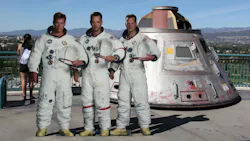
I found my answer in one of my favorite movies. Apollo 13 tells the story of a failed NASA mission to land on the moon and the subsequent struggles to safely return the astronauts to Earth. The critical events we deal with in our lives as supply chain leaders, (while not life and death like the Apollo mission) have parallels to the barrage of crises the characters experienced.
Crisis leadership is a skill worth refining; let’s delve into the lessons from Apollo 13 for inspiration.
A Leader’s Role in a Crisis Is to Set the Right Tone
Amid any crisis, especially early on, it’s easy to focus on the negative. Going negative when difficulty hits your supply chain is a very human reaction.
In Apollo 13, NASA leaders discuss how the crisis (an oxygen tank exploding and damaging the spacecraft) “could be the worst disaster NASA’s ever experienced.” The mission’s director, Gene Kranz (played by Ed Harris), quickly rebukes, “with all due respect, I believe this is going to be our finest hour.”
During crisis, a leader’s job is to set the tone for the team and display confidence. During the crisis events my team and I faced, I worked hard at staying calm and reassuring, even if my stomach was churning inside. Your team will mirror whatever emotion you project, so choose it well. I understood that for us to deal with the crisis effectively, we all needed to be focused on solving the problem, calmly. A calm, clear-thinking leader helps the team to formulate a game plan to deal effectively with the situation at hand.
Strong Teams Are Built Before Tough Times Happen
Few situations reveal the strength or dysfunction of a team more than living through an extreme-stress situation. In Apollo 13, Fred Haise and Jack Swigert (played by Bill Paxton and Kevin Bacon respectively) blamed each other for the explosion of a critical oxygen tank. As things got heated, Jim Lovell, the ranking officer (played by Tom Hanks) stepped in to defuse the argument and refocused the crew on the mission.
When the pressure comes, if your team doesn’t have a healthy dynamic, it will unravel. It’s the leader’s job to develop and pressure-test their team before tough times happen. Supply chain leaders should work to create a team culture built on mission and collaboration; this will serve the team well during stressful events.
We insisted on hiring team members that fit our culture. We worked hard at challenging each other, whether it be during meetings or on the shop floor. We called it creating healthy tension. We believed if teams could survive difficult conversations when stakes were lower, we stood better chance with handling pressure when stakes were high.
A Successful Failure
In one of movie’s final scenes, as the astronauts have landed safely and are being hoisted from ship’s command module by the U.S. Navy, Jim Lovell speaks to a grateful and inspired audience. He said his team’s mission was dubbed “a successful failure.” Although they had not accomplished their original objective of going to the moon; they had surmounted the almost impossible task of returning home safely.
Strong supply chain leaders assess every situation: things that go well and things that don’t. There are learnings in both that can be applied the next time your supply chain is disrupted.
After my team and I made it through a crisis, we always did a postmortem, assessing what went well and what didn’t. Regardless of the outcome, we saw the aftermath as a learning opportunity. Studying the effects of disruptive events helped minimize their impact in the future.
Parting Thoughts
If you work in or lead a global supply chain, crisis is inevitable; it’s the life we’ve chosen. Remember, work to build an effective, highly functioning team when times are good, without disruption, and find the lessons in past struggles.
And when crisis strikes again—and it will—you can lead with calm and confidence knowing that with your guidance and their talents and experience, your team will successfully solve the problem.
About the Author
 Darrell Edwards
Darrell Edwards
Darrell Edwards is an assistant professor of practice in the Supply Chain Management Department at the University of Tennessee. Prior to joining the UT faculty, he was Senior Vice President and Chief Operating Officer at La-Z-Boy Incorporated, the nation’s largest producer of reclining chairs and one of the nation’s largest providers of home furnishings.
Edwards has over three decades of deep global operations and supply chain experience, delivering significant value within consumer product industries. Edwards was a named executive officer (NEO) who led the global operations and supply chain for La-Z-Boy Incorporated’s Branded Business totaling in excess of 9,000 employees.
He currently serves on the Board of Directors for the Correct Craft Corporation in Orlando, Florida, and Rival Holdings in Fort Wayne, Indiana. Moreover, Edwards has been recognized as an award-winning global leader, having led numerous business units to achieve national and global recognition for operational excellence. His interests are focused in leadership, business strategy, executive coaching, team building, and process innovation. He is a frequent guest speaker at various national forums, and authored articles in several business trade publications.
Edwards holds a Doctor of Business Administration degree from the Fox School of Business at Temple University in Philadelphia, Pennsylvania, a Master of Business Administration degree from the University of Tennessee at Knoxville, and a master’s degree in global management from the Thunderbird School of Global Management in Glendale, Arizona.