Musk Can Wall Off Shanghai. He Cannot Wall Off China’s Supply Chain.
Despite previously dismissing a potential spinoff of Tesla’s China business, Elon Musk confirmed on October 20 that Tesla and SpaceX have each formed special committees of independent directors to evaluate a merger. Given mounting U.S.-China tensions, a combined entity valued at roughly $3.5 trillion could put that separation back on the table.
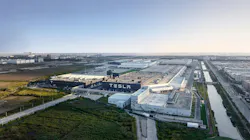
Most commentary has fixed on two hurdles: winning half of all outstanding Tesla shares, and deciding what to do with Giga Shanghai, which builds more than half of the cars Tesla sells worldwide. The working assumption is that once the China question is “solved” through a spin-off, a sale or a firewall, the combined company can become a clean, defense-grade American champion.
That assumption is incomplete.
Separating a Chinese factory is the easy part. The harder problem sits one or two tiers upstream, in the minerals and machines China controls. The realistic goal for this decade is not a China-free company but a China-insulated one.
Why Shanghai Is a Problem, and Why It Is Solvable
SpaceX drew about a fifth of its 2025 revenue from the U.S. government. Tesla is the only wholly foreign-owned automaker in China, and its Chinese-built cars use more than 95% local parts from over 400 suppliers.
Combining a Pentagon contractor with a factory that depends on Beijing’s goodwill raises national-security alarms in both capitals; JPMorgan calls regulatory approval a “practical bottleneck.”
Tesla’s advisers have reportedly discussed a spin-off, sale or closure of the China business, though Musk dismissed the report as “absurdly fake news.”
Closure would sacrifice Tesla’s lowest-cost plant, a sale needs Beijing’s blessing and a spin-off may not look like a real break to Washington. The likeliest outcome is ring-fencing: separate entities, systems and staff. But these are corporate-structure problems, with corporate-structure solutions.
Where Decoupling Stops
SpaceX has already shown what decoupling looks like. In August it began auditing suppliers worldwide, requiring them to keep Chinese-made equipment and Chinese nationals away from SpaceX work. It has lined up long-term nickel superalloy supply from Korea, sought non-Chinese polysilicon and pushed to build solar manufacturing in the United States. At the level of parts, factories and personnel, this works.
Look one or two tiers upstream, however, and China reappears.
SpaceX’s Korean alloy supplier sources nickel from an Indonesian project co-owned with an affiliate of China’s Tsingshan. China refines more than 90% of the world’s rare earths, and the International Energy Agency projects that refining capacity planned outside China will meet only about two-thirds of requirements by 2035.
China’s dominance of upstream supply chain operations is structural, not merely commercial.
Beijing Is Already Acting as Gatekeeper
In January, Musk pledged 100 gigawatts a year of U.S. solar-cell capacity. By March, Tesla was negotiating to buy $2.9 billion of Chinese equipment. In May, The New York Times reported that Beijing had blocked exports of high-end tools from Chinese company Suzhou Maxwell to Tesla. This month, China proposed banning exports of the technology and equipment for next-generation perovskite and tandem cells, while still selling the cells themselves.
The message is precise: China will sell Musk products, not the capacity to make them.
Rare earths carry a sharper deadline. In October 2025, Beijing announced rules requiring licenses for foreign-made products containing as little as 0.1% Chinese-origin rare earths by value. The rule was suspended for a year, and that suspension expires on November 10. If it returns, a Japanese magnet bound for a Starlink satellite or an Optimus robot could need Beijing’s permission.
What the Merger Debate Misses
The leverage is asymmetric. Washington controls permission: contracts, clearances and market access. Beijing controls inputs, and with them cost and speed.
The bigger the combined company’s ambitions, the more that asymmetry bites.
A faster Starship cadence; a Starlink constellation approaching 10,000 active satellites; and plans for orbital data centers all demand magnets, gallium, solar wafers and specialty alloys in volumes that non-Chinese suppliers cannot yet deliver at comparable cost or speed.
Beijing also need not block the merger to shape it.
China can approve with conditions, such as safeguards on data from roughly two million Chinese Tesla drivers, while calibrating access to equipment and minerals. It can also simply wait: Intel abandoned its $5.4 billion purchase of Tower Semiconductor in 2023 after Chinese approval never arrived. And Tesla’s own bargaining power in China is eroding. Domestic retail sales fell 9% in September, and Leapmotor outsold Tesla China in June.
Managing the Risk
Decoupling buys security and eligibility for sensitive U.S. government work, but it carries a price premium and a long tail of indirect dependence. Investors should price that premium rather than assume China risk leaves with Shanghai. Allied suppliers in Korea, Japan and Europe will find themselves squeezed between American audits and Chinese licensing rules.
The special committees should treat upstream resilience as a deal term, not a footnote. That means mapping exposure to the third tier, building buffer inventories of magnets and gallium before November 10, and co-investing with allied refiners and equipment makers.
Washington should fund processing and toolmaking, not just assembly, because that is where China’s leverage lies.
A merged Tesla and SpaceX can control who builds its hardware. For the rest of this decade, China will still heavily influence what that hardware costs and how quickly it can scale.
Planning for insulation rather than independence is not defeatism. It is the only strategy the supply chain will allow in the foreseeable future.
About the Author
 Christopher S. Tang
Distinguished Professor and Ca
Christopher Tang is a distinguished research professor at the UCLA Anderson School of Management.
A scholar of global supply chain management, Tang’s interest in his field began in the private sector when he worked for IBM to solve internal production planning problems. Exposure to real-life industry projects motivated his academic research, where he developed teaching cases on microfinancing for the poor, mobile platforms for developing economies and new business models in the age of the Internet, among other topics.
Tang has been a consultant to numerous corporations, including Amazon, HP, IBM, Nestlé and Accenture. He has published six books and in addition to being a regular contributor to IndustryWeek, he has written for the Wall Street Journal, Barron’s, Financial Times, China Daily, Fortune, Bloomberg Law and The Guardian.