Podcast: What Happened When Fidelity Manufacturing Changed From Family-Owned To Employee-Owned
Key Highlights
- An ESOP can support succession planning while giving employees a stake in company growth and the long-term value they help create.
- Employee ownership can shift workplace culture, encouraging workers to consider costs and how daily decisions add or detract from company value.
- Fidelity Manufacturing’s expansion reflects rising demand for backup generators driven by data centers, AI, technology and construction growth.
- Strong company culture and employee referrals can help manufacturers attract workers, while a local labor-pool analysis supports workforce planning for expansion.
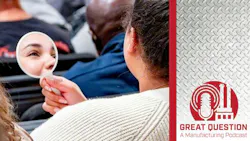



In this episode of Great Question: a Manufacturing Podcast, Mitch Twardosky, CEO of Fidelity Manufacturing, discusses the manufacturing company's very recent ownership transition—the owners sold the company to an employee stock ownership plan (ESOP) as a succession plan—while in the midst of significant company growth driven by increasing demand for backup generation.
Twardosky shares with IndustryWeek's Jill Jusko how the ESOP almost immediately had employees taking an ownership mindset about what does and does not add value to the company. He also talks about workforce development related to the manufacturer's expansion into Texas, where a 200,000 square-foot plant is about to open.
Below is an exceprt from the podcast:
Jill Jusko: Hello and welcome to Great Question: A Manufacturing Podcast. My name is Jill Jusko. I am executive editor of Industry Week. Joining me today is Mitch Twardosky, CEO of Fidelity Manufacturing. Excuse me, Fidelity Manufacturing, an Ocala, Florida-based manufacturing company that recently completed its transition to an ESOP (Employee Stock Ownership Plan). We are going to talk about that transition today. Additionally, the company has been on a significant growth trajectory, really, from when it launched, and there's very much additional growth expected in the very near future. We are also going to talk about that growth and what it means in terms of workforce strategy. So with that, let's get started. Welcome Mitch.
Mitch Twardosky: Thank you, Jill. It's nice to be here. Really appreciate the opportunity to talk with you today.
JJ: Okay, let's get started with just giving our audience some feedback about yourself and the company. So tell us about you. Tell us about Fidelity Manufacturing, ...what it makes, what kind of operation it is, and how long you've been with the company as well.
MT: Sure, Fidelity Manufacturing was founded in 2014 by Brad and Wendy Dinkins. Brad had worked with a previous company, and they were in some financial trouble, and so he went to visit them and realized he liked the people at this company, and so decided to buy the intellectual property and the assets, and he started his own company, Fidelity Manufacturing. Brad and Wendy are strong people of faith, and they prayed about it and felt like it was the right thing to do. Brad's big passion in life really is the Helping Hands foundation of Ocala. They have a couple apartments for homeless women, children, men—mostly women and children—and he thought buying a manufacturing company would give him an opportunity to place people in work, right. They come from jail, they come from the streets, and they get them back on their feet. And if they had a place where they could work, then that whole process would be so much easier. So that's why he started Fidelity Manufacturing. He was very specific on the name, meaning integrity. He wanted to build a company of integrity, and so that's when he started in July of 2014.
I was fortunate enough to meet Brad and get hired in October of 2016, so almost the end of (2016), and then the growth trajectory really started in 2017. In July, I'm sorry, in January of 2017, we had 40 people. In January of this year, we had 540 people. So the big exponential growth really started in 2017, and it's just been, the industry's growing, and so it's been nonstop over the last 10 years, and really big growth since, really since COVID and this expansion with data centers and the need for technology and data center use, and so the industry is just growing exponentially, and it looks like in the near future there's not much of a slowdown.
JJ: Let's back up just a little bit. What does Fidelity Manufacturing actually make?
MT: Oh yeah, well, I guess it'd be nice to know that. So we package generators. Our customers are generator dealers, so Cummins Cat, MTU ... whatever the dealer sells. And so they ship us an open generator set, and we package it. So we build the fuel tank that goes underneath it. We set the generator on top of the fuel tank, and then we build a really nice enclosure that goes over the generator to protect it. So really, what the end user sees is our package, not necessarily the generator inside. And ... Fidelity does a really nice job of building an esthetically pleasing package, and so that's really helped with our with our growth too,
JJ: And the products are for what? Who is the end customer?
MT: End customers are anybody that needs backup power. So hospitals, industrial buildings, stores, you know, grocery stores, data centers, any type of industrial building that requires backup power, and these are big generators—like they're three megs. They weigh 70,000 pounds, and they come in on big tractor trailers. And our package actually takes three tractor trailers to haul it from our site to the end site—one for the tank, one for the generator, one for the enclosure, and then it gets reassembled at the end user site.
JJ: And do you do that reassembly?
MT: We do. We have a service team, full service team. We're also state licensed here in Florida, state licensed electrical contractor. So we have service techs that go to the site and reassemble our packages.
JJ: Tell us about the Ocala site. How big is that?
MT: So we have two sites here at Ocala. The original building that Brad moved the company into in 2015, we call that our Plant One. It's about 65,000 square feet of manufacturing space. And then, you know, I told you the really started growing in 2017. So in 2019, Brad purchased what we call Plant Two. It's 80,000 square feet of manufacturing, and then we've just added. We've done various additions over the years. Seems like every year we're doing an addition to one of the plants, and so we've added another 25,000 square foot here at Plant One, another 20,000 square foot at Plant Two. We just finished or are just completing now a 25,000 square foot warehouse right next to Plant Two, and of course we're also opening a plant in Texas this year.
JJ: Okay, we will get to that in a bit. The company completed its transition to an ESOP ... just at the very end of September, so two weeks ago, basically. Tell us what that means for the company.
MT: Well, we really needed a good succession plan. Brad and Wendy are into retirement age, and they needed a way to move the company into the next phase of ts life while they stepped out of it, and so they decided an ESOP was what they wanted to do. Brad wasn't real involved over the last few years with the company, as I told you what his passions are, and so he really saw the company grow, really from the outside watching it, and the employees, and when he comes here, he just loves the people here, much like his initial reaction in 2014, and so he thought a great succession plan would be to sell the company to the employees that built it and allow them to gain the future value from the company as it continues to grow.
JJ: And in terms of yourself, were you, as the CEO part of that decision-making process, or where is your integration in that process?
MT: Interestingly enough, Brad has been talking about an ESOP, really not long after I got here. I would say by 2017 or 18, he had me investigate ESOPs, then decided to hold back, and then this time around it seemed to be more serious, and he got his son Paul Dinkins involved, and Paul lives in St. Louis, and he really ran the whole thing. So between Paul and Brad and the rest of the family, Ken and Brad's wife Wendy, they really pulled this whole thing together themselves and did a really nice job of it.
JJ: So what does being an ESOP—I guess it was a privately owned company before, and transitioned to an ESOP—what does that mean for the employees? What changes for them?
MT: Well, as an ESOP, they become the owners, right. An employee stock ownership plan. The employees are now the owners of the company through this ESOP trust, and so whatever value that the company, as the company grows and gains in value, and this is really we're just at the beginning. Fidelity, I know it sounds like it grew really fast over the last 10 years, but it's going to grow just as fast and maybe more over the next 10 years, and so the owners made a conscious decision to give that value to the employees. And so the employees are now the owners, and as the company increases in value, their shares increase in value. So someday when they—it's a retirement plan, and ESOP is a government-regulated retirement plan based on you know ERISA, 1974 ERISA law—so they get the money when they retire, but they're building value much like Brad and Wendy had a company, and when they went to retire, they sold it. Our employees now have a vehicle for growing their portfolio, I guess you could say, so that when they go to retire, they have money available for them, and they're creating that value every day that they're at work.
JJ: So, does it change anything for them in their day-to-day activity in the company?
MT: They still have the exact same job, same leadership, same process. ...The running of the business stays the same, but the mindset's different. I've already heard people making comments about, hey, you know what is this costing us? Because they understand that everything they do now either adds value or detracts from the value, and they want to add value constantly. So yeah, it's more of an ownership mindset for everybody.
JJ: And what about for you? What does it mean for you? And does anything change for you?
MT: No, like I said, the leadership team stays the same. The daily processes and procedures all remain the same. So for me, I'm just excited to be part of ... this experiment or this company we call Fidelity Manufacturing and now growing together with all my coworkers in an ESOP. So just it's really exciting. It's really exciting to be owners with all the people around me. I, as we walk by each other in the hall now we, you know, high five or fist bump and say good morning, owner. So a lot of buzz and a lot of fun around here.
JJ: I'm glad you mentioned that because I very specifically wanted to ask, talk to you about how the employees learned the news because I heard a little bit about it, and I thought the story is worth retelling with the mirrors. If you could kind of talk about, what transpired to alert the workforce that this was happening. I love the story.
MT: Yeah, I love telling the story because it was so much fun. So we called an all-company meeting, and so to get everybody there without raising too much suspicion, of course, everybody was just wondering what is this all about? We call it a 'good news' meeting. We're going to have an all-company, good news meeting and tell everybody, there's just so many things, we're growing so fast, and there's so many things going on here that different people in different departments don't really know all the neat things that are happening. Some people don't know at Plant Two, they don't know about the expansion at Plant One, or they don't know what's going on at R&D and all the great innovations.
And so we told everyone we want to have this good news meeting, and we did. It was a good news meeting. We told them about all the fun stuff happening at Fidelity, and ... we bussed people in. Everybody from Plant One, Plant Two, both shifts; we had people here from Texas and then people that couldn't make it like, we have the techs are all over the country, they're in Nevada and Arizona and Texas and so anyways we also did it on a Teams meeting. so the whole company could be part of this good news meeting.
So after I gave him all the good news, I said, I tried to get them in a good mood beyond that by saying, 'Hey, I'm going to tell you some things about Fidelity, and I want you to say, This is great.' And so we practiced a couple things, like Fidelity's got a great future, and the whole crowd yelled—we had 530, 540 people in there—This is great, and so then I'd say something else, and everyone yelled, This is great! And I said, Brad and Wendy sold the company, and it was just silence.
JJ: This is not so great.
MT: Yeah, everyone's just kind of looking around, not knowing what coming next. So the silence didn't last too long. I said, Well, okay, so I want to introduce you all to the new owners so that you're familiar with who's taking ownership of our company. I said you were handed a mirror on the way into the meeting. If you'd all pick up your mirror and look into it, that's right. You are the new owners of Fidelity Manufacturing—and then the place went crazy. It was ... once it clicked, everybody really got really noisy in there. It was a lot of fun. It was a lot of fun.
JJ: It sounds like it was a lot of fun. That was a great idea. Whose idea was that with the mirrors and everything?
MT: You know, I think we have a consultant that we worked with. You know, for the communication plan, and he's doing training. They're doing training this week, Praxis Consulting, and I think he's the one. He said he heard that before, where they used a mirror. So it took some planning, and we gave everybody a gift bag with a certificate and a commemorative coin. ... They can (it) as a keepsake. And then afterwards we had pies outside, so everyone could go get their piece of their pie. So we had a lot of fun with it. It was a great celebration.
JJ: And then it sounds like the mindset change probably comes along almost immediately, right? I'm now an owner. I've got to keep an eye on things.
MT: That's right. Yeah, I actually heard someone yell right from ... in that meeting something about what's this costing us or something like that. So they caught on pretty quickly.
JJ: Yeah, were these mirrors really necessary? I think that's a great story, and I enjoyed hearing how you alerted the workforce. So kudos to whoever's idea it was.
MT: It was a team effort to pull all that off, and we all brainstormed, and yeah, it was it was a lot of fun. The whole thing went off really well.
JJ: I made an assumption that you took questions. Were there a lot of questions? Did you have to field a lot from the workforce? And what kind of questions were you getting?
MT: Well, because we had over 500 people in the room, we knew that if we opened it up to questions, we could be there for hours. So we directed them to a website. Paul Dinkins developed this really nice website with pretty much any question and answer that you could imagine about ESOPs, and even specifically about our ESOP, because they are set up differently. There (is) some flexibility in how you set your plan up, and so there was a QR code in their gift bag that had that, so they could go to the website, and we also let them know that this week—that just happened last week—and we let them know this week we'd be doing training with our consultant who would be giving them details about exactly what it means to be an employee owner and what the future looks like and all that.
JJ: Yeah, so you're still very early in the process of, not in transitioning to the ESOP, but kind of training everybody on what this means for you. Is that fair to say?
MT: Yeah. An ESOP is four simple letters, but it is a very complicated process and plan, and so we're all learning. Yeah, the whole company, but even leadership, we're still learning. What does it actually mean to run an ESOP, and what are the legal obligations of that because it is a federally regulated retirement plan and so there's a lot that goes into it and we're all learning together as we as we go here, because like you said, it just happened a couple weeks ago and so everyone is excited to find out what this really means for all of us as we move forward.
JJ: Okay, great. So now to kind of jump into kind of workforce strategy and growth issues real quick. So I had read that the company started with 28 employees in 2014 and is now I think I said 550 ... In any event, it's a lot of growth in not a lot of time. It's significant growth over a fairly short period of time, I think most manufacturers would agree. And on top of that, now you are planning to open a 200,000 square foot facility in McGregor, Texas. Has that opened already?
MT: It is in the process of being renovated so that we can start producing product, hopefully in November of this year. That's coming quick.
JJ: Yeah, it is. So, what is happening at that facility? Is it just an extension of Ocala, or is there different work going on there, or is it a manufacturing plant versus distribution, or, tell us more.
MT: So, Fidelity Manufacturing actually takes raw material, flat sheets of steel, flat sheets of aluminum, to build our tanks and enclosures. So we're a full-service manufacturer from raw material to the finished product, full assembly. As I mentioned, we have electricians, mechanics that do the final assembly. That whole process that we do here in Ocala will be the exact same process we're going to do in Texas. So they'll start with the raw material and build the product and then do all the assembly once the generator gets there, just like we do here in Ocala.
JJ: What is driving this need for more space?
MT: There's just a big demand for backup generators. Obviously, a big part of that is data centers. But I was surprised when I joined the company in 2016. That was pre, you know, data center boom. Just the demand for backup generators in our country is much larger than I would have ever imagined. It's a really big business, and so add into that all the growth in construction that's going on across the country, and then add into that the growth of technology and AI, and so the growth of data centers. It's just booming. Backup generator supply and demand is, it's growing exponentially.
JJ: And why McGregor, Texas?
MT: We've got a lot of customers in Texas and then west of Texas who've asked us for many, many years now. We actually had customers fly here to talk to the owner a few years ago to ask him to open a plant in Texas. So we've gotten pressure from our customers to move out west, and so we made the ... we've been working on Brad for a couple years to make this happen. We had a Texas flag in our conference rooms for every meeting he came to. You'd see a Texas flag there for the last couple of years, and so he decided that—this is a big move, right. I mean, Brad's an Ocala guy, and all his businesses are right here in the Ocala area. So to open a plant in Texas, it really is a big move for all of us. And so we chose Texas because we've been asked to go west, and we were looking for somewhere in central Texas. We hired a site selection company to look at different areas. When we found the building in McGregor, we had them do an analysis of the labor pool, and there's just a lot of strong labor areas around McGregor. Fifteen minutes north is Waco. Just to the south is Killeen and Fort Hood that's got a population of I think 400,000, and there's little metropolises all around McGregor. So within 30 minutes, there's an excellent labor pool to pull from.
JJ: Just to be clear, you are not moving the company from Ocala to Texas. This is an expansion, right?
MT: Correct. Yes, just an expansion. Plant One and Plant Two, we're still looking at different expansions here. We're doing a big expansion, about an eight-acre expansion right here in Plant One. The plans are getting processed now while we're opening the Texas plant, and the 200,000 square feet is actually 194,000. It's a leased building, but we're buying 124 acres adjacent to that from the city of McGregor, and we're building a 265,000 square foot future facility. So the idea was to lease to build up the workforce while the new building's being built, and so once we can open it up, we have a large workforce. We can move right next door into the new building.
JJ: Oh, okay, okay, that makes sense. So again, I read now that you will need about 450 people over the next four years, not immediately, for your Texas location. Have you started already the hiring process for that, or where does that stand?
MT: Our first couple hires were HR. We've got a generalist and a recruiter there. Our plant manager. We hired a plant manager for the plant, and the three of them are interviewing and hiring supervisors for all the departments right now, so we actually have a group. I think I'd mentioned talking about the ESOP, the Good News meeting. We flew them in from Texas, so they're going back and forth between here and Texas doing training. Once we get our supervisors trained and ... they're ready to start training a team, then we'll start hiring. Continue the hiring. That'll be throughout this month because by ... November we're hoping to be producing product in there.
JJ: By November.
MT: By November this year.
JJ: Okay, so that's less than a month away.
MT: It's coming fast, yeah.
JJ: Just a couple more questions, and this question kind of relates to the workforce. So, as I'm sure you're well aware, the conversation around manufacturing for many years now—as this is Manufacturing Day and Manufacturing Month, as it so happens as well—lot of concern about where are we going to find workers. That's been a struggle for almost every manufacturer that I've spoken with, quite frankly, some across the board, some for specific titles, et cetera, et cetera, specific jobs. Has that been a concern for your company at all, given your growth? And then, what does that mean? How concerned are you about finding workers in Texas?
MT: Yeah. So again, we did it here in Ocala. We feel really blessed to have been able to get the people that we were able to to grow here, from the 40 to the 540, and ... really over 550 now. But we're also adding in Texas, so it'll be over 600 just after the first of the year. And we have a really good culture here. What we hear from others as they come here that, wow, this is a great place, and then they start telling their friends. And I met a guy, honestly, at a restaurant the other day. He was coming in as I was going out, and he saw my shirt says Fidelity. He goes, oh, I just applied there. One of my friends works there and told me I need to come over there.
And so that word of mouth has really helped us out a lot, and we've been able to fill all of our positions here in Ocala, and we're hearing that there's already a buzz about Fidelity in the McGregor area. I was just talking to our new parts assembly supervisor, who's from Texas. He's here for training, and he said that yeah, everyone's talking about what a great thing it will be for McGregor to have a company that'll hire four or 500 people, that the town and the city really needs it, and so people are excited to have us come there, and we're excited to be there, and we're excited to add some new team members and new owners to the company.
JJ: So you are not concerned at this point about finding a workforce there in Texas.
MT: Based on our analysis of the labor pool, we feel like we're going to get the people that we need. Yes, and we can always supplement with technology. Our goal, though, is to add owners to Fidelity. You know, Fidelity is a little different than a lot of companies. Our goal is to help people. You know, that's Brad's heart. That's really the foundation of the company, and so we want to help people. We want to help people grow. We want to help people get jobs. We're a second chance company, as I mentioned, through Helping Hands. People come from jail or off the streets, and so we really want to help the community, and that just attracts some really good help. We've been blessed here, and we're hoping to be blessed there too.
JJ: You know, I think that is a perfect place to stop because you just kind of wrapped it up really nicely. So good luck in Texas. Good luck with your growth, still, that you're having as well in Ocala. And maybe we will give you guys a buzz in a year and see how everything is moving along. So with that, thank you very much.
MT: Thank you, Jill. Appreciate your time today.
About the Podcast
Great Question: A Manufacturing Podcast offers news and information for the people who make, store and move things and those who manage and maintain the facilities where that work gets done. Manufacturers from chemical producers to automakers to machine shops can listen for critical insights into the technologies, economic conditions and best practices that can influence how to best run facilities to reach operational excellence.
Listen to another episode and subscribe on your favorite podcast app
About the Author
 Jill Jusko
Jill Jusko
Bio: Jill Jusko is executive editor for IndustryWeek. She has been writing about manufacturing operations leadership for more than 20 years. Her coverage spotlights companies that are in pursuit of world-class results in quality, productivity, cost and other benchmarks by implementing the latest continuous improvement and lean/Six-Sigma strategies. Jill also coordinates IndustryWeek’s Best Plants Awards Program, which annually salutes the leading manufacturing facilities in North America.
Have a story idea? Send it to [email protected].