Efficient Human Movement: Saving Cost, Improving Quality and Safety
Key Highlights
- Efficient human movement reduces fatigue, injury risk, and process variation, directly impacting safety and quality.
- Categorizing tasks into value-added and non-value-added helps focus improvement efforts on eliminating wasteful motions.
- Applying 5S principles creates a clean, organized workspace that enhances productivity.
- Incorporating ergonomics, including cognitive ergonomics, improves operator effectiveness and overall well-being.
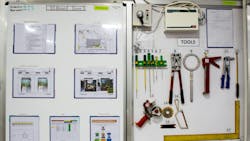
One of the most powerful methods for improving performance lies in the operations side of the shop and often goes unnoticed.
Efficient human movement has huge potential to improve safety and quality and boost team morale. The cumulation of the physical motions that operators must perform to ensure shift targets are accomplished on time directly influences everything on the shop floor, from yield losses to rates of near-miss events.
This is a prime example of where the phrase “work smarter, not harder” is very relevant and can reap benefits. Used effectively, this asset enables leaders to drive high productivity in manufacturing.
Understanding Wasteful Motion
Motion is one of the seven major wastes in lean manufacturing. Unnecessary activities—non-value-added tasks—like bending to grab, walking extra steps, lifting useless items and searching for tools to perform a job are inefficient human movements. Even though individually such tasks might not pose a problem, repetition of these movements throughout the day can compromise safety, quality and cost.
- Every repeated bend adds to fatigue, leading to increased risk of injury.
- Every unestablished human activity adds to variation in process, impacting quality.
- Every unnecessary step adds to wasted time, increasing labor cost.
Distinction Between Movements
Since effective motion is so closely integrated with lean manufacturing, it is important to distinguish between value-added and non-value-added tasks. Once the tasks are categorized, it becomes easier to focus and address minimizing non-value-added tasks.
Value-added activities directly increase the worth of a product or service in the customer’s eyes. Tasks such as welding and cutting directly transform the product, while regular cleaning of equipment and inspection checks improve quality.
Non-value-added activities add no value to the product or process. Examples include searching for tools or equipment, taking unnecessary steps between workstations and unnecessarily transporting material—for example, rearranging inventory in the shop but with no specific plan to optimize production.
Once these tasks are categorized, leaders can work to reduce or eliminate the non-value-added tasks. Over time, a simple adjustment can lead to saving couple seconds on each cycle. With repetition, gained seconds becomes minutes, then hours that can be instead used for productive actions.
Role of Human Factors and Ergonomics
Human factors and ergonomics (HF/E) is a design-oriented framework for improving compatibility, effectiveness, safety, ease of performance and operators’ well-being and quality of life. Traditional ergonomics are rooted in human physical activity, but with the evolution of technology in industry, leaders now also focus on cognitive ergonomics, which emphasize mental processes such as perception, memory, information processing, reasoning and responses.
Leaders must understand that ergonomics is a business issue. Natural, convenient, effective motion of operators leads to stable operations and predictable human output.
5S Principles to Optimize Motion
Tracking motion through the 5S method can help improve a motion-controlled system, aiming at good ergonomics and elimination of non-value-added tasks.
Sort: Uncluttering workspace and retaining only required items
Set in order: Assigning each material a specific labelled area in the shop for easy inventory and re-ordering
Shine: Cleaning the workspace
Standardize: Setting the standard and documentation for the entire team to follow
Encouraging Buy-In and Engagement
Ideas are a start, but implementation on the plant floor is everything. Leadership best practices include modeling 5S daily on the floor, running audits to check and share improvement in metrics with the team, encouraging 5S ideas and feedback, along with prompt implementation and standardization of the project. Sharing past successful examples and data-driven prediction models also helps demonstrate the benefits and impact.
A collaborative culture is essential as well. Work toward building a collaborative environment by encouraging team-led decision-making—prioritizing operator-led improvements, dedicating time to group meetings for brainstorming solutions and allowing team members to manage continuous-improvement projects. All of these initiatives should be tied into daily tracking of key metrics, maintaining action items and meeting deadlines.
The goal is for the entire manufacturing team to understand, recognize and use improvements to make operations safer, faster and more convenient, with better-quality output.
These improvements may have minimal impact in the beginning, but if the metrics are tracked effectively over the long-term, the benefit of such a system trumps every other improvement.
Leaders who master the principles of effective human movement are able to build strong teams, resilient processes and world-class operations.
About the Author
 Aviroop "Avi" Majumdar
Aviroop "Avi" Majumdar
Production Engineer and Process Supervisor, Tesla
Avi is a production supervisor and process engineer in Tesla’s 4680 Cell Manufacturing program at Giga, Texas. An early-career manufacturing leader, he currently oversees a team of associates and technicians responsible for day-to-day production floor operations. He is adept at training and mentoring staff, driving continuous improvement initiatives, and ensuring operational execution aligns with organizational goals. Avi is committed to fostering a culture of accountability, safety, and operational excellence.
A mechanical engineer by training, Avi brings strong experience in process optimization, advanced manufacturing, and automation. His technical skill set spans DOEs, DMAIC, PLC programming, and data analytics, with a proven track record of leading cross-functional projects that improve quality, reduce costs and enhance equipment performance. His background includes internships in semiconductor packaging, battery manufacturing, and energy reliability analytics, as well as hands-on project work in mechanical design, controls, and automated systems.
Outside of Tesla, Avi serves as a Tau Beta Pi District director and editorial board member, where he mentors new engineers and supports their professional development and leadership growth. Across all roles, he combines technical depth with people-centered leadership to deliver meaningful impact in high-growth manufacturing environments.