Ghost Ships Are Hurting Supply Chain Visibility
Key Highlights
- 'Ghost ships' are vessels that disappear from public tracking systems, their location manipulated or their digital record misleading.
- An estimated 65% of outbound tankers crossing the Strait of Hormuz operate in dark mode, reducing visibility and increasing supply chain uncertainty.
- Misinformation in vessel tracking can cause manufacturing delays, compliance risks and financial losses.
- Layered verification processes, combining AIS data with other sources and escalation triggers for handling uncertain shipments, can help mitigate risk.
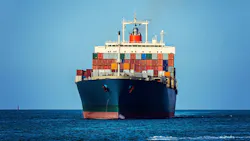
A manufacturing shipment does not have to be lost to cause disruption. It only has to become uncertain.
In May 2026, shipping analytics firm Vortexa estimated that about 65% of outbound loaded tankers crossing the Strait of Hormuz traveled in “dark” mode, according to Reuters. Their public tracking signals were unavailable or unreliable during part of the voyage.
The vessels were still moving, and their cargo was still on board. What disappeared was dependable visibility.
That matters to manufacturers. A plant may have the right supplier, a carefully sequenced production plan and confirmed customer orders, yet still face downtime because no one can say with confidence when a critical shipment will arrive.
These vessels are sometimes called digital “ghost ships.” The term can describe ships that disappear from public tracking systems, manipulate their location or identity or create a misleading digital record.
Not every tracking gap is evidence of wrongdoing. Crews may limit transmissions because of conflict, piracy or safety concerns, and equipment can fail. But for a manufacturer waiting for raw materials or components, the immediate problem is the same: The data used to make production decisions can no longer be fully trusted.
A Maritime Data Problem Reaches the Factory Floor
Manufacturers use ocean-shipping information long before a vessel reaches port.
Planners use arrival estimates to schedule production, labor and warehouse capacity. Procurement teams use shipment status to decide whether replacement materials are needed. Customer-service teams use it to make delivery commitments.
When a vessel goes dark or reports an implausible location, those decisions become guesses.
Consider a manufacturer waiting for specialized electronic components. The vessel carrying them stops transmitting reliable location information, but the arrival estimate remains unchanged in the company’s system. The procurement team waits because an emergency order would be expensive. Several days later, the carrier confirms a major delay.
The company must now choose among production downtime, premium air freight or a missed delivery. A small data gap has become a costly operating decision.
The risk can be greater for companies running lean inventories, depending on single-source suppliers or importing materials with long replenishment times. A disruption lasting a few days at sea can affect weeks of plant schedules.
The Cost Goes Beyond Late Cargo
Unreliable vessel information also creates compliance risk.
Manufacturers are increasingly expected to understand where materials originated, who handled them and whether restricted entities were involved. That can matter under sanctions, import controls, forced-labor rules and customer sourcing standards.
The tanker Skipper illustrates the problem. U.S. authorities seized the vessel near Venezuela in December 2025. Reuters reported that it was falsely flying Guyana’s flag, while other public reporting described manipulated tracking information.
The broader lesson is that a shipment’s documents, vessel identity and digital route can present a story that later proves incomplete or false.
A company may have no intention of buying from a prohibited source. Yet if its due-diligence process accepts carrier documents and one tracking feed without further review, it may not identify the risk until customs officials, banks or regulators intervene.
The result could be a shipment hold, production interruption, financial loss or reputational damage.
More Alerts Are Not the Answer
Manufacturers do not need another dashboard filled with warnings. They need a process that separates a harmless signal loss from a problem requiring action.
Automatic Identification System (AIS) data remains valuable. It provides information about a vessel’s identity, position, speed and direction. But it should be treated as one source rather than unquestionable proof.
A stronger process compares AIS information with port calls, carrier updates, satellite data, customs records, weather and historical routes. One inconsistency may have an innocent explanation. Several appearing together may justify escalation.
This is where operations research and artificial intelligence can help.
Operations research uses data and structured decision methods to solve complex operational problems. Instead of reviewing one vessel update at a time, analytical systems can evaluate patterns across an entire voyage.
Does the vessel’s speed match the reported route? Is the arrival estimate still physically possible? Has its identity, flag or destination changed? Does its behavior differ sharply from previous voyages?
AI can process these signals at a scale that would overwhelm a human logistics team. Human review remains essential because unusual behavior is not automatically suspicious. Analysts must consider weather, port congestion, conflict and equipment failure before deciding what the data mean.
What Manufacturers Can Do Now
The first step is to identify which ocean shipments can actually stop production.
Not every container needs the same level of monitoring. Manufacturers should focus enhanced visibility on materials with no approved substitute, long replacement times, high compliance exposure or an immediate effect on customer commitments.
The second step is to define escalation triggers before a shipment becomes uncertain. A company should know how long a critical vessel can remain unverified before procurement contacts the supplier, logistics requests independent confirmation, compliance begins a review or production planning activates an alternative.
Without agreed thresholds, teams lose time debating whether the problem is serious.
Manufacturers should also ask suppliers and logistics providers how they verify vessel information. Do they rely on one tracking platform? Can they confirm port activity through other sources? How quickly must they report an extended tracking gap, route change, cargo transfer or vessel substitution?
Those expectations can be built into supplier reviews and logistics agreements.
Scenario planning is equally important. Manufacturers should test what happens if a critical shipment is delayed by three days, two weeks or longer. Which production line is affected first? Is an alternate supplier approved? When should customers be told? At what point does premium freight become cheaper than downtime?
The goal is not to predict every disruption. It is to make sure the company still has options when reliable information disappears.
Visibility Is Now a Manufacturing Capability
For years, vessel tracking was treated mainly as a transportation concern. That view no longer fits a manufacturing system in which materials cross oceans, inventory is tightly managed and customer promises depend on precise timing.
Manufacturers do not need to become maritime intelligence organizations. They do need to understand which shipments are critical, which data supports their decisions and what they will do when that data becomes unreliable.
The next production disruption may not begin with a broken machine, a supplier bankruptcy or a closed port.
It may begin with a ship that appears to be in the wrong place—or does not appear at all.
Manufacturers that recognize that uncertainty early will have choices. Those that do not may discover the problem only when the line stops.
About the Author
Manikandan Chandran
Senior Software Engineer, Shipping and Logistics
Manikandan Chandran is a technology architect and author with experience in artificial intelligence, cloud computing, logistics and software engineering. He works as a senior software engineer at a major ocean shipping company, where he contributes to technology projects supporting shipping and logistics operations. He is a member of the Institute for Operations Research and the Management Sciences.