Recycled Materials Are Strengthening US Supply Chains
Key Highlights
- The recycled-materials scale is enormous: $183.6 billion in U.S. economic impact and 600,000 jobs.
- Advanced sorting technologies like AI and LIBS are revolutionizing material recovery and quality control.
- Scaling recycled material use strengthens supply chain resilience amid global disruptions.
- Using recycled materials can reduce carbon emissions by up to 96%, conserving natural resources.
- Manufacturers are encouraged to audit sourcing, identify substitution opportunities and build local supplier relationships.
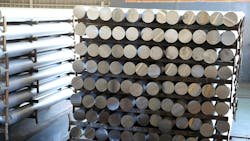
As manufacturers navigate volatile raw material markets and supply chain disruptions, a critical opportunity to build resilience is hiding in plain sight – recycled materials are playing an expanded role in creating a more secure and sustainable supply chain across the U.S. economy.
In recognition of Global Recycling Day, it is worth highlighting that the recycled materials industry supplies 70% of the steel used in U.S. manufacturing, 75% of the paper used in mills and millions of tons of plastic, glass, electronics and other materials across domestic supply chains. From the new cars rolling off America's assembly lines, to the latest phones and laptops, to everyday personal care products and beverages, recycled materials are integral to our daily lives.
The scale is enormous: Recycled materials represent $183.6 billion in economic impact annually and support 600,000 jobs across the United States. From local recyclers to multinational public companies, today’s recycled materials industry is leveraging AI and the latest technologies to recover more material and deliver the high-quality raw materials our economy depends on.
The question is no longer whether recycled materials play a role. The United States already has a robust domestic supply stream. Scaling that advantage can help strengthen U.S. manufacturing resilience. We see three critical opportunities.
Strengthening Supply Chain Resilience
The last few years have taught us that global supply chains are fragile. Geopolitical tensions, shipping delays and market speculation create uncertainty. By providing a reliable, domestic source of high-quality materials, the recycled materials industry strengthens supply chain resilience, diversifies sources of raw materials and keeps factories running and store shelves stocked.
Sourcing Raw Materials Responsibly and Sustainably
Using recycled materials instead of primary materials generates significant carbon emissions savings, up to 96% in the case of aluminum. Given that these materials don’t need to be mined, drilled or otherwise extracted from the earth, this also means less strain on our natural resources. And because the industry is committed to engaging in responsible and transparent production practices, manufacturers can meet the rising demands of consumers to understand what is going into the products they use.
Leading on Innovation and Differentiation
Here's what some manufacturers may not know: The recycled materials industry is experiencing a technological renaissance. Advanced sorting technologies, including AI-powered systems, are enabling the industry to process materials with greater precision and consistency than ever. New specifications, improved quality grades, and emerging material streams are creating opportunities to differentiate your products and access new markets. For example, AI-powered sorting combined with advanced sensors like laser-induced breakdown spectroscopy (LIBS) is a gamechanger in recycling. LIBS can identify ingredients in aluminum, like magnesium and silicon, that previous technologies couldn’t easily find. This enables industries including automotive, aviation and transportation to sort aluminum by its exact type, so high-quality aluminum can be recycled into new high-quality products, instead of being turned into lower-grade materials.
Start Here
If you're ready to maximize the recycled materials advantage already at work in your operations, consider these concrete steps:
Audit your current sourcing. Work with your procurement team to map exactly where recycled materials are already flowing into your operations. You'll likely be surprised by the volume and variety.
Identify substitution opportunities. Are there product lines where you could increase recycled content or shift to recycled sourcing with minimal operational change?
Connect with local suppliers. The recycled materials industry includes thousands of companies across the U.S. and globally. Local sourcing reduces transportation costs and strengthens community relationships while supporting domestic manufacturing and local jobs.
Document and communicate your story. Your customers and investors want to know about your responsible sourcing practices. You're already doing it – now tell that story.
The Bottom Line
Recycled materials are integral to American manufacturing and essential to supply chain resilience, cost and operational management. In short: Recycled materials give you a competitive edge. The manufacturers winning today aren’t just figuring out how to use recycled materials – they're fully recognizing and leveraging what they're already using.
Your operations are powered by recycled materials. The question is: What will you do with that advantage?
About the Author
 Robin Wiener
Robin Wiener
President, Recycled Materials ASsociation
Robin leads ReMA, the Washington, DC based trade association representing the $117 billion recycling industry, representing more than 1,300 companies nationwide and throughout the globe that process, broker and industrially consume valuable recycled commodities (including metal, paper, plastics, textiles, rubber, and electronics). ReMA’s mission is to promote safe, economically sustainable and environmentally responsible recycling through networking, advocacy, and education.