Carbon CEO: Additive Manufacturing Ready to Move on From the Embarrassment of 2024-2025
There’s an additive manufacturing company out there looking to solve your engineering challenges, if they know what’s good for them.
The last several years have seen the 3D printing industry go through a circus of failed acquisitions. The idea of replacing mass production of traditional parts with additive manufacturing feels long dead. Now the money lies in materials development and niche markets.
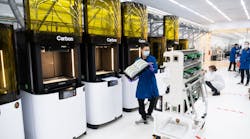
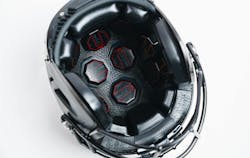
Additive manufacturing company Carbon has, for example, supplemented its own line of 3D printers with a robust material development business. One example: protective gear and inserts made from elastomeric materials that return to original shape even after extreme bending and stretching. These materials may replace the foam in helmets, for example.
We spoke with Phil DeSimone, CEO and co-founder of Carbon, about the state of 3D printing and whether we might see a more stable additive market soon. The interview has been edited for length and clarity.
Dennis Scimeca, IndustryWeek: Do you think additive companies that focus on hardware versus also offering services and materials development have any long-term chance to survive in today’s additive market?
Phil DeSimone, Carbon: If you are just a hardware maker of, a maker of a 3D printer, and you have no capability to create differentiation through materials or some sort of slick software, you are toast. That is my belief. The materials, not the printer, dictate your opportunity.
We create materials that are truly differentiated, that go after specific application spaces that we believe there are large opportunities in. We sell a lot of machines and resins that way, and that has been our focus, and that’s how we’ve differentiated ourselves from the competition.
IW: Do you think additive will ever gain a significant foothold in mass production? Or has that ship sailed?
PD: I think the dream and the failedness of the historic incumbents was that 3D printing was going to 3D print everything. And that is baloney. You’re never going to 3D print a K-cup for a Keurig. you’re never going to 3D print Solo cups. You’re never going to print any of those things that are high volume. But there are things that you can do with 3D printing that you can’t do with injection molding, where the value prop is clear, and that is where we focus.
I think that world is not gone. I think that world is starting to creep up.

IW: Reflecting on the flurry of attempted acquisitions between Nano Dimension, Stratasys and 3D Systems in 2023, and the Desktop Metal fracas last year, do you think we’re in for any more high profile acquisitions or bankruptcy declarations this year?
PD: I think the number of 3D printing companies is going to reduce significantly over the course of the next 12 to 24 months.
IW: When do you think the additive industry might hit a place of stability where no one’s asking that question anymore?
PD: I think it will happen within the next two to three years. I think the companies that are remaining, that are private, there’s a handful of them that truly are good, and when they go public the market’s viewpoint will change. … I think FormLabs is in that bucket. I think Bambu Labs out of China is doing some incredible things.
I think the Nano Dimension stuff, the Stratasys hostile takeovers, 3D Systems’s massive instability over the course of last decade, all of that has led to embarrassment for the market generally. But I do think there are good things happening. … I think there will be a new guard that start to be able to go public, call it in the next half a decade, that will change the viewpoint.
Until that happens, the market’s right to be skeptical. I think venture capital is going to completely come to a halt, and I believe that that will cause a lot of these companies that have started over the last three to five years to not be able to be solvent, because being cash flow positive in this market is really, really tough.
IW: What do you think a new additive company will have to focus on to be successful?
PD: They should focus on a customer problem that is a big enough opportunity and work backwards from that. The problem with that is, it is a long road. It is not for the faint of heart. First conversation to getting a product out the door in the consumer product world is 12 to 18 months, at best, to get to significant revenues. In the defense or medical world it could be three to five years.
IW: What is additive manufacturing’s largest untapped market? Or have we run the gamut at this point?
PD: No, no, we’re still in like the first pitch of the first inning … Defense, broadly. I would say the other one is in life sciences, but when I talk about life sciences, I mean drug delivery applications specifically.
IW: How does additive manufacturing open up reshoring opportunities?
PD: What I will say is less around reshoring, but supply chain resiliency. Additive manufacturing gives people flexibility.
It actually doesn’t matter where the printer is, typically the costs are roughly the same. One of my largest customers, who makes bike saddles, their VP of supply chain, congratulated me. “For the first time ever, I had a contract manufacturer quote the printing of a part off your printers in Asia, Europe and North America, and the price came back exactly the same.”
So, what’s super intriguing is, like, this Climacool shoe as an example…this product is 100% 3D printed, the entire shoe in a single piece. This product lends itself really well for it to be made locally…without the need for shipment, the fear of tariffs, because the price point, whether it’s made in the U.S., Europe or Asia, is going to be the same.

IW: The way I spoke about additive five years ago is very different than the way I talk about additive today. The industry changes so much that trying to make predictions feels a little bit like a fool’s errand. Who knows what’s going to change after another five years?
PD: I would say the leadership five years ago in the additive industry is the main reason for that. The SPACs (special purpose acquisition companies, investors that took several startups public without the traditional rounds of due diligence) did not do the industry any help, how Desktop Metal and Markforged and all of those folks financially went out into the public markets.
People need to do something different. If they don’t, I think the industry is going to continue to go through a world of hurt. If you look at all of the incumbents, they all go to market the same way. They all focus on revenue growth the same way, let’s just get a myriad of different technologies that we’re all going to launch and we don’t even have the R&D to make all of them better every year.
You’re never going to get to what we need to do as an industry, which is really find things that are differentiated.
IW: If a company wants to get into additive manufacturing, what’s the most difficult thing they need to face?
PD: It’s where you’re going to bring value, what industry you’re going to focus on. What is it you can do that nobody else can? If you think that you’re going to bring a printer to market, you’re just going to do it better and cheaper, you’re going to have some tough going.
About the Author
 Dennis Scimeca
Dennis Scimeca
Dennis Scimeca is a veteran technology journalist with particular experience in vision system technology, machine learning/artificial intelligence, and augmented/mixed/virtual reality (XR), with bylines in consumer, developer, and B2B outlets.
At IndustryWeek, he covers the competitive advantages gained by manufacturers that deploy proven technologies. If you would like to share your story with IndustryWeek, please contact Dennis at [email protected].