Digital Tools Turn 'Eco-Friendly' into Economic Wins
Key Highlights
- Digital twin technology enables virtual testing and optimization, reducing planning time and costs by up to 50%.
- Companies like Mercedes Benz and Pikolin demonstrate how digital tools improve energy efficiency, reduce emissions and increase productivity.
- Transitioning to renewable energy sources and electrification of industrial processes are key to meeting global decarbonization targets.
- Digitalization helps optimize supply chains, design sustainable products and retrofit existing assets for greater environmental impact.
A UN Global Compact-Accenture 2025 study revealed that 99% of CEOs intend to sustain or strengthen their sustainability commitments, focusing on initiatives that generate clear, measurable business impact. This misconception can hold businesses back from rethinking their current operations and investing in sustainable practices.
It’s time to recognize that sustainability and profitability are not opposing goals, but complementary objectives that drive a successful business.
Breaking down environmental and cost barriers requires businesses to look holistically at decarbonization: decarbonizing the power supply, reducing energy consumption, electrifying energy consumption and decarbonizing products and supply chain.
The digital twin – a digital representation of a physical asset or process – and other digital tools generate value in this journey by enabling “what if” scenarios in the virtual world to predict future performance and behavior prior to physical experimentation. Sustainability progress is advancing rapidly thanks to the digital twin, and now, industrial AI can provide these insights at speed and scale.
This article will explore how combining the real and digital worlds helps leading companies achieve these levers while saving costs, increasing resilience, complying with regulations and ultimately gaining a competitive advantage.
Mercedes-Benz: Decarbonizing the Power Supply
To meet the energy demand of industry and infrastructure without further damaging our planet, we need to transition away from fossil fuels and toward building more solar and wind capacity. But how can industry make this change? By decarbonizing the power supply. While this may sound easier said than done, digitalization is helping companies achieve this goal faster.
For example, Mercedes-Benz has been leveraging the digital twin to transition to 100% renewables by 2039 and is currently installing 1 million square meters of solar panels by the end of this year. The challenge they faced was combining on-site generation with storage and grid electricity as cost efficiently as possible. Using a digital twin specifically designed for energy, Mercedes-Benz was able to simulate a physical energy system. The twin verified planning scenarios for energy usage, providing recommendations on how to optimize desired outcomes, including energy efficiency and associated cost savings, as well as emission reductions.
Systems like this one can reduce energy consumption, CO₂ emissions and planning times for systems set up by as much as 50% (potential savings from technology, not project-specific).
Pikolin: Reducing Energy Consumption
Energy efficiency has been discussed for decades. Today, however, the conversation carries a new urgency because industry must reduce energy use by 23 to 25% from current levels to meet 2030 global targets.
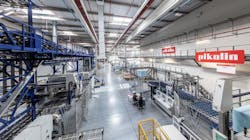
This challenge demands a mindset shift, transitioning from an opportunistic energy-savings approach to a holistic and systemic one. Spanish mattress manufacturer Pikolin had the opportunity to design a new factory and kept sustainability top of mind. With a scalable digital solution and a digital twin, the company vertically integrated its production chain for greater connectivity. It was able to streamline engineering and drive efficiency and maintenance in operations by simulating in the virtual world and then recreating in the real world.
Pikolin is currently collecting 30,000 data points for transparency that allows them to make smarter decisions. This has resulted in a 14% reduction in power usage, 40% less natural gas and a 30% increase in productivity. This is proof that sustainable design can deliver measurable environmental and business gains.
Electrifying Energy Consumption at a Dairy
Today, only 22% of the world’s energy use comes from electricity. The remaining 78% still depends on burning fossil fuels, particularly in buildings and transport industries. By 2050, that share of electricity is expected to more than double to 55%, according to the World Energy Outlook 2024 by IEA.
The most powerful lever for achieving this transition is industrial heat electrification, which can transform energy-intensive processes. This electrification needs to be powered by clean energy.
Flexible heat electrification has transformed the operations of German company Breitenburger Milchzentrale by shifting to renewable energy sources while maintaining product quality and operational consistency. The cheese manufacturer leverages hybrid process heat systems, which can increase resilience and flexibility by balancing gas-fired and electric heat, allowing adaption to fluctuating energy demands or grid constraints.
Beyond operational benefits, this approach also delivers significant environmental and business impacts, reducing hundreds of tons of CO₂ emissions and saving the company €300,000 ($356,000 USD) in network fees and energy costs per year.
By integrating electrification thoughtfully, the company not only reduces emissions but also positions itself to operate more efficiently, resiliently and sustainably towards an energy-conscious future.
Becker Marine: Decarbonizing Products and Supply Chain
As much as 80% of a product’s environmental impact is determined in the design phase, making this stage of product development essential for improving environmental footprint. Modeling a product’s potential sustainable impact allows companies to optimize for sustainability and performance.
German marine company Becker Marine Systems retrofits vessels with energy-efficient devices to meet environmental regulation requirements. Leveraging digital twin technology, Becker Marine uses simulation to design, evaluate and optimize specialized devices that are custom fit to the hull of each vessel.
As a result, their product, Becker Mewis Duct, enables customers to experience up to 10% annual power savings and has reduced roughly 19 million tons of CO₂ for a typical bulk carrier to date. The return-on-investment for the shipbuilder is less than one year.
A Start-up Simulating Jet Design and Manufacturing

Another company designing for a decarbonized future is JetZero, a U.S.-based aerospace start-up that is building its first factory in Greensboro, North Carolina.
JetZero’s fuel-efficient aircraft design and production is the world’s first simulated virtually from the start using a comprehensive digital twin. The extensive virtual testing and optimization is intended to de-risk certification and production and accelerate time to market, while also keeping focus on sustainability and passenger experience.
Using digital tools can also extend a company’s view of its supply chain, providing visibility to select suppliers that minimize environmental impact or give a holistic view of the supplier logistics network to set targets, track progress and identify optimization potential.
Sustainability and profitability aren’t competing objectives. As we’ve observed across industries, companies that tackle decarbonization through a holistic look of digitalization are not only reducing their environmental impact but also unlocking significant operational and financial benefits.
When green meets green, businesses thrive, demonstrating how eco-friendly choices can also drive efficiency, profitability and long-term competitive advantage.
About the Author
 Eryn Devola
Eryn Devola
Head of Sustainability, Siemens Digital Industries
Eryn Devola is the head of sustainability for Siemens Digital Industries, where she leads the sustainability horizontal market. Devola completed an National Science Foundation Fellowship focused on environmentally conscious manufacturing and has applied the knowledge she gained there to many roles in her career. Devola has a bachelor’s and master’s in mechanical engineering from Michigan Technology University, and an MBA from the University of Louisville