Designing the Future-Ready Factory
Key Highlights
- Future-ready factories must improve efficiency, sustainability and flexibility to meet growing demand despite resource and supply chain challenges.
- AI-powered cameras, smart sensors and analytics boost performance through real-time visibility, predictive maintenance and improved safety.
- Data-driven operations help manufacturers adapt quickly while optimizing energy use and supporting sustainability goals.
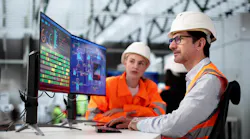
Manufacturers face numerous challenges amid an economic climate that isn't short of demand, but increasingly beset by supply chain obstacles. Factories now endure growing pressure to increase productivity with limited resources, while also incorporating sustainability goals and being more flexible in a rapidly changing market.
The purchasing managers' index (PMI) was reported at 54 points in April 2026, marking the strongest manufacturing conditions in over four years. The surge in new orders and input inventories indicates that demand isn't slowing, yet operating with limited resources and a complex operational environment could hinder the ability to meet business goals.
Given these challenges, the future-ready factory needs to consider three principles to succeed: efficiency, sustainability and flexibility. Designers planning an industrial plant that incorporates these pillars will need to leverage advanced technology to build an environment that scales to ever-changing requirements.
Understanding the challenges
Much of the current manufacturing spotlight shines on the growing demand for data center infrastructure that supports the development of artificial intelligence (AI), with investment capital expected to reach $7 trillion by 2030. The demand for components, such as servers and mechanical parts, has plants working at full capacity to meet orders. However, the challenges factories face put them at risk of not meeting that demand.
This scenario outlines how significant demand against current bottlenecks will shape the future factory's outlook. Plants will need to become more efficient to boost productivity when resources are constrained. Facilities will need to become more sustainable, not only to comply with regulations but also to minimize costs. Administrators will need to implement more flexibility to adapt to rapidly evolving market demands.
Industry leaders agree that achieving a future-ready factory requires more innovative thinking and a comprehensive approach to address the challenges, including increased automation and digitization, lean processes and rethinking layouts to support agility and flexibility. Implementing advanced, scalable technologies can be crucial to structuring a future-ready factory.
Addressing efficiency bottlenecks
Technologies that help promote efficiency are the first design challenges to address, where planners will push towards further system digitization to enable real-time data collection. Implementing devices that process and analyze deep data can help decision-makers continuously improve their operations and adjust processes and procedures to maximize productivity.
Real-time awareness is a core element in curating a more efficient factory floor. Manufacturing security systems with AI-assisted cameras, video management systems and smart sensors are an example of how technology can help designers achieve that goal.
Advanced cameras offer multifaceted capabilities, helping reduce efficiency bottlenecks and enhancing visibility on the shop floor. AI-assisted algorithms in devices can improve worker safety by detecting unsafe practices or missing personal protective equipment (PPE) that could cause accidents, thereby minimizing disruptions.
More importantly, thermal optics on the cameras can enable predictive maintenance, allowing administrative teams to perform necessary repairs before equipment fails. Where keeping productivity growing is more vital to the operation than ever, hardware that keeps manufacturing equipment running optimally can maximize efficiency.
Sustainability overviews
The same technologies can help address sustainability challenges, particularly energy consumption to meet production quotas, a growing concern for factory administrators. The resources required to meet the exponential demand for goods such as data center components are not only proving financially costly. They can also breach environmental regulations in many jurisdictions.
Designers will seek to connect factories to renewable energy sources and implement more efficient waste management systems to help reduce environmental footprints. However, finding more energy-sustainable solutions is only part of the challenge. Ensuring they can power an ever-expanding operation is arguably more crucial.
Maintaining visibility into energy connections and factory usage can help achieve sustainability goals, comply with regulatory frameworks and reduce operating costs. Video security cameras can help protect energy hubs from damage and disruption and observe their efficiency. Smart sensors can also check emissions to help ensure they don't exceed harmful levels.
Supporting data analytics software for these devices can provide usage insights to optimize energy use and enable real-time action to improve facilities. Again, factories supporting sustainability are a crucial pillar for operating in demand-heavy circumstances.
Finding flexibility
Finally, being flexible enough to adjust factory infrastructure to meet demand quickly is the last pillar shaping the future-ready factory. Adaptive manufacturing is the keyword for industry leaders, pushing towards facilities that can transform their layouts, production lines and procedures to respond to changing market demands quickly.
Factories will need scalable solutions that enable quick transitions for complex manufacturing operations. Designers can use the retail industry as an example of how to implement flexibility mechanisms to adapt to a fast-changing market, including optimizing layouts and operations.
Retail stores must continually adjust their floor layouts and staff procedures to deliver the best customer experience and maximize sales opportunities. Shop managers are using video security cameras to continuously review actions, such as how customers interact with layouts and merchandise and leverage retail intelligence insights to support complex optimization decisions.
Factory designers can take the same approach, using advanced camera systems to provide data that supports the most efficient layout and procedures. Access to real-time insights can help generate fast, data-driven designs that accelerate infrastructure deployment and establish a more efficient manufacturing operation.
Future-ready foundations
Considering manufacturing demand trends, the future of the factory hinges on a facility's ability to scale quickly, which consistently presents challenges for efficiency, sustainability and flexibility. Despite the industry being well-positioned for success, unprecedented demand for construction goods and machinery is likely to keep production lines under pressure for the years to come.
There's no one-size-fits-all approach to factory design, but ensuring its future-ready requires technology that provides real-time data and enhanced visibility to support quick, accurate decision-making and overcome those challenges. Implementing a comprehensive system of video, sensors and data analytics can be an integral part of future-ready factory designs.
Sponsored By:

About the Author
 John Kim
John Kim
Senior Director of Product and Design for Avigilon at Motorola Solutions
John brings over 15 years of experience in product development and design, specializing in physical security solutions. As Senior Director of Product and Design for Avigilon at Motorola Solutions, his expertise lies in driving innovative hardware development and implementing agile best practices to deliver cutting-edge products. John also possesses a keen understanding of cloud security, AI and emerging technology trends, leveraging them to shape the future of security solutions.
Related

 future_proofing_manufacturing