GM Looks to Boost Inventory of Full-Size Pickups
You could consider it a bit of a luxury problem.
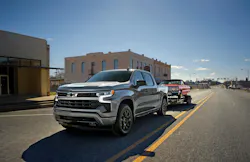
The leaders of General Motors Corp. are looking to increase the auto giant’s inventories—particularly of its very profitable full-sized pickup trucks—after ending the first quarter with about 47 days of supply on dealers’ lots.
Speaking to analysts after Detroit-based GM reported its first-quarter results, Chair and CEO Mary Barra said the company began 2026 with lower inventories after “a very strong close to the fourth quarter” and added that situation persisted as teams installed tooling for the next generation of market-leading large pickups. GM dealers finished March with about 516,000 vehicles in their inventory, which was down 6% year over year.
CFO Paul Jacobson said on GM’s conference call that retail sales were dinged by the lower inventory of full-size pickups and added that plans call for pushing up inventory “over the next several quarters while being mindful of the broader demand environment.” Barra said the production of next-gen trucks should start ramping in the third quarter.
“We’re not anticipating any material downtime at this point” later this year, Jacobson said about full-size truck production. “That’s what we’re going to need to lean into a little bit to try to get our inventory levels back into the targeted range from where they’ve been.”
To help its overall inventory situation—Barra and Jacobson are looking to grow supply back to between 50 and 60 days of sales—GM during the first quarter also rerouted about 7,500 full-size sport-utility vehicles that had been slated to go to the Middle East. Jacobson said the logistical challenges created by the Iran war also contributed to that decision but added that the inventory question was also important.
 Hare and Tortoise fast and slow

GM delivered nearly 1.3 million vehicles across the globe in the first three months of this year, which was down from roughly 1.45 million early last year mainly because of lower electric-vehicle shipments. North American deliveries fell to 743,000 from 819,000 a year earlier because the company stopped making some Cadillac models and imported fewer cars from Korea.
Speaking to the broader demand environment, Barra said activity is holding up. The industry’s overall sales rate remains around 16 million and adding that “showroom traffic is stable.” Answering a question about the impact of the Iran war on consumers’ habit, she said the length of the conflict will be the biggest factor in any shift of note.
“To date, we really haven’t seen that,” she added.
Other items of note from GM’s call included:
- Executives have raised their 2026 guidance for earnings before interest and taxes by $500M because they’re reversing tariffs paid under the International Emergency Economic Powers Act, measures that the U.S. Supreme Court ruled early this year were illegal.
- The ongoing restructuring of GM’s EV portfolio and associated supplier contract settlements led to another $1.1 billion in charges, adding to the $7.6 billion the company wrote down in the second half of last year.
- And yet: Barra noted that GM’s share of the EV market at the end of March was 13%, an increase of three points from the end of 2025.
Those numbers and other factors contributed to GM posting a net profit of $2.6 billion on revenues of $43.6 billion, with both of those figures being down slightly from early last year. Adjusted EBIT rose, though, to $4.3 billion from $3.5 billion thanks in part to the $500 million tariff adjustment.
Shares of GM (Ticker: GM) were up about 1% to $78.75 in afternoon trading on April 28. They have risen 13% over the past six months, which has grown the company’s market value to $71 billion.
About the Author
Geert De Lombaerde
Senior Editor
A native of Belgium, Geert De Lombaerde has been in business journalism since the mid-1990s and writes about public companies, markets and economic trends for Endeavor Business Media publications, focusing on IndustryWeek, FleetOwner, Oil & Gas Journal, T&D World and Healthcare Innovation. He also curates the twice-monthly Market Moves Strategy newsletter that showcases Endeavor stories on strategy, leadership and investment and contributes to other Market Moves newsletters.
With a degree in journalism from the University of Missouri, he began his reporting career at the Business Courier in Cincinnati in 1997, initially covering retail and the courts before shifting to banking, insurance and investing. He later was managing editor and editor of the Nashville Business Journal before being named editor of the Nashville Post in early 2008. He led a team that helped grow the Post's online traffic more than fivefold before joining Endeavor in September 2021.