Practical Advice for Navigating Tariff Policy in 2026
Key Highlights
- A Supreme Court decision on the IEEPA tariffs is expected as early as January 9, 2026.
- U.S. tariff collections increased from $84.2 billion in Q3 2024 to $331.4 billion in Q3 2025.
- Look for changes in the USMCA's joint renewal in July 2026. The Trump administration has particular concerns about China's investments in Mexico, Canada's digital services tax, automotive rules of origin and electric-vehicle and battery supply chains.
- Read on for expertise on better sourcing practices, refund reviews and approaches, Free Trade Zone and Bonded Warehouse options and more.
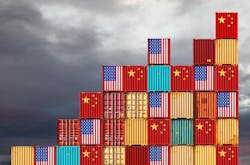
Since taking office in January 2025, President Donald Trump has issued numerous executive orders that increase duty costs for importers.
The president imposed an alphabet soup of new tariff types: International Emergency Economic Powers Act (IEEPA) “Liberation Day” reciprocal tariffs, IEEPA fentanyl tariffs and extra IEEPA duties on imports from Brazil and India.
Section 232 commodity-based tariffs, focused on manufactured goods deemed essential to national security, were imposed on items made of aluminum, steel, copper, wood and on autos, auto parts and heavy-duty trucks.
Tariff rates themselves were increased. The de minimis duty-free exemption for low-value imports was eliminated. In total, the Federal Bureau of Economic Analysis reported that tariff collections increased from $84.2 billion in Q3 2024 to $331.4 billion in Q3 2025, a whopping 280% increase.
What Should Manufacturers Watch for in 2026?
With the administration’s constant changes in trade policy, and its commitment to reducing imports, focus on these top three trade issues:
The U.S. Supreme Court’s expected tariff ruling (which could come as early as January 9) on the legality of the IEEPA reciprocal and fentanyl tariffs and the subsequent government reactions. If the duties are disallowed, Customs refunds may be possible—and new types of duties imposed. The Trump administration chose to use IEEPA because it requires no notice and no administrative process before it is imposed. Section 232 and 301 tariffs can be used to meet the goal of additional tariffs—they simply require a longer timeline and some administrative processes before they are imposed.
Refund requests can be submitted through the usual processes for requesting duty refunds: submitting post-summary corrections and/or protests to U.S. Customs. These applications are filed electronically and can be submitted by the importer, their customs broker, trade attorneys or trade consultants.
The USMCA trade agreement’s joint renewal in July. Canada and Mexico are the U.S.’s largest trading partners, and industry sectors including automotive and aviation have highly integrated North American supply chains. Does Trump see Canada and Mexico as partners in building more competitive manufacturing industries and in generating jobs? Or will Trump pursue a go-it-alone approach to international trade, no matter the costs?
There is major uncertainty about the administration's desired course of action. Preliminary indications are that the administration has particular concerns about China's investments in Mexico, Canada's digital services tax, automotive rules of origin and electric-vehicle and battery supply chains. Trade discussions with Canada have been on again/off again, and there is the possibility that the U.S. may fall back to a bilateral trade agreement. July 2026 will be a defining moment.
Disputes over U.S. access to critical mineral imports and/or U.S. agricultural sales to China. Currently, most imports from China are subject to at least a 45% tariff cost (from a combination of today’s reciprocal and fentanyl duties, plus the Section 301 duties on China imposed during the first Trump administration). At times of tension, those costs have risen to as high as 165%. Will the trade war with China reignite? China supplies the majority of global demand for the rare-earth elements needed by the tech and defense industries. When trade tensions are high, China imposes export restrictions on rare-earth elements and the U.S. increases tariffs. Even if future tariff changes are short-term negotiating tactics, your imports could be impacted.
Success Despite the Challenges
Here are the top tariff-savings approaches that savvy manufacturers have been using:
Sourcing USMCA-qualifying items. If you buy imported goods from either Canada or Mexico, and the items meet the criteria for USMCA qualification, the items are duty-free from all the ordinary and IEEPA types of duty. About 90% of current imports from Canada are USMCA-qualifying, meaning that the remaining 10% of Canadian imports incur a 35% tariff. USMCA qualification analysis can help determine duty-free importation of all items that meet the criteria.
Preparing to file for IEEPA refunds. If the U.S. Supreme Court disallows the IEEPA tariffs, there is a significant opportunity for refunds of the duties which were paid. If you don’t have it already, seek qualified legal or customs experts to prepare . Gather customs entry information. Enroll in Customs’ electronic refund payment process through your company’s Automated Commercial Environment (ACE) Portal.
Reviewing U.S. exports for potential import-duty refunds. Under a provision called Duty Drawback, up to 99% of duties paid on imported items that are subsequently exported is refundable. Duties paid on components used to manufacture exported items can also have their duties refunded. There is a five-year look-back period for drawback filings, making this provision an attractive way to bolster 2026’s bottom line.
Evaluating Free Trade Zone (FTZ) and Bonded Warehouse options to avoid or delay duty payment. Free Trade Zones allow imported items to be used in manufacturing before entry is made and before any duty paid. FTZs exist in every state, and your manufacturing facility can become a sub-zone. In a FTZ, duty is only due when the item leaves the facility for sale in the U.S. If the manufactured item is exported outside the U.S., no duty is ever due.
Bonded warehouses for long-term storage of high-value items. Duty is only due when the stored items are withdrawn for sale in the U.S. Goods can be stored for five years before customs entry and duty payment are required. The benefits are improved cash flow and the ability to pay duty rates applicable at the time of withdrawal rather than those applicable at time of entry.
FTZ and Bonded Warehouses are relatively easy and inexpensive to implement. With today’s high-duty costs, refresh your analysis to assess whether these provisions bring savings.
Reducing the cost and risk of any single potential government action by diversifying the manufacturing and sourcing base. Consider modifying sourcing strategy from “China Plus One” to “China Plus Many” or even to “Anywhere But China.” Compare nearshoring and reshoring costs to today’s import cost structures.
The trade winds will continue to shift in 2026. By focusing on the key issues, implementing a broad range of trade tactics and collaborating with important partners, 2026 will bring “fair winds and following seas” to your supply chain.
About the Author
Lauren Pittelli
founder and principal
Lauren Pittelli is the founder and principal of Baker Logistics Consulting Services, a consulting firm focused on addressing the international trade and transportation needs of industry. Her consulting services focus on 3PL selection and management, international air and sea transportation and customs and trade compliance. Prior to starting Baker, Lauren spent 30 years at leading international freight-forwarding companies managing their transportation, customs and contract logistics business in the Midwest. She is a graduate of Harvard College and a licensed U.S. Customs House broker.