New Lucid CEO Cutting 18% of U.S. Jobs, Arizona Plant Shift
Key Highlights
- Lucid to cut nearly 20% of its U.S. workforce and end a factory shift to reduce costs and improve cash flow.
- EV makers are aligning production with demand, highlighting the need for flexible workforce and capacity planning.
- Lucid and Rivian are targeting lower-cost EVs, signaling a broader industry shift toward more affordable vehicle segments.

Electric vehicle manufacturer Lucid Group Inc. will lay off nearly one out of every five U.S. workers this summer, cuts that come just months after executives said they were laying off 12% of the company’s U.S. workforce.
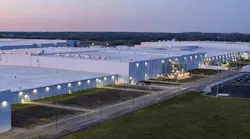
In a June 22 filing with the U.S. Securities and Exchange Commission, Lucid leaders said they also have eliminated the second shift at the company’s AMP-1 factory in Arizona, which it expanded two years ago to cover about 3 million square feet so that it could handle production of its Gravity SUV as well as future models. Word of the cuts come only a few weeks after new Chief Executive Officer Silvio Napoli formally stepped into his role and pledged a review of its operations.
Just how many people the latest cuts are affecting is unclear because Lucid doesn’t break out the size of its U.S. workforce. The company finished last year with about 9,000 globally.
In the SEC filing, Chief Financial Officer Taoufiq Boussaid said the cuts are intended to “advance the company’s path toward profitability and positive cash flow generation by streamlining its organizational structure, optimizing operating expenses, and aligning production plans with anticipated demand.” While the layoffs from earlier this year didn’t involve production, logistics and quality employees, this round will affect full-time and hourly workers as well as contractors.
 f_glendale_1
 rivn_r2_1
Included in that figure is severance and other benefits for Marc Winterhoff, the company’s chief operating officer who had stepped in as interim CEO after Peter Rawlinson stepped down early last year. The SEC filing noted that Lucid’s COO position has been eliminated.
News of Lucid’s latest cuts comes about a week after The Wall Street Journal reported that Rivian Automotive Inc. was laying off several hundred people, about 2% of its workforce, as part of the restructuring of several teams at the company. Rivian ended 2025 with roughly 15,200 people on its payroll.
Both Lucid and Rivian are working on new models that take aim at the midsized market and will sell for about $50,000, well below the price points at which they’ve been marketing their first-generation vehicles. Rivian is moving toward profitability, with CEO RJ Scaringe and his team forecasting it will start making a gross profit from its automotive operations by year’s end (even though the company’s adjusted EBITDA loss for all of 2026 will still be $2.1 billion to $1.8 billion). Key to that guidance is the ramping up of production of Rivian’s R2, which the company began delivering this spring and the production of which it will ramp throughout the summer and fall.
Lucid looks to have ahead of it a longer journey to profitability. The company lost $1.1 billion in the first quarter on revenues of about $282 million and executives have said they are looking to be cash-flow positive by late this decade. Napoli last month suspended production guidance as he settles into his new role.
About the Author
Geert De Lombaerde
Senior Editor
A native of Belgium, Geert De Lombaerde has been in business journalism since the mid-1990s and writes about public companies, markets and economic trends for Endeavor Business Media publications, focusing on IndustryWeek, FleetOwner, Oil & Gas Journal, T&D World and Healthcare Innovation. He also curates the twice-monthly Market Moves Strategy newsletter that showcases Endeavor stories on strategy, leadership and investment and contributes to other Market Moves newsletters.
With a degree in journalism from the University of Missouri, he began his reporting career at the Business Courier in Cincinnati in 1997, initially covering retail and the courts before shifting to banking, insurance and investing. He later was managing editor and editor of the Nashville Business Journal before being named editor of the Nashville Post in early 2008. He led a team that helped grow the Post's online traffic more than fivefold before joining Endeavor in September 2021.