The Daily Management Obeya: the Importance of Selfless Leadership
Key Highlights
- A daily management obeya tracks day-to-day performance, while a hoshin obeya focuses on strategy and breakthrough objectives.
- When decisions repeatedly escalate to senior tiers, leaders should investigate gaps in training, resources, autonomy, or coaching.
- Selfless leaders remove barriers and develop others’ problem-solving capabilities instead of taking over.
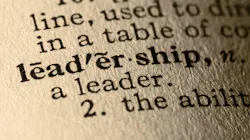




What is a selfless leader? It's a leader who listens rather than provides all the answers. It's a leader who removes barriers to achievement without taking over. It's a leader who credits the team, rather than hogging all the accolades for a job well done.
A selfless leader is all of those and more, say the hosts of the Behind the Curtain: Adventures in Continuous Improvement podcast.
In this latest episode, hosts Dr. Mohamed Saleh and John Dyer don’t simply deliver the attributes of the selfless leader, they also delve into the importance of those attributes to the success of daily management obeyas. This installment continues their series on popular lean tools and the key behaviors that make those tools effective.
Among the key concepts in this episode:
- The difference between a daily management obeya and a hoshin obeya
- A telltale sign for leaders that their coaching needs improvement.
- A call for a new leadership metric.
The continuous improvement practitioners launch the episode with an explanation of the difference between a daily management obeya and a hoshin obeya. While the hoshin obeya focuses on big picture issues, such as strategy, vision and breakthrough objectives, the daily management obeya focuses on day-to-day operations, or what Saleh calls the “performance engine” for an organization. (Hoshin, he says, is the “growth engine.”)
The daily management obeya sits atop tiered huddles, explains Saleh.
Tiered huddles provide a rapid escalation system that escalates issues to the next level when barriers can’t be solved at that level. “Then it escalates and escalates until the top, and then a visual room—sometimes multiple levels in the same room—a visual room that allows us to see abnormalities, escalate those barriers, to coordinate support there, assign an ownership to who could serve the best in that room to the front lines and follow through on commitments,” Saleh says.
The room is the daily management obeya.
“We're really just looking at a conference room, if you will … you can just imagine it being segmented by department, by function, by work area, with a bunch of bullet-point objectives and red and green tags that get flipped over whether you're meeting those objectives or not right,” adds Dyer. “It’s a very easy way to see how the entire organization is doing by quickly scanning the walls and seeing how many reds and greens there are, and where some of the biggest priorities need to be focused on, based on those reds and greens.”
While daily management obeyas can be “very effective,” they also can be used incorrectly, Dyer says.
“I've actually seen these rooms locked out to everyone but the leaders,” he says. “You can just imagine at that point, they become an executive lounge.”
Dyer says he prefers the term “achieving excellence” room to obeya room, “because that’s what we are trying to do.”
“I also think, and I've done this with organizations to great effect, is that the huddle meetings could rotate through this room every day. You know, a different group could have their huddle meeting in this room, and then the next group has it the next day, and the next group has it the next day. So, maybe once a month, every huddle takes place in this room now,” he says. “Why is that important? Well, you'd be amazed at how much interest the shop floor employees, especially, will have in this room, because they're going to look around and see how their area compares to all the rest of the areas.”
The duo then launches into the attributes of a selfless leader, many of which are outlined at the top of this article. Most importantly, says Saleh, “How are you coaching people to make decisions for the organization at the right level?”
For example, he explains, “If I knew a tier two should have made that decision, but it came up to a tier four in the organization at the top level, what broke down in tier two? What kind of coaching and development is needed at tier two so that doesn't come to me?”
Saleh explains that leaders have two obligations in this instance. “The first option is: Is this a development opportunity in a certain tier, and that's what your leader standard work should be focused on, or is there a gap in (the lower tier) feeling that they have the autonomy or empowerment to actually make that decision.”
The latter option is typically driven by fear, he adds.
Dyer suggests the introduction of a new leadership metric.
“The more issues that have to bubble up to tier three, tier four to get resolved, is an indicator that tier one is failing, right? Or they don't have the right training, they don't have the right tools, or they don't have the right resources, or they don't feel empowered to address that particular issue,” he says. “So I think that should be one of the leaders' metrics is that, hey, every time a problem bubbles up to tier four, we need to really examine that to say why did it get this far? What do we need to do different to help make the tier one and tier two comfortable enough to address this? That truly is selfless leadership.”
And finally, deep into the podcast, the two briefly discuss the use of red, green and yellow indicators to measure progress, with Dyer launching a controversial, “I think green should be reserved for 100%.” His explanation provides much more nuance.
Says Saleh in conclusion: "The daily management obeya is still a tool, just like anything else, and selfless leadership is the behavior behind it. But the strongest leader in the room is not the person that problem solves every problem. It's the person that's really helping build capabilities within that organization to solve problem."
About the Author
 Jill Jusko
Bio: Jill Jusko is executive editor for IndustryWeek. She has been writing about manufacturing operations leadership for more than 20 years. Her coverage spotlights companies that are in pursuit of world-class results in quality, productivity, cost and other benchmarks by implementing the latest continuous improvement and lean/Six-Sigma strategies. Jill also coordinates IndustryWeek’s Best Plants Awards Program, which annually salutes the leading manufacturing facilities in North America.
Have a story idea? Send it to [email protected].
Related
 hands putting stickers on a chart in a business setting
 group of people gathered around whiteboard, industrial setting

