Buyers of Metal Are Prioritizing Certainty Over Price. Which Means Metals CEOs Are Pushing Price.
Key Highlights
- Cleveland-Cliffs Inc. Chairman and CEO Lourenco Goncalves said in a conference call that he believes steel prices are not yet at peak.
- Strong steel demand, low inventories and rising customer minimum orders are supporting higher prices into 2027.
- Aluminum markets also face supply constraints and geopolitical risks, making secure sourcing and long-term supply agreements increasingly important.
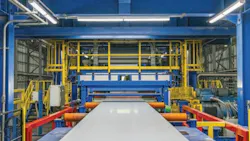
The customer is always right but Cleveland-Cliffs Inc. Chairman and CEO Lourenco Goncalves, rarely uber-diplomatic in his public statements, said he has a slight disagreement with the steel maker’s clients earlier this week.
“Everybody is going to index and going to index with a minor or no discount because they all believe – not all, but a good number of clients […] – that prices have peaked [and that] being on the discount will help them going forward,” Goncalves said on an Oct. 19 conference call discussing Cliffs’ Q3. “On the other hand, I believe that steel prices are not at peak.”
Helping underpin Goncalves’ belief are two important factors that look likely to shape the market for steel and other metals in 2027. Firstly, the Trump administration’s push to limit metal imports and more broadly reshore manufacturing – of which Goncalves is a full-throated supporter – is paying off for domestic producers who he said can now better plan for a future in which they can invest in capacity and hire people. And secondly, a broadening of growth in the manufacturing sector is pushing customers to increase their call on Cliffs.
“Clients are asking to raise their minimums because at, this very moment, the biggest point […] is to have steel, not to negotiate a price,” Goncalves said.
Not surprisingly, this dynamic is helping producers such as Cliffs raise their prices and promise investors that they will continue to do so. CFO Celso Goncalves told analysts that Cliffs’ average selling price during the third quarter rose nearly 5%, a pace that looks durable for the rest of this year and into 2027.
“Index pricing in the U.S. has increased by roughly $40 per ton each month for most of this year, and we do not see any signals in our order book pointing to a slowdown of this pace,” Celso Goncalves said.
The leaders of Cleveland-Cliffs aren’t the only ones in the metals sector expecting good things from next year even if they aren’t yet giving investors formal targets. On Steel Dynamics Inc.’s third-quarter earnings call Oct. 20, CFO Theresa Wagler said demand for the company’s flat-rolled steel is staying strong while inventories remain low, which bodes well for prices and profitability in the months ahead.
 Automotive tool and die
 chart_financial_853480_emily2k_dreamstime
 Reshoring US Production
“We’re starting to see the uplift from this macro environment,” she added. “And we believe it could be considerable.”
Less ebullient but still positive on his team’s recent earnings call was Alcoa Corp. President and CEO Bill Oplinger. The price of aluminum has retreated from its spring surge and is essentially flat for 2026 but Oplinger told analysts and investors on Oct. 15 that the global upheaval from the Iran war means inventories are “historically low at approximately 42 days of consumption, leaving the market with limited capacity to absorb further supply disruptions or stronger-than-expected demand.”
As with steel, that’s putting a floor under prices (which are still up more than 25% from about 18 months ago) while markets in Europe and North America “remain structurally short of metal” and Alcoa’s order book is in solid shape.
“Most products are sold out or tightly committed,” Oplinger said. “Packaging and electrical markets continue to lead demand. Transportation remains resilient and construction, particularly in Europe, remains the softest end market. Customer sentiment is cautious but constructive with continued interest in secure supply and long-term agreements.”
What looks like market power for metals manufacturers looks like a margin squeeze for many of their customers: General Motors Corp. CFO Paul Jacobson said this week that the higher commodity inflation that has materialized since summer could, if it doesn’t retreat, cut up to $1.5 billion from the automotive giant’s adjusted earnings before interest and taxes in 2027.
Jacobson and GM Chair and CEO Mary Barra said their teams are working up plans to offset those cost increases. AI and other efficiency efforts will play a role but Jacobson also suggested a broader program is in the works.
“Several years ago, we did a $2 billion fixed-cost reduction program that was very successful over that time period,” he said. “We’re continuing to go to work. We’re looking at those plans and, as we’ve said repeatedly, we’re committed to grow earnings every year. That’s what we’re going to be working towards the best we can.”
About the Author
Geert De Lombaerde
Senior Editor
A native of Belgium, Geert De Lombaerde has been in business journalism since the mid-1990s and writes about public companies, markets and economic trends for Endeavor Business Media publications, focusing on IndustryWeek, FleetOwner, Oil & Gas Journal, T&D World and Healthcare Innovation. He also curates the twice-monthly Market Moves Strategy newsletter that showcases Endeavor stories on strategy, leadership and investment and contributes to other Market Moves newsletters.
With a degree in journalism from the University of Missouri, he began his reporting career at the Business Courier in Cincinnati in 1997, initially covering retail and the courts before shifting to banking, insurance and investing. He later was managing editor and editor of the Nashville Business Journal before being named editor of the Nashville Post in early 2008. He led a team that helped grow the Post's online traffic more than fivefold before joining Endeavor in September 2021.