Supply-Chain Stresses Aren’t Going Away. GM’s CFO Has a Vision for Improving Quality.
This decade’s supply-chain stresses have created a new dynamic for manufacturers that’s more complex than the traditional back and forth “where there’s a lot of supplier claims asking for more money, higher margin,” General Motors Corp. CFO Paul Jacobson said at a recent investor meeting. And that requires different responses than before.
Speaking at Barclays’ 17th Annual Global Automotive and Mobility Tech Conference in New York the week before Thanksgiving, Jacobson said the waves of disruption most businesses have seen during the 2020s have created an environment where “the quality and consistency isn’t what it used to be.” A big factor from GM’s perspective, he said, is that suppliers located in smaller communities have fewer long-time employees today than they used to. That turnover is resulting in inconsistencies and delays that were less of an issue when these companies employed teams of workers with two decades or more of experience.
“We’re spending more on expedited logistics and freight than we have in years past. And I'd like to see that come down,” Jacobson told the Barclays audience. “So where we can be helpful as part of our warranty initiatives, we’ve put quality engineers out […] deeper into the supply chain to try to catch problems sooner, deploying digital technology and so on to try to make sure that we can stabilize that a lot. But I think this is a stress point.”
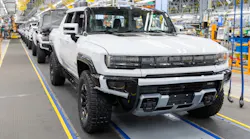
 dreamstime_m_117615202
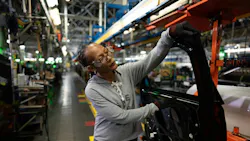
 dreamstime_xxl_476632997

Jacobson and his team at GM aren’t the only manufacturers paying more attention to their supply chains at the end of 2026. During the recent third-quarter earnings reporting season, a notable number of other executives pointed out similar issues. Among them were:
- Chris Urmson, CEO of autonomous trucking venture Aurora Innovation Inc., who said his team “bumped into problems with material availability, component quality” that forced it to find some alternative suppliers.
- Cummins Inc. executives, who told investors that the Q3 performance of their power systems and distribution divisions came in below expectations because of supply-chain constraints. Cummins teams working on axles and engines also are working through some supplier issues that in turn led customer Daimler Truck to talk about maybe needing to push some Q4 production into early next year.
- Also speaking at the Barclays conference, David Dauch, chairman and CEO of Dauch Corp. (the former American Axle) said that today’s “tough conditions” for Tier 2, 3 and 4 suppliers aren’t likely to improve soon. Dauch, he said, has “had to prop up some of those […] suppliers financially” and send teams to improve their operations.
While some of those problems could either be specific to a certain company or are being caused by temporary market distortions, others reflect the deeper workforce and quality issues Jacobson discussed at the Barclays event. And that, he added, requires a more holistic long-term reset that shifts some risk to suppliers but better rewards them for performance.
How More Than 2,200 Quality Pros Are Navigating Today's Tricky Environment
Octave earlier this year released its 2026 Pulse of Quality in Manufacturing report, which asked 2,263 quality professionals across the United States, United Kingdom and Germany how they're dealing with workforce shortage, tariffs and more. A key finding: 65% of companies are increasing their spending on quality initiatives.
“I’ve said before that I would really like to see a world where GM’s suppliers make higher margins and better money than they do working for anybody else in exchange for consistency, quality and risk-sharing,” he said. “Because it’s not a zero-sum game. There’s a lot more efficiencies to be gained and split between us if we can get that quality and consistency going […] The reward for that is you make really good margins if you perform really, really well because I think that’s bigger and better for the overall entity.”
Vick Vaishnavi, head of quality management software company Octave Reliance, said he agrees with Jacobson’s thinking on manufacturers tying suppliers more closely to them as they look to boost quality. (Disclosure: GM uses Octave Reliance’s software, primarily for environmental, health and safety applications.) Doing so day to day, he said, requires putting in place strong processes around part approvals, inspections and needed corrective actions.
On a more strategic level, that could involve several approaches. One of them is integrating vertically by having the original equipment manufacturer outright buy a supplier, a model that has gone in and out of vogue in recent decades. The direct investment approach Dauch mentioned is another and Vaishnavi said that could involve taking equity stakes in return for buying equipment or it could involve an up-front payment that the supplier repays over time through a royalty to the OEM.
Regardless of the path manufacturers choose when they seek to improve their quality and consistency, it sounds like broader changes are coming to the supply chain. Dauch said his teams are looking beyond the fires they’re needing to put out today.
“We’re also looking at our whole purchasing strategy about which suppliers have the depth and breadth that can manage and be resilient during difficult times, good and bad times,” he said at the Barclays gathering.
Vaishnavi is on the same page. Crucial for manufacturers to have long-term success with their supply chains, he said, is to view quality as a strategic differentiator that’s embedded in every-day decisions rather than a tactical necessity that only gets major attention when things go south. Doing that and setting up the needed repeatable processes make it easier for OEMs to lift up suppliers and get closer to Jacobson’s vision.
“For some organizations, every year is a ‘quality’ year,” he said. “But not every day is a ‘quality’ day.”
About the Author
Geert De Lombaerde
Senior Editor
A native of Belgium, Geert De Lombaerde has been in business journalism since the mid-1990s and writes about public companies, markets and economic trends for Endeavor Business Media publications, focusing on IndustryWeek, FleetOwner, Oil & Gas Journal, T&D World and Healthcare Innovation. He also curates the twice-monthly Market Moves Strategy newsletter that showcases Endeavor stories on strategy, leadership and investment and contributes to other Market Moves newsletters.
With a degree in journalism from the University of Missouri, he began his reporting career at the Business Courier in Cincinnati in 1997, initially covering retail and the courts before shifting to banking, insurance and investing. He later was managing editor and editor of the Nashville Business Journal before being named editor of the Nashville Post in early 2008. He led a team that helped grow the Post's online traffic more than fivefold before joining Endeavor in September 2021.